
Which Country Has the Largest Agricultural Land in the World?
When we talk about farmland investment, one question that often comes up is — who owns the most agricultural land on the planet? The answer might surprise you. And more importantly, understanding global farmland trends can help you appreciate why owning even a small piece of agricultural land in India is a smarter move than most investors realize.
The Global Farmland Picture
The world has approximately 4.8 billion hectares of agricultural land — that’s nearly a third of the Earth’s total land surface. But this land is not distributed equally. A handful of countries dominate the global agricultural landscape.
#1 China — The World’s Largest Agricultural Land Holder
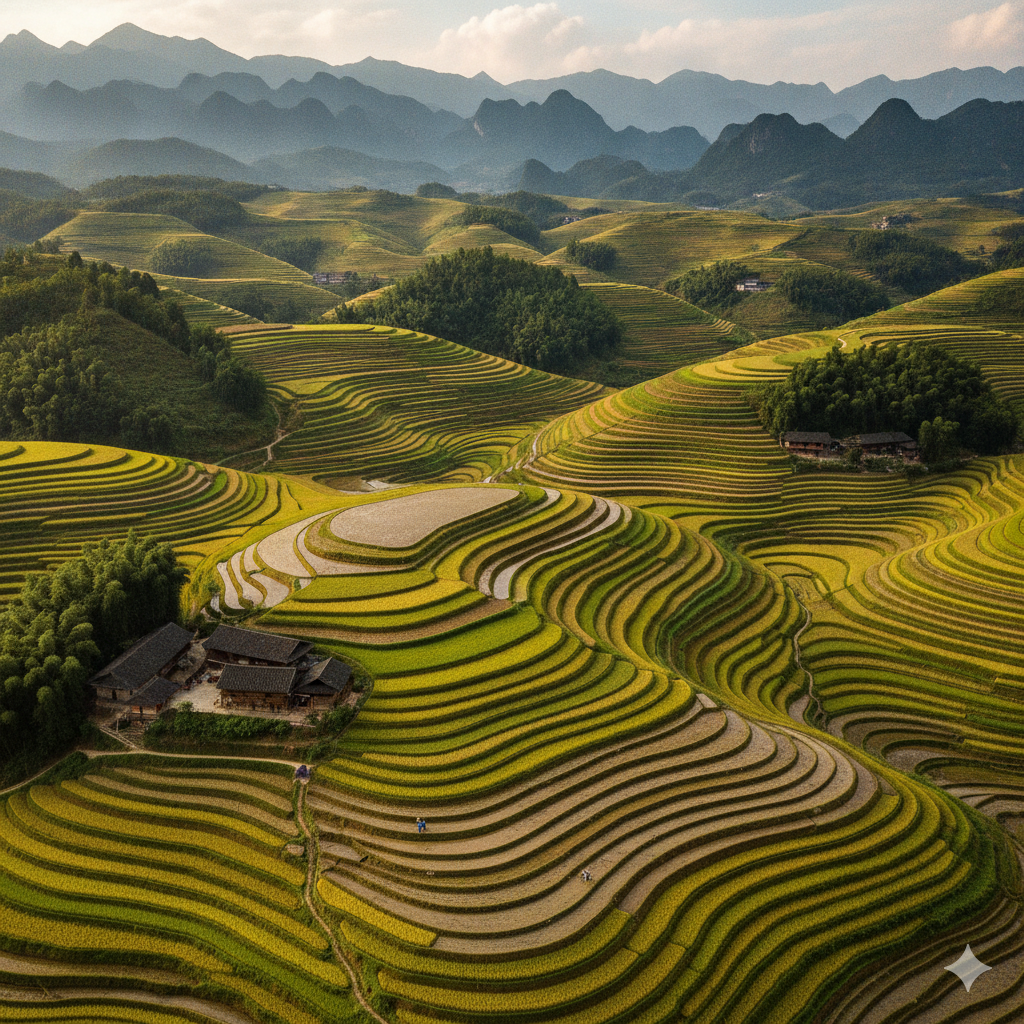
China tops the list with over 528 million hectares of agricultural land. Given its population of 1.4 billion, the country has built its entire civilization and economy around maximizing every inch of cultivable land. From the fertile plains of the Yangtze River to the vast terraces of Yunnan, Chinese agriculture is both ancient and intensely productive.
That said, China faces a growing problem — rapid urbanization is eating into farmland every year, making agricultural land increasingly scarce and valuable.
#2 United States — Efficiency Over Scale
The USA holds around 407 million hectares of agricultural land, making it the second largest. What sets America apart is not just the size but the productivity — American farms are among the most mechanized and high-yield in the world. The Midwest’s “Corn Belt” and California’s Central Valley alone feed a significant portion of the world.
Farmland in the US has also become a serious investment asset class, with institutional investors and billionaires like Bill Gates buying up vast tracts of agricultural land.
#3 Australia — Land Rich, Population Sparse
Australia holds around 353 million hectares of agricultural land — remarkable for a country with just 26 million people. Most of it is used for grazing rather than crop cultivation, owing to the dry outback climate. Australia is a major global exporter of wheat, beef, and wool.
#4 Brazil — The Rising Agricultural Powerhouse
Brazil has emerged as one of the most important agricultural nations in the world, with approximately 282 million hectares under agricultural use. The country is the world’s largest exporter of soybeans, coffee, sugar, and beef. The Amazon-adjacent Cerrado region is its agricultural heartland.
Brazil’s farmland boom has attracted massive foreign investment — a clear signal of how valuable agricultural land is becoming as a global asset.
#5 India — Small Per Capita, But Mighty in Output
India has approximately 179 million hectares of agricultural land — making it one of the top five globally. What makes India remarkable is that it achieves this with one of the smallest per-capita farmland ratios in the world. India is the world’s largest producer of milk, pulses, and spices, and the second-largest producer of wheat and rice.
For a country of 1.4 billion people, Indian farmland is under enormous pressure — which is exactly why agricultural land here is only going to become more valuable over time.
A Quick Comparison Table
Rank | Country | Agricultural Land (approx.) |
1 | China | 528 million hectares |
2 | United States | 407 million hectares |
3 | Australia | 353 million hectares |
4 | Brazil | 282 million hectares |
5 | India | 179 million hectares |
What This Means for Indian Farmland Investors
Here’s the point most people miss: India has a massive population, growing food demand, shrinking agricultural land due to urbanization, and rising institutional interest in farmland as an asset. That combination creates exactly the kind of scarcity that drives long-term value.
In states like Karnataka — particularly in high-growth corridors like Bengaluru–Mysuru — agricultural land and managed farmland are seeing strong appreciation, driven by:
- 🌱 Growing demand for organic and local produce
- 🏙️ Urban professionals seeking farm lifestyle escapes
- 💰 NRI investors diversifying into tangible Indian assets
- 🛣️ Infrastructure development (expressways, industrial zones) pushing land values up
Global Farmland Is Becoming a Serious Asset Class
Across the world, smart money is moving into agricultural land. Pension funds, sovereign wealth funds, and high-net-worth individuals are buying farmland as a hedge against inflation, food scarcity, and currency risk. In India, this trend is still early — which means the opportunity window is open right now.
Own Your Piece of It
You don’t need to buy 500 acres in the Midwest or a ranch in Australia to benefit from the global farmland investment trend. A managed farmland plot in Karnataka — legally structured, actively cultivated, and professionally managed — gives you the same underlying thesis at a fraction of the cost.
That’s exactly what DesiReNest offers through projects like Krishi Kushi Farms — where urban professionals and NRIs can own productive agricultural land without relocating or farming themselves.
Ready to invest in Indian farmland before the window closes?