
What Is a Farm Field? Everything You Need to Know Before You Invest in One
You’ve seen them on drives out of the city — vast stretches of green, rows of crops catching the morning light, the smell of earth after rain. That is a farm field. But what exactly does the term mean, and why should someone living in Bengaluru or an NRI sitting in Dubai care about it?
Let’s break it down — simply, practically, and with an investor’s lens.
What Is a Farm Field?
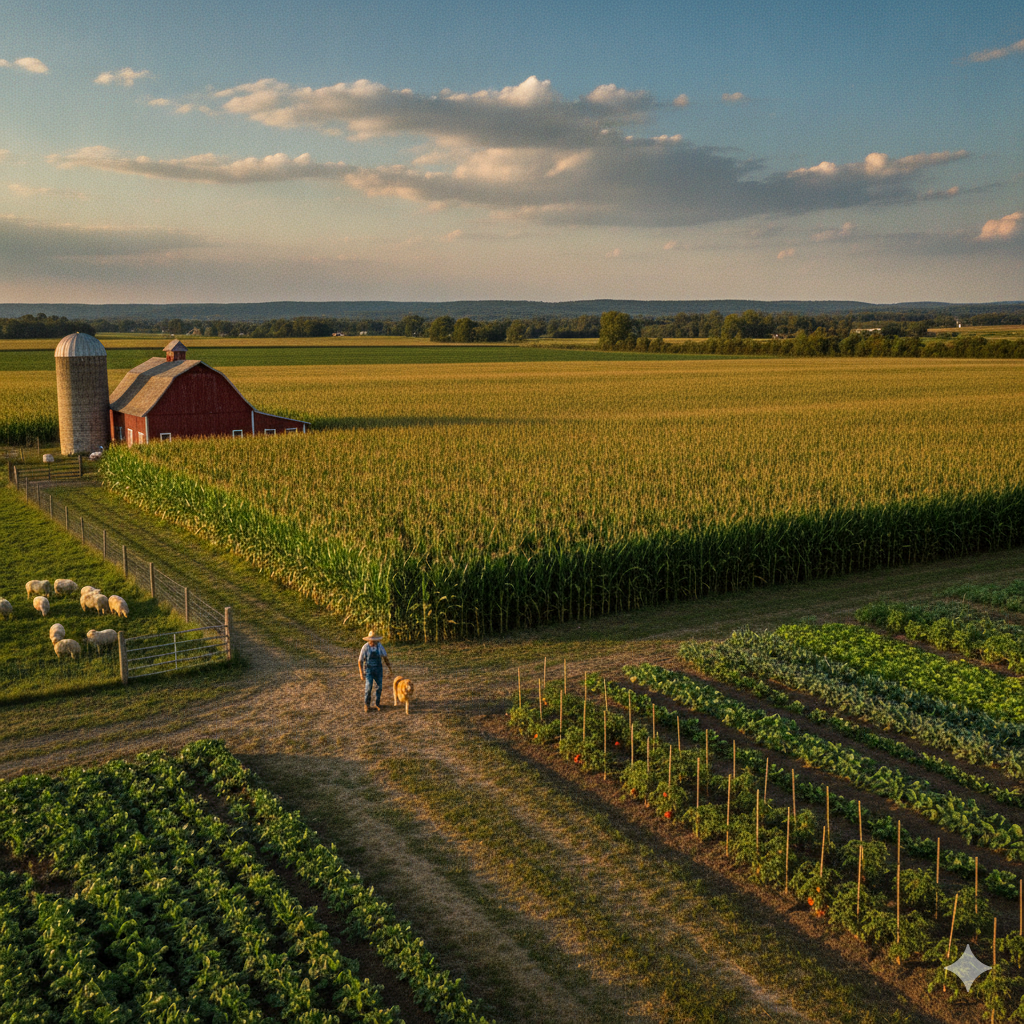
A farm field is a defined area of land on a farm that is prepared, cultivated, and used for growing crops, raising livestock, or both. It is the basic productive unit of any agricultural operation.
A single farm can have multiple fields, each dedicated to a different purpose — one for paddy, one for vegetables, one lying fallow to recover its nutrients. Together, these fields make up the working landscape of a farm.
In simple terms:
- A farm is the overall property
- A farm field is the individual plot of land within that farm where actual cultivation happens
Types of Farm Fields
Not all farm fields are the same. They vary by crop, climate, soil type, and farming method.
Crop Fields
The most common type. These are fields dedicated to growing food crops like rice, wheat, maize, sugarcane, or pulses. In Karnataka, you’ll find fields growing ragi, jowar, tomatoes, and flowers depending on the region and season.Orchard Fields
These are fields planted with fruit-bearing trees — mango, coconut, guava, pomegranate, or sandalwood. Orchard fields take longer to produce returns but offer higher and more consistent income once mature. This is the most popular format in managed farmland investments today.Vegetable and Horticulture Fields
Shorter crop cycles, faster returns, but higher management intensity. Common in peri-urban farming zones around Bengaluru and Mysuru where market access is quick.Pasture and Grazing Fields
Land maintained as grassland for cattle or goat grazing. Less common as an investment product but significant in dairy-heavy regions of Karnataka.Fallow Fields
Land intentionally left uncultivated for a season or more to restore soil fertility. A fallow field is not wasted land — it is resting land, and a sign of good agricultural practice.Mixed or Integrated Fields
Increasingly popular in managed farmland projects, these combine trees, crops, and sometimes poultry or aquaculture in the same field. This approach, called agroforestry or integrated farming, maximises income per acre while improving soil health.
What Makes a Good Farm Field?
Whether you’re a farmer or an investor, the quality of a farm field depends on several key factors:
Soil Quality
The foundation of everything. Good farm fields have deep, fertile topsoil with the right pH balance. In the Mysuru and Bengaluru rural belt, red laterite and black cotton soils are common — each suited to different crops.
Water Availability
A field without reliable water is a field with limited potential. Look for access to a borewell, canal irrigation, or proximity to a tank or reservoir. Drip irrigation systems significantly improve water efficiency and crop output.
Sunlight and Slope
Crops need sun. Fields with good east-west orientation and gentle slopes (for drainage without erosion) are more productive.
Road Access
Often overlooked. A fertile field that cannot be reached by vehicle during monsoon is a management nightmare. Good farm fields have all-weather road access for equipment and produce transport.
Legal Clarity
This one matters most for investors. A farm field must have a clean RTC (Pahani), clear encumbrance certificate, and no disputed ownership or tenancy claims. In Karnataka, this also means verifying whether the land is under any government acquisition notification.
Farm Fields and the Modern Investment Opportunity
Here’s where things get interesting for urban buyers.
Across India, farm fields — especially in well-connected peri-urban zones — are becoming one of the most sought-after investment assets. Why?
Scarcity: Urban expansion is permanently converting agricultural land into residential and commercial zones. The supply of cultivable farm fields is shrinking every decade.
Food Demand: India’s population, changing diet preferences, and rising organic food consumption are putting more pressure on existing farm fields to produce more.
Lifestyle Shift: Post-pandemic, there is a genuine and growing desire among urban professionals to own a piece of land — a farm field they can visit on weekends, breathe fresh air, grow a few fruit trees, and eventually retire near.
Appreciation: Farm fields in corridors like Bengaluru–Mysuru, Kanakapura, Bannerghatta, and Tumkur have seen consistent land value appreciation over the past decade, outperforming many traditional investment assets during volatile markets.
What Managed Farmland Does Differently
Owning a farm field sounds romantic. Managing one is hard work. That’s the gap that managed farmland products fill.
When you invest in a managed farmland project, you’re essentially owning a farm field — with professionals handling the soil prep, planting, irrigation, harvesting, and even sales of produce. You get the asset, the income potential, and the lifestyle access — without needing to know the difference between drip tape spacing and fertigation cycles.
It is farm field ownership made practical for the modern investor.
The Karnataka Advantage
Karnataka offers some of the most diverse and investment-ready farm fields in South India:
- 🌿 Mysuru region — fertile, water-rich, ideal for sandalwood, coconut, and flower cultivation
- 🌾 Kanakapura belt — rising land values, silk and horticulture legacy
- 🌳 Bengaluru rural — proximity to the city with strong appreciation potential
- 🚗 Mysuru–Bengaluru Expressway corridor — infrastructure-driven land value growth
Each of these regions offers farm fields with genuine agricultural productivity and long-term investment upside.
Before You Buy a Farm Field — Checklist
- ✅ Verify RTC / Pahani for crop and ownership history
- ✅ Check Encumbrance Certificate for the last 15–30 years
- ✅ Confirm water source — borewell depth, yield, and legal status
- ✅ Inspect soil — ask for a soil health report if available
- ✅ Check road connectivity — especially during monsoon
- ✅ Understand the legal structure of the sale if buying from a developer
- ✅ Clarify what crops are planned and what the income model looks like
Final Thought
A farm field is more than land. It is a living, producing, breathing asset — one that feeds people, builds wealth quietly over time, and offers something no apartment ever can: a genuine connection to the earth.
For the urban professional, the NRI investor, or anyone tired of watching markets move unpredictably — a farm field in the right location, managed the right way, may be the most grounded investment you ever make.