Forest vs Farmland: Key Differences Explained Simply
Introduction
Forests and farmlands are two of the most important types of land use on Earth. Both play essential roles in supporting life, maintaining ecological balance, and contributing to economic development. However, forests and farmlands serve very different purposes and have distinct characteristics.
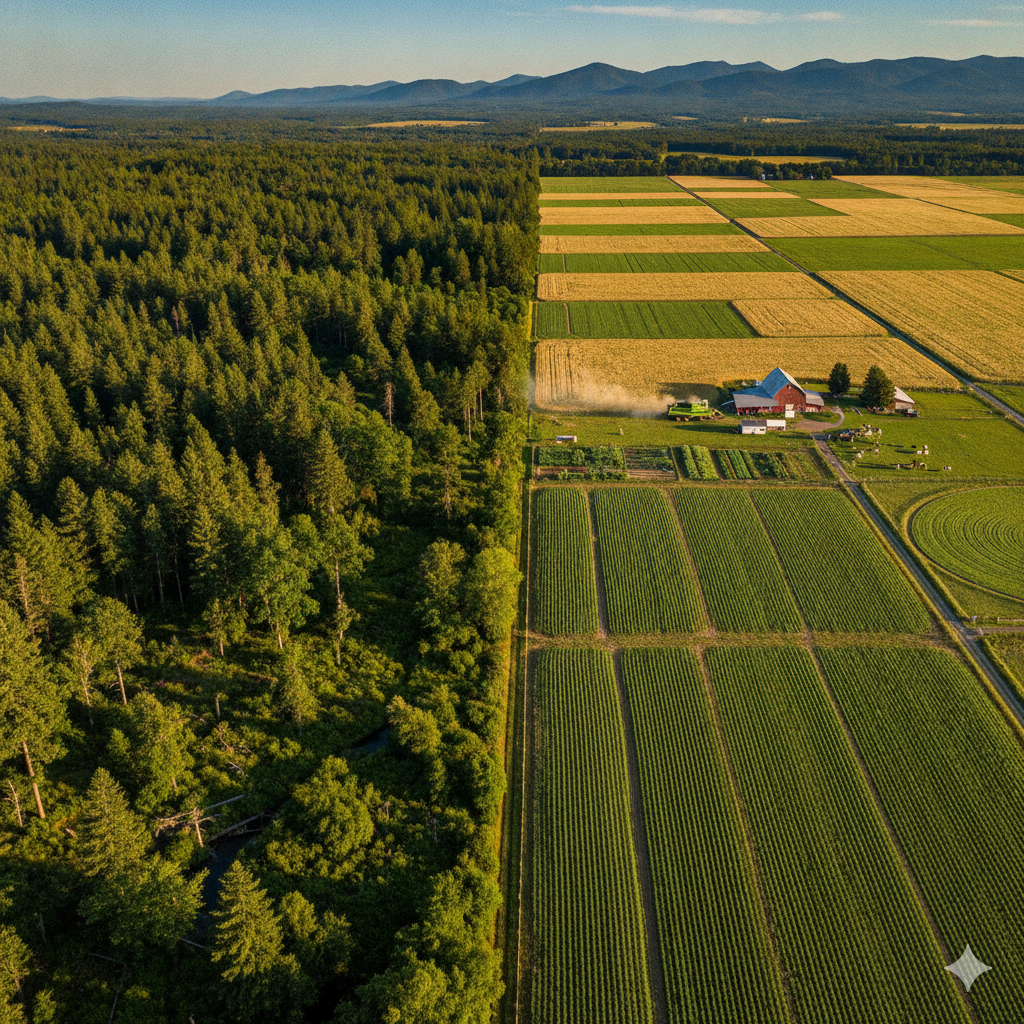
While forests are natural ecosystems dominated by trees and wildlife, farmlands are managed landscapes designed for agricultural production. Understanding the differences between forest and farmland is important for farmers, environmentalists, policymakers, students, and anyone interested in sustainable land management.
As global populations continue to grow, the demand for agricultural land is increasing. At the same time, forests are becoming increasingly valuable for biodiversity conservation, climate regulation, and carbon storage. Balancing the needs of agriculture and forest conservation has become one of the most significant environmental challenges of the 21st century.
This article explores the key differences between forests and farmlands, their characteristics, benefits, challenges, and their role in creating a sustainable future.
What Is a Forest?
A forest is a large area of land covered primarily by trees, shrubs, and other vegetation. Forests are natural ecosystems that support diverse plant and animal species while providing important environmental services.
Forests occur naturally and are often characterized by:
- Dense tree cover
- Rich biodiversity
- Natural water cycles
- Complex ecosystems
- Wildlife habitats
Forests can be found in various climatic regions, including tropical, temperate, and boreal zones.
Types of Forests
Tropical Forests
Tropical forests are located near the equator and receive high levels of rainfall throughout the year.
Examples include:
- Rainforests
- Tropical evergreen forests
Temperate Forests
Temperate forests experience moderate climates and distinct seasons.
Common features include:
- Deciduous trees
- Mixed vegetation
- Rich wildlife populations
Boreal Forests
Also known as taiga forests, boreal forests are found in colder regions and consist mainly of coniferous trees.
What Is Farmland?
Farmland is land used for agricultural purposes, including growing crops and raising livestock. Unlike forests, farmlands are actively managed by humans to produce food, fiber, fuel, and other agricultural products.
Farmland typically includes:
- Crop fields
- Orchards
- Vegetable farms
- Pasturelands
- Livestock grazing areas
Farmers use various techniques such as irrigation, fertilization, planting, and harvesting to maximize agricultural productivity.
Types of Farmland
Cropland
Cropland is used specifically for cultivating crops such as:
- Wheat
- Rice
- Corn
- Soybeans
- Vegetables
Pastureland
Pastureland is used for grazing livestock, including cattle, sheep, and goats.
Permanent Crops
These include long-term agricultural plantations such as:
- Coffee farms
- Tea plantations
- Fruit orchards
- Vineyards
Key Differences Between Forest and Farmland
Although forests and farmlands both involve land and vegetation, they differ significantly in purpose, management, biodiversity, and environmental impact.
|
Feature |
Forest |
Farmland |
|
Purpose |
Supports natural ecosystems |
Produces agricultural products |
|
Vegetation |
Natural trees and plants |
Cultivated crops and managed vegetation |
|
Biodiversity |
Very high |
Usually lower |
|
Human Intervention |
Limited or moderate |
High |
|
Wildlife Habitat |
Extensive |
Limited |
|
Carbon Storage |
High |
Moderate |
|
Economic Use |
Timber, tourism, ecosystem services |
Food and agricultural production |
|
Soil Disturbance |
Minimal |
Frequent cultivation |
|
Water Conservation |
Excellent |
Varies depending on farming practices |
|
Management |
Natural or conservation-focused |
Agricultural production-focused |
Purpose of Forests and Farmlands
Purpose of Forests
Forests provide numerous ecological functions, including:
- Conserving biodiversity
- Protecting watersheds
- Regulating climate
- Preventing soil erosion
- Storing carbon dioxide
Forests are essential for maintaining healthy ecosystems and supporting wildlife populations.
Purpose of Farmlands
Farmlands are primarily intended to:
- Produce food
- Generate income
- Supply raw materials
- Support rural livelihoods
Agricultural production is critical for feeding the world’s growing population.
Biodiversity: Forest vs Farmland
One of the most significant differences between forests and farmlands is biodiversity.
Forest Biodiversity
Forests contain a wide variety of:
- Trees
- Plants
- Birds
- Mammals
- Insects
- Reptiles
- Microorganisms
A single forest ecosystem may support thousands of species.
Farmland Biodiversity
Farmland typically contains fewer species because agricultural production often focuses on one or a few crops.
For example:
- A wheat field may contain mostly wheat plants.
- A corn farm may be dominated by corn crops.
Modern farming practices sometimes reduce biodiversity through monoculture systems.
Carbon Storage and Climate Impact
Forests as Carbon Sinks
Forests absorb carbon dioxide from the atmosphere through photosynthesis.
Benefits include:
- Reducing greenhouse gases
- Slowing climate change
- Improving air quality
Large forests act as natural carbon sinks and are crucial for climate regulation.
Farmland and Carbon Emissions
Agricultural activities may contribute to carbon emissions through:
- Machinery use
- Fertilizer application
- Land clearing
- Livestock production
However, sustainable farming practices can improve carbon sequestration in agricultural soils.
Soil Conservation
Forest Soil Protection
Forest vegetation protects soil by:
- Reducing erosion
- Improving soil structure
- Retaining moisture
- Recycling nutrients
Tree roots help stabilize the land and prevent degradation.
Farmland Soil Management
Farmland requires active soil management.
Farmers use methods such as:
- Crop rotation
- Cover cropping
- Conservation tillage
- Organic amendments
Without proper management, farmland can experience soil erosion and fertility loss.
Water Management
Forests and Water Conservation
Forests play a major role in regulating water cycles.
They help:
- Capture rainfall
- Recharge groundwater
- Prevent flooding
- Improve water quality
Forest ecosystems act as natural water filters.
Farmland Water Use
Agriculture often requires significant amounts of water for irrigation.
Depending on farming practices, water use can be:
- Efficient through drip irrigation
- Excessive through outdated irrigation methods
Sustainable water management is essential for productive agriculture.
Economic Importance
Economic Benefits of Forests
Forests contribute to economies through:
- Timber production
- Ecotourism
- Recreation
- Non-timber forest products
- Carbon credits
Many communities rely on forests for income and resources.
Economic Benefits of Farmland
Farmland supports:
- Food production
- Agricultural exports
- Rural employment
- Agribusiness industries
Agriculture remains one of the largest economic sectors worldwide.
Environmental Challenges
Challenges Facing Forests
Forests face several threats, including:
- Deforestation
- Illegal logging
- Wildfires
- Climate change
- Habitat destruction
These challenges can lead to biodiversity loss and ecosystem degradation.
Challenges Facing Farmland
Common agricultural challenges include:
- Soil erosion
- Water scarcity
- Pest infestations
- Climate variability
- Land degradation
Sustainable farming practices are necessary to address these issues.
Can Forests and Farmland Coexist?
Yes. Sustainable land management seeks to balance agricultural production with forest conservation.
One effective approach is agroforestry.
What Is Agroforestry?
Agroforestry combines trees and agricultural crops on the same land.
Benefits include:
- Improved biodiversity
- Better soil health
- Increased carbon storage
- Additional income sources
- Enhanced resilience to climate change
Agroforestry demonstrates that forests and farming can work together rather than compete for land.
The Importance of Sustainable Land Use
As the global population approaches 10 billion, pressure on land resources continues to increase.
Sustainable land use involves:
- Protecting natural forests
- Improving agricultural productivity
- Reducing deforestation
- Conserving biodiversity
- Managing water resources responsibly
Finding the right balance between forest conservation and farmland expansion is essential for long-term environmental and economic sustainability.
Frequently Asked Questions (FAQs)
What is the main difference between a forest and farmland?
A forest is a natural ecosystem dominated by trees and wildlife, while farmland is managed land used for growing crops and raising livestock.
Which has more biodiversity, forests or farmlands?
Forests generally have much higher biodiversity because they support a wide range of plant and animal species.
Why are forests important?
Forests regulate climate, store carbon, protect soil, conserve water, and provide habitats for wildlife.
Why is farmland important?
Farmland produces food, fiber, and raw materials necessary for human survival and economic development.
Can farmland be converted into forests?
Yes. Reforestation and afforestation projects can restore agricultural land to forest ecosystems under suitable conditions.
Conclusion
Forests and farmlands are both essential components of the Earth’s landscape, but they serve different purposes. Forests support biodiversity, regulate climate, conserve water, and provide critical ecosystem services. Farmlands, on the other hand, are vital for producing food, generating income, and supporting global economies.
Understanding the differences between forest and farmland helps us appreciate the value of both land-use systems. As environmental challenges and food demands continue to grow, sustainable management practices will be crucial for protecting forests while maintaining productive agricultural landscapes.
By promoting responsible farming, conserving natural forests, and adopting integrated approaches such as agroforestry, societies can achieve a healthier balance between agricultural development and environmental conservation.