
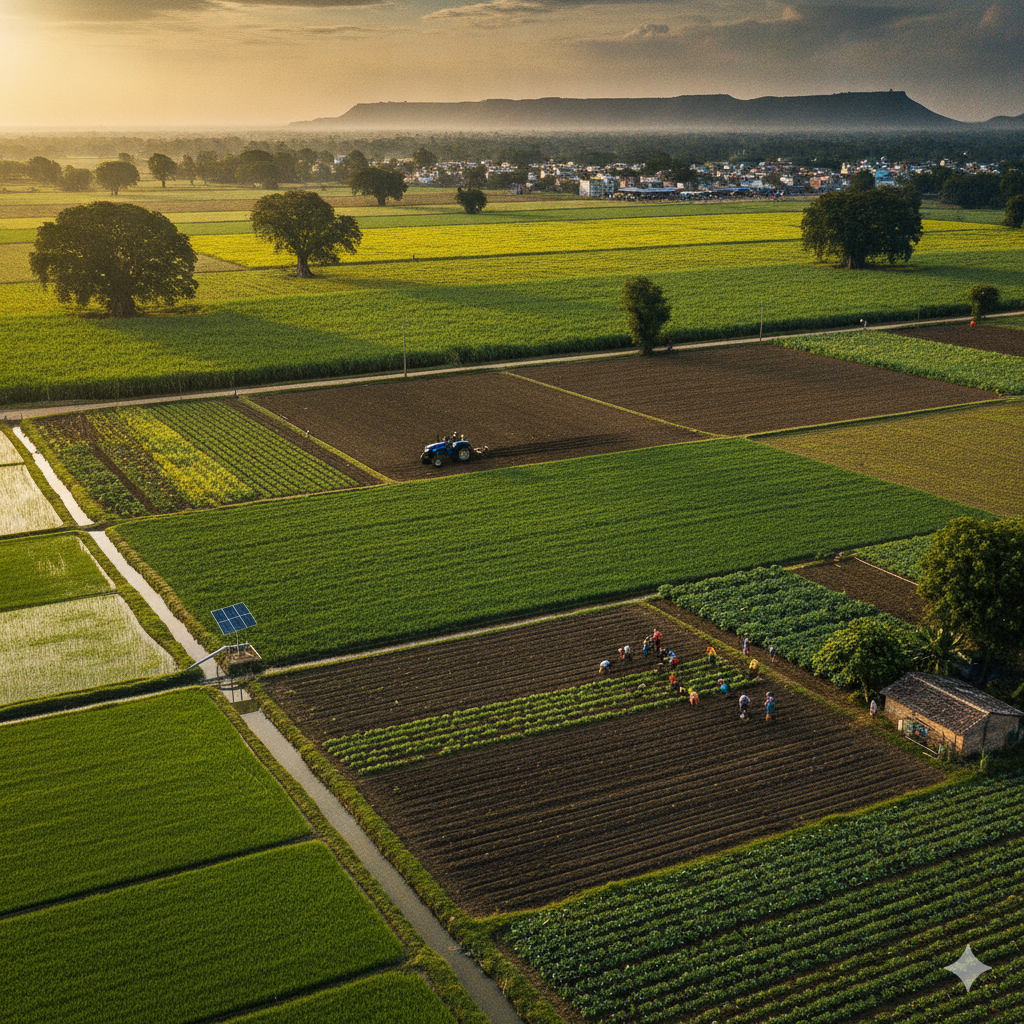
What Is the Difference Between Farmland and Agricultural Land? A Complete Guide
Introduction
Land is one of the most important natural resources on Earth, especially for food production and rural livelihoods. In discussions about farming, real estate, and land investment, two terms are often used interchangeably: farmland and agricultural land.
However, many people are confused about whether they mean the same thing or if there is a difference between them.
The answer is: they are related but not exactly the same.
This blog explains the difference between farmland and agricultural land in simple terms, along with their uses, classifications, and importance in farming and investment.
What Is Agricultural Land?
Agricultural land refers to any land used for agricultural activities, including crop production, livestock grazing, plantations, and allied farming activities.
It is a broad term that includes all types of land used in agriculture.
Types of Agricultural Land
Agricultural land can include:
- Cropland (for growing crops like rice, wheat, maize)
- Pastureland (for grazing animals like cattle, sheep, goats)
- Orchards (fruit plantations like mango, apple, citrus)
- Plantation land (tea, coffee, rubber, sugarcane)
- Mixed farming land
Key Features of Agricultural Land
- Used for farming-related activities
- Can include both crops and livestock use
- Managed or natural depending on region
- Often regulated by government land laws
In simple terms, agricultural land is the umbrella category.
What Is Farmland?
Farmland is a more specific type of agricultural land that is primarily used for growing crops and farming operations.
It usually refers to land actively cultivated for agricultural production.
Types of Farmland
Farmland generally includes:
- Crop fields (rice, wheat, corn, vegetables)
- Irrigated farms
- Dry land farms
- Commercial farming plots
- Managed agricultural estates
Key Features of Farmland
- Actively cultivated for crop production
- May or may not include livestock use
- Often privately owned or leased
- Used for commercial or subsistence farming
Farmland is a subset of agricultural land focused more on cultivation.
Key Difference Between Farmland and Agricultural Land
Here is a simple comparison:
Feature | Agricultural Land | Farmland |
Meaning | Broad category of all farming-related land | Specific land used mainly for crop cultivation |
Scope | Includes crops, livestock, plantations, grazing | Mainly crop production land |
Usage | Farming + animal husbandry + plantations | Primarily crop farming |
Classification | Umbrella term | Sub-category |
Examples | Pastures, orchards, plantations | Wheat fields, rice farms, vegetable farms |
Nature | May be natural or managed | Usually actively cultivated |
Simple Explanation
To make it easier:
- Agricultural land = all land used for farming activities
- Farmland = land specifically used to grow crops
So, all farmland is agricultural land, but not all agricultural land is farmland.
Real-Life Example
Let’s take a farm in India:
- 50 acres used for wheat farming
- 20 acres used for cattle grazing
- 10 acres used for mango orchard
Classification:
- Agricultural land = 80 acres (total farming land)
- Farmland = 50 acres (crop-growing land only)
Why This Difference Matters
Understanding the difference is important for several reasons:
1. Land Investment Decisions
Investors must know whether land is suitable for:
- Crop production
- Livestock farming
- Mixed agriculture
2. Legal Classification
In many countries, laws differ based on land type.
Some rules apply only to:
- Agricultural land
- Farmland used for cultivation
3. Taxation Rules
Tax benefits may vary depending on land classification.
4. Farming Purpose
Farmers choose land based on whether they want:
- Crop farming (farmland)
- Mixed agricultural activity (agricultural land)
Farmland vs Agricultural Land in India
In India, the distinction is especially important due to state-level land laws.
India classifies land broadly as agricultural land, but usage determines whether it is considered farmland or other agricultural use.
Common Usage:
- Agricultural land: Includes all farming-related land types
- Farmland: Refers more specifically to crop-growing plots
State regulations may also affect ownership, conversion, and usage rights.
Can Agricultural Land Be Converted into Farmland?
Yes. In many cases:
- Grazing land can be converted into cropland
- Plantation land can be converted into crop farming
- Mixed agricultural land can be reorganized
However, conversion depends on:
- Soil quality
- Water availability
- Government approval (in some regions)
- Land classification laws
Investment Perspective
From an investment point of view:
Agricultural Land
- Broader investment category
- Includes multiple income sources
- More diversified usage
Farmland
- Focused on crop production
- Easier to evaluate productivity
- Often preferred for structured farming investments
Both can be valuable depending on location and management.
Common Misconceptions
1. They are the same
Not true—farmland is a subset of agricultural land.
2. Farmland always includes livestock
Not necessarily; it mainly refers to crop production land.
3. Agricultural land cannot be used for crops
Incorrect—crop farming is one of its main uses.
Conclusion
The difference between farmland and agricultural land is simple but important.
- Agricultural land is the broad category that includes all types of farming-related land.
- Farmland is a specific type of agricultural land mainly used for crop cultivation.
Understanding this difference helps in making better decisions in farming, investment, taxation, and land management.
In short, all farmland is agricultural land, but not all agricultural land is farmland—a distinction that matters in both agriculture and real estate planning.
Introduction
Farmland in India has become an increasingly popular investment option due to rising land prices, growing food demand, and interest in sustainable and lifestyle-based living. Investors, NRIs, and urban professionals are now actively exploring agricultural land as a long-term asset class.
A common question is: Which is the best farmland in India?
The truth is that there is no single “best” farmland location in India. The ideal farmland depends on your purpose—whether it is investment appreciation, farming income, farmhouse development, or long-term land holding. However, certain regions in India consistently stand out due to infrastructure growth, soil quality, water availability, and demand.
This blog explores the best farmland locations in India, what makes them attractive, and how to choose the right farmland for investment.
What Makes Farmland “Best”?
Before identifying locations, it is important to understand the key factors that define high-quality farmland:
1. Soil Quality
Fertile soil supports higher crop yields and better agricultural returns.
2. Water Availability
Regions with reliable rainfall or groundwater access are more productive.
3. Connectivity
Proximity to highways, cities, and markets increases land value.
4. Infrastructure Development
Industrial corridors, airports, and highways boost appreciation.
5. Legal Clarity
Clear land titles and minimal disputes are essential.
6. Long-Term Appreciation Potential
Areas near expanding cities often provide strong capital growth.
1. Bangalore Rural Region (Karnataka)
Bengaluru outskirts are among the most popular farmland investment destinations in India.
Popular Areas:
- Devanahalli
- Nandi Hills region
- Hoskote
- Anekal
- Kanakapura Road
Why It Is Attractive:
- Strong IT-driven urban expansion
- Airport and infrastructure development
- High demand for farmhouses and eco-living
- Good long-term appreciation potential
Best For:
- Farmhouse investment
- Long-term land appreciation
- Lifestyle farming
2. Pune and Maharashtra Belt
Pune and surrounding regions are also highly sought after for farmland investment.
Popular Areas:
- Lonavala
- Talegaon
- Mulshi
- Nashik outskirts
Why It Is Attractive:
- Close to Mumbai-Pune industrial corridor
- Strong tourism and farmhouse demand
- Fertile agricultural land
- Good climate conditions
Best For:
- Farmhouse projects
- Agro-tourism
- Long-term appreciation
3. Hyderabad Peri-Urban Region (Telangana)
Hyderabad has become one of the fastest-growing farmland investment markets.
Popular Areas:
- Shankarpally
- Mokila
- Chevella
- Yadagirigutta
Why It Is Attractive:
- IT and pharma industry growth
- Outer ring road development
- Affordable farmland compared to Bangalore
- Strong appreciation potential
Best For:
- Investment-focused farmland
- Future urban expansion benefits
4. Chennai Outskirts (Tamil Nadu)
Chennai offers good farmland opportunities in its outskirts.
Popular Areas:
- ECR (East Coast Road)
- Chengalpattu
- Sriperumbudur
- Oragadam
Why It Is Attractive:
- Industrial corridor development
- Coastal connectivity
- Growing demand for weekend homes
- Mixed agricultural potential
5. Coimbatore Region (Tamil Nadu)
Coimbatore is known for its fertile land and agricultural productivity.
Why It Is Attractive:
- Excellent soil fertility
- Strong water resources
- Agricultural tradition
- Moderate pricing compared to metro cities
Best For:
- Active farming
- Plantation crops
- Long-term agricultural income
6. Delhi NCR Peripheral Regions
New Delhi outskirts and NCR regions also offer farmland investment opportunities.
Popular Areas:
- Sohna (Haryana)
- Yamuna Expressway region
- Greater Noida outskirts
- Panipat and Karnal
Why It Is Attractive:
- Rapid infrastructure development
- Highway connectivity
- High land appreciation potential
- Farmhouse demand
7. Gujarat Agricultural Belt
Gujarat has strong agricultural productivity and investment potential.
Popular Areas:
- Ahmedabad outskirts
- Vadodara
- Surat rural belt
Why It Is Attractive:
- Strong industrial base
- Good irrigation systems
- Business-friendly environment
- Stable land appreciation
Which Is the Best Farmland in India?
There is no single best farmland location in India. Instead, the “best” depends on your goal:
For High Appreciation:
- Bangalore outskirts
- Hyderabad outskirts
- Delhi NCR regions
For Farming Income:
- Coimbatore
- Maharashtra rural belt
- Gujarat agricultural regions
For Farmhouses and Lifestyle:
- Pune (Lonavala, Mulshi)
- Bangalore rural areas
- NCR outskirts
Emerging Trend: Managed Farmland Projects
Modern investors are also exploring managed farmland projects offered by companies such as:
Hosachiguru
These projects provide:
- Managed farming services
- Regenerative agriculture practices
- Passive income options
- Structured farmland ownership
This model is becoming popular among urban investors.
Risks of Buying Farmland in India
Even in the best locations, farmland investment carries risks:
- Legal title issues
- State-specific purchase restrictions
- Water scarcity in some regions
- Low liquidity
- Long-term investment horizon
Proper due diligence is essential before investing.
Tips to Choose the Best Farmland
- Always verify land ownership documents
- Check water availability (borewell, irrigation)
- Prefer areas near infrastructure growth
- Avoid disputed or unclear land titles
- Consider long-term appreciation potential
- Consult legal and agricultural experts
Future of Farmland Investment in India
Farmland in India is expected to grow in importance due to:
- Urban expansion
- Rising food demand
- Eco-living trends
- Agritech advancements
- Limited availability of fertile land
As cities expand, peri-urban farmland is likely to become more valuable over time.
Conclusion
The best farmland in India depends on your investment objective. While regions like Bangalore, Hyderabad, Pune, and NCR offer strong appreciation potential, areas like Coimbatore and Gujarat provide better farming income opportunities.
Instead of searching for a single “best” location, investors should focus on legal clarity, water availability, infrastructure growth, and long-term goals.
With proper research and planning, farmland can be a strong long-term asset in India’s growing economy.