What Is Land (Class 7)? Meaning, Types,Uses, and Explanation for Students
Introduction
In Class 7 Geography, one of the first and most important topics students learn is land. Land is a basic natural resource that supports all life on Earth. It is the surface of the Earth where we live, grow food, build houses, and carry out economic activities.
Understanding what land is helps students learn about agriculture, forests, industries, and how humans use natural resources.
In this blog, we will explain what land is in Class 7, its meaning, types, uses, and importance in simple language.
What Is Land? (Class 7 Definition)
In simple Class 7 terms:
Land is the solid surface of the Earth that is not covered by water and is used by humans for various activities.
Land includes:
- Mountains
- Plains
- Plateaus
- Deserts
- Valleys
- Forest areas
It is one of the most important natural resources because it supports life and human activities.
Importance of Land
Land is important because:
1. It Supports Life
All plants, animals, and humans depend on land for survival.
2. It Provides Food
We grow crops on land, which becomes our food.
3. It Provides Shelter
Houses, cities, and villages are built on land.
4. It Supports Economy
Industries, agriculture, and trade all depend on land.
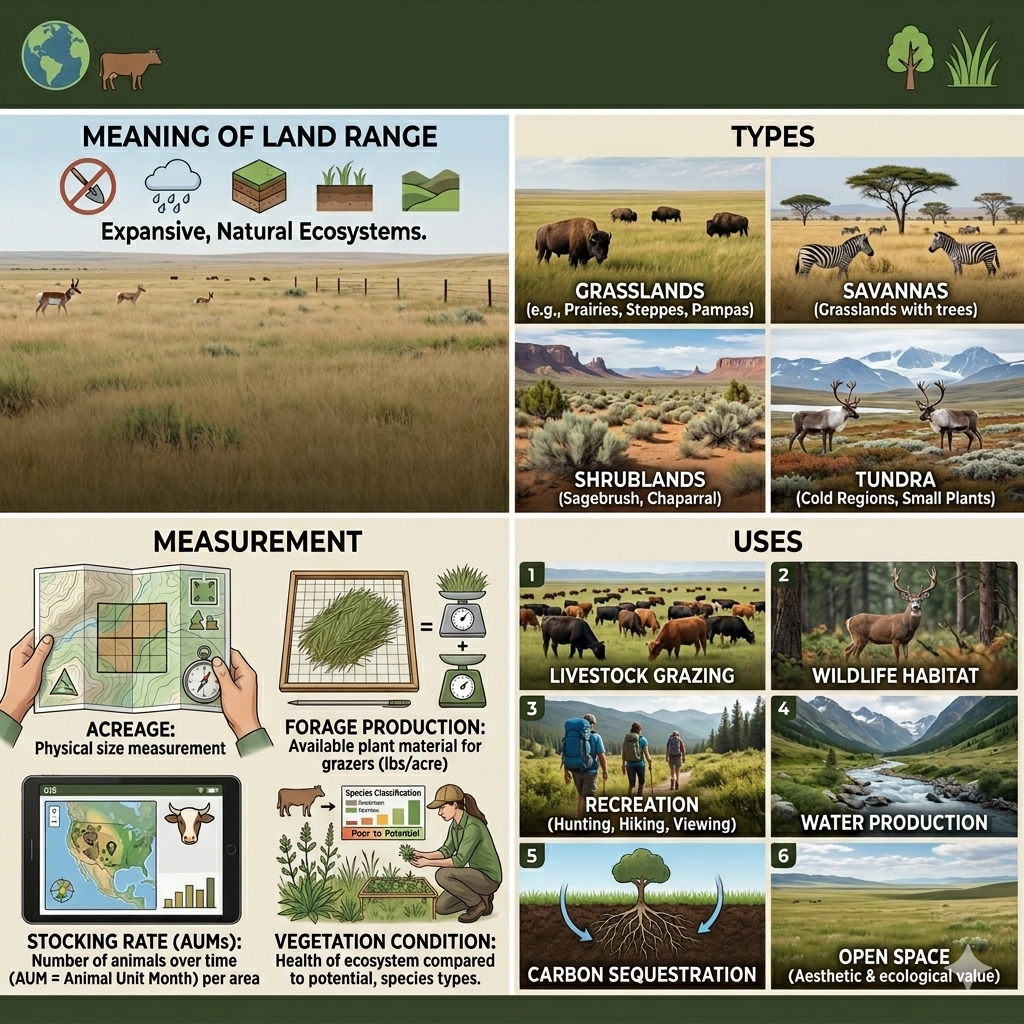
Types of Land (Class 7 Geography)
Land is classified into different types based on its features and use.
1. Agricultural Land
This land is used for farming.
Uses:
- Growing crops like wheat, rice, maize
- Vegetable and fruit cultivation
- Animal grazing
Agricultural land is very important for food production.
2. Forest Land
This land is covered with trees and vegetation.
Uses:
- Provides oxygen
- Supports wildlife
- Supplies wood and medicinal plants
Forests help maintain ecological balance.
3. Residential Land
This land is used for living purposes.
Uses:
- Houses
- Villages
- Cities
- Apartments
People build homes and settlements on residential land.
4. Industrial Land
This land is used for factories and industries.
Uses:
- Manufacturing goods
- Production units
- Warehouses
Industrial land supports economic development.
5. Barren Land
This land cannot be used for farming or construction easily.
Reasons:
- Rocky surface
- Desert conditions
- Low fertility
Examples include deserts and rocky mountains.
6. Water Bodies (Related Land Use Study)
Although not land, water bodies are studied with land resources.
Examples:
- Rivers
- Lakes
- Oceans
They are important for irrigation, transport, and climate control.
Land Use in Class 7
Land use means how humans use land for different activities.
Major Land Uses:
- Agriculture
- Forestry
- Housing
- Industries
- Transport and roads
- Recreation
Factors Affecting Land Use
Several factors decide how land is used:
1. Physical Factors
- Climate
- Soil type
- Relief (mountains, plains)
2. Human Factors
- Population
- Technology
- Economic development
- Culture
Conservation of Land
Class 7 Geography also teaches that land must be protected.
Ways to conserve land:
- Avoid deforestation
- Practice sustainable farming
- Prevent soil erosion
- Plant trees
- Use land wisely
Why Land Is Called a Natural Resource
Land is called a natural resource because:
- It is provided by nature
- It cannot be created by humans
- It is essential for survival
- It supports all economic activities
Simple Example for Students
Think of land as a big stage:
- Farmers use it to grow food
- Builders use it to construct houses
- Industries use it to produce goods
- Forests grow naturally on it
Without land, none of these activities would be possible.
Frequently Asked Questions (FAQs)
What is land in Class 7 geography?
Land is the solid surface of the Earth used for living, farming, building, and other activities.
What are the main types of land?
The main types are agricultural land, forest land, residential land, industrial land, and barren land.
Why is land important?
Land is important for food, shelter, economy, and environmental balance.
Conclusion
In Class 7 Geography, land is defined as the Earth’s surface used for various human activities. It is one of the most important natural resources because it supports life, provides food, and enables economic development.
Understanding land and its types helps students learn how humans interact with nature and how important it is to use land responsibly.
In short, land is the foundation of life and development on Earth.