
What Is the Purpose of Agricultural Land? Meaning, Uses, and Importance
Introduction
Agricultural land is one of the most important natural resources on Earth. It supports human life by producing food, raw materials, and other essential products. Without agricultural land, large-scale farming would not be possible.
So, what is the purpose of agricultural land?
In simple terms:
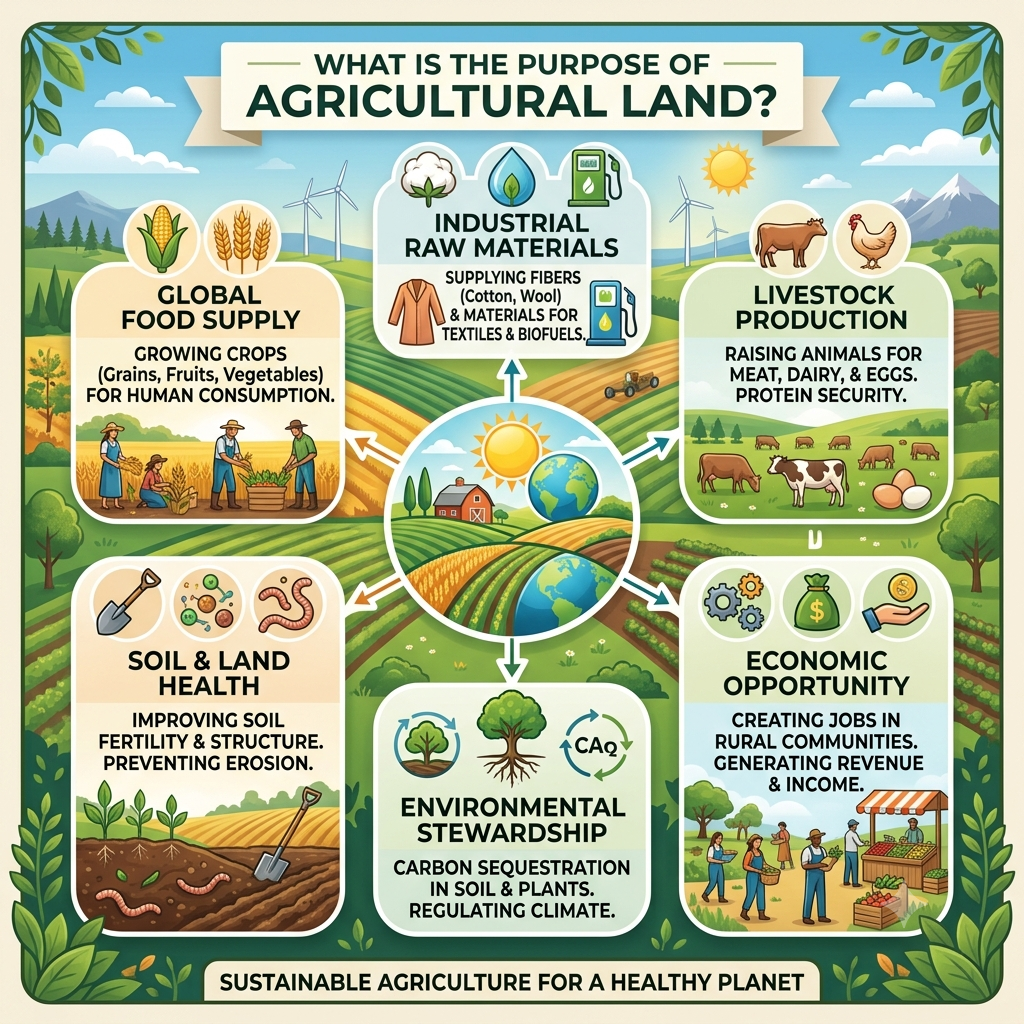
The purpose of agricultural land is to produce food, support farming activities, and sustain human and animal life.
What Is Agricultural Land?
Agricultural land is land that is used for farming activities such as growing crops, vegetables, fruits, and raising livestock.
It includes:
- Crop fields
- Orchards
- Plantations
- Grazing land
- Irrigated farming areas
Main Purpose of Agricultural Land
The primary purpose of agricultural land is:
To support food production and agricultural activities.
But its role goes far beyond just farming.
1. Food Production (Primary Purpose)
The most important purpose is growing food for people.
Crops grown:
- Rice
- Wheat
- Maize
- Vegetables
- Fruits
Importance:
- Feeds the global population
- Ensures food security
- Provides daily nutrition
2. Livestock Farming
Agricultural land is used for raising animals.
Livestock
Animals include:
- Cows
- Buffaloes
- Goats
- Sheep
- Poultry
Products:
- Milk
- Meat
- Eggs
3. Raw Material Supply
Agricultural land provides raw materials for industries.
Examples:
- Cotton → textile industry
- Sugarcane → sugar industry
- Jute → packaging material
- Oilseeds → edible oil
4. Economic Development
Agricultural land supports the economy by:
- Generating income for farmers
- Supporting exports
- Contributing to GDP
Many countries depend heavily on agriculture for economic growth.
5. Employment Generation
Millions of people depend on agricultural land for jobs.
Jobs include:
- Farmers
- Agricultural laborers
- Transport workers
- Food processing workers
6. Supporting Industries
Agricultural land indirectly supports many industries:
- Food processing
- Dairy industry
- Textile industry
- Biofuel production
These industries depend on farm output.
7. Environmental Balance
When managed properly, agricultural land helps the environment:
- Maintains soil fertility
- Supports biodiversity
- Promotes sustainable ecosystems
Example of Agricultural Land in India
India
India uses agricultural land for:
- Rice farming in West Bengal
- Wheat farming in Punjab
- Sugarcane farming in Uttar Pradesh
- Tea plantations in Assam
- Coffee farms in Karnataka
Importance of Agricultural Land
Agricultural land is important because it:
- Ensures food security
- Supports rural livelihoods
- Provides raw materials
- Strengthens the economy
- Maintains ecological balance
Challenges Facing Agricultural Land
- Urban expansion
- Soil degradation
- Water scarcity
- Climate change
- Overuse of chemicals
Future of Agricultural Land
The future depends on:
- Smart farming technology
- Organic farming
- Precision agriculture
- Better irrigation systems
- Sustainable land use
Conclusion
The purpose of agricultural land is to produce food, support livestock farming, supply raw materials, and sustain the economy. It is essential for human survival and development.
In simple terms, agricultural land exists to feed people, support industries, and maintain global food systems.