
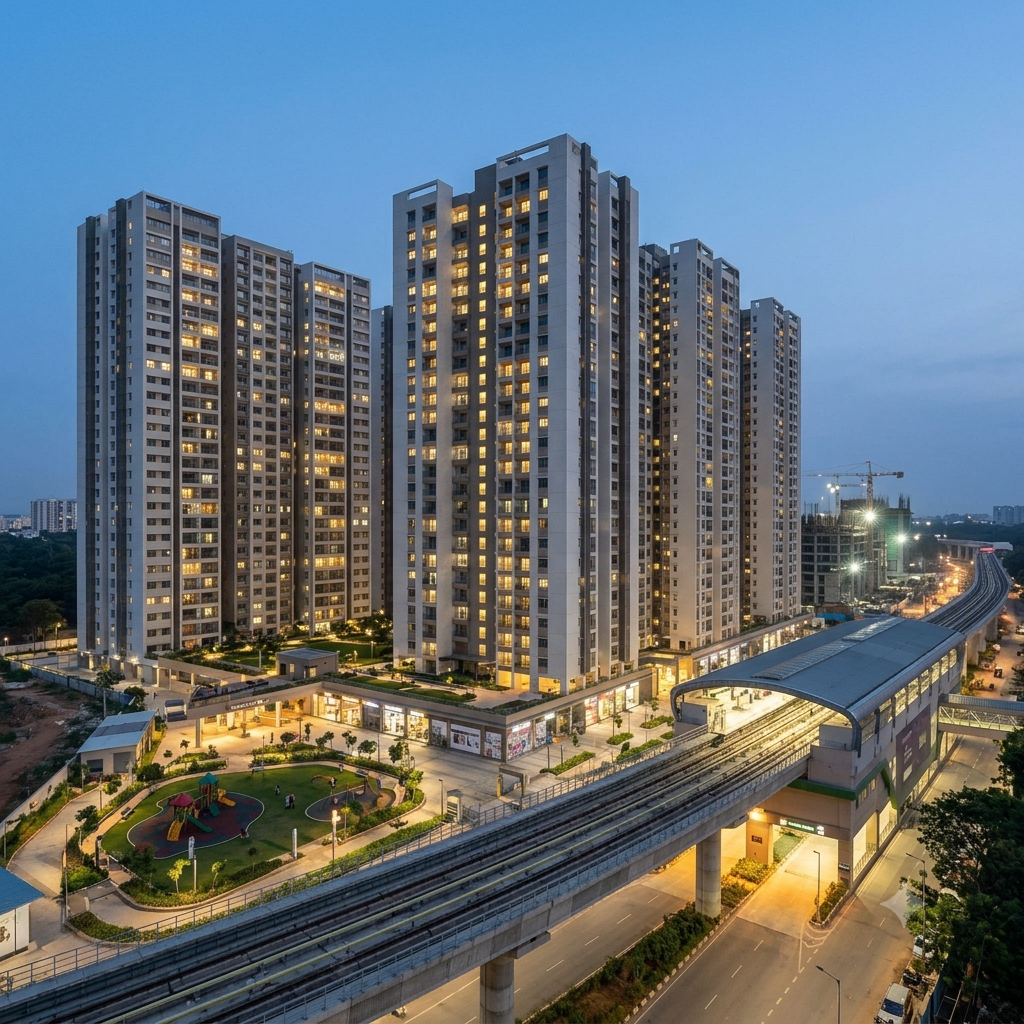
Where to Buy Investment Property in Bangalore
Bangalore (Bengaluru) remains one of India’s strongest real estate investment markets due to its IT-driven economy, population growth, and continuous infrastructure expansion. But not all areas offer the same returns.
If you’re asking “Where should I buy investment property in Bangalore in 2026?”, the answer depends on whether your goal is:
- 💰 High rental income
- 📈 Long-term appreciation
- ⚖️ Balanced growth + stability
This guide breaks down the best investment locations in Bangalore in 2026, based on growth potential, rental demand, and infrastructure development.
🏆 Top Investment Strategy for Bangalore (2026)
Before location selection, understand this:
Best investment formula:
👉 Buy near IT hubs + upcoming infrastructure + metro connectivity
These factors drive:
- Rental demand
- Price appreciation
- Resale value
🔥 1. Whitefield (Best Overall Investment Zone)
Whitefield is one of the most established IT and residential hubs.
Why invest here:
- Large IT workforce (steady rental demand)
- Metro connectivity improving accessibility
- Strong resale market
- Premium gated communities
Best property type:
- 2BHK & 3BHK apartments in gated societies
ROI outlook:
- 📈 Strong appreciation
- 💰 High rental demand
👉 One of the safest long-term investment bets in Bangalore.
🚀 2. Sarjapur Road (High Growth Corridor)
Sarjapur Road is one of the fastest-growing real estate corridors.
Why invest here:
- Close to ORR tech corridor
- Rapid residential development
- Upcoming infrastructure projects
Pros:
- High appreciation potential
- Strong future demand
- Modern housing projects
Risks:
- Some areas still developing infrastructure
👉 Best for long-term capital growth.
💼 3. Outer Ring Road (ORR) – Bellandur, Marathahalli, Mahadevapura
The ORR corridor is the core IT employment belt of Bangalore.
Why invest here:
- Major tech parks and offices
- Extremely high rental demand
- High-income tenant base
Pros:
- Strong rental yields
- Premium appreciation
- Always in demand
Cons:
- High entry prices
- Traffic congestion
👉 Best for rental income + stable appreciation.
✈️ 4. North Bangalore (Hebbal, Yelahanka, Devanahalli)
North Bangalore is the future growth zone.
Why invest here:
- Airport-driven development
- Large infrastructure projects
- Lower congestion compared to city center
Pros:
- High appreciation potential
- Spacious new developments
- Growing commercial zones
Best for:
- Long-term investors (5–10+ years)
🏢 5. Electronic City (Affordable Investment Hub)
Electronic City is one of the most budget-friendly IT hubs.
Why invest here:
- Strong IT employment base (Infosys, Wipro, etc.)
- Affordable property prices
- Metro connectivity improving
Pros:
- Good rental demand
- Low entry cost
- Stable returns
Cons:
- Distance from central Bangalore
👉 Best for first-time investors.
🌆 6. HSR Layout (Balanced Investment Area)
HSR Layout offers a mix of lifestyle and investment stability.
Why invest here:
- Close to ORR tech corridor
- High demand from professionals
- Well-planned layout
Pros:
- Stable appreciation
- Good rental market
- Strong livability
👉 Ideal for balanced investors.
🏙️ 7. Hebbal (Premium North Bangalore Hub)
Hebbal is a fast-growing premium zone.
Why invest here:
- Airport connectivity
- Luxury residential projects
- Commercial growth
Pros:
- Strong long-term appreciation
- High-end tenant base
- Infrastructure-led growth
📊 8. Kanakapura Road (Emerging Growth Area)
Kanakapura Road is gaining traction due to metro expansion.
Why invest here:
- New metro connectivity
- Affordable pricing
- Green and less congested environment
Pros:
- Entry-level investment opportunities
- Future appreciation potential
🧭 9. Thanisandra Road (North Bangalore Hotspot)
Thanisandra is becoming a major residential hub.
Why invest here:
- Close to Manyata Tech Park
- Rapid apartment development
- Strong rental demand
Pros:
- IT-driven rental market
- High appreciation potential
🏡 10. Whitefield Extension & Varthur Road
These are emerging micro-markets near Whitefield.
Why invest here:
- Spillover demand from Whitefield
- New gated communities
- Infrastructure expansion
Pros:
- Lower entry price than Whitefield
- Strong future growth
📊 Quick Investment Comparison Table
Area | Best For | Price Level | ROI Potential |
Whitefield | Balanced investing | High | Strong |
Sarjapur Road | Growth investors | Medium | Very High |
ORR Corridor | Rental income | High | Strong |
North Bangalore | Long-term growth | Medium | Very High |
Electronic City | Budget investors | Low | Medium |
HSR Layout | Stability | High | Strong |
Hebbal | Premium investment | High | Strong |
Kanakapura Road | Entry-level buyers | Low | Medium-High |
Thanisandra | Rental demand | Medium | Strong |
🧠 How to Choose the Right Area
Ask yourself:
💰 1. Budget?
- Low budget → Electronic City, Kanakapura Road
- Mid budget → Sarjapur, Thanisandra
- High budget → Whitefield, Hebbal, ORR
📈 2. Investment Goal?
- Rental income → ORR, Whitefield, Thanisandra
- Long-term appreciation → North Bangalore, Sarjapur
- Balanced → HSR Layout
🧑💻 3. Tenant Demand?
Always prioritize:
- IT corridors
- Metro-connected zones
- Gated communities
⚠️ Common Investment Mistakes
1. Buying only based on price
Cheap areas may not appreciate well.
2. Ignoring infrastructure timelines
Delayed projects can slow returns.
3. Overpaying in premium micro-markets
Entry price matters for ROI.
4. Not considering rental demand
No tenants = weak cash flow.
📈 Bangalore Real Estate Outlook (2026)
- Strong IT-driven demand continues
- Metro expansion improving connectivity
- North & East Bangalore growing fastest
- Rental demand remains very strong in tech corridors
👉 Overall: stable long-term growth market with strong micro-location differences.
🏁 Final Thoughts
The best places to buy investment property in Bangalore in 2026 are:
- 🥇 Whitefield (balanced growth + rental demand)
- 🥈 Sarjapur Road (high appreciation potential)
- 🥉 ORR Corridor (best rental income zone)
- 🚀 North Bangalore (future mega-growth area)
👉 The key takeaway:
In Bangalore real estate, micro-location matters more than the city itself.
Choosing the right corridor near IT hubs and infrastructure growth zones is what determines your long-term success.