
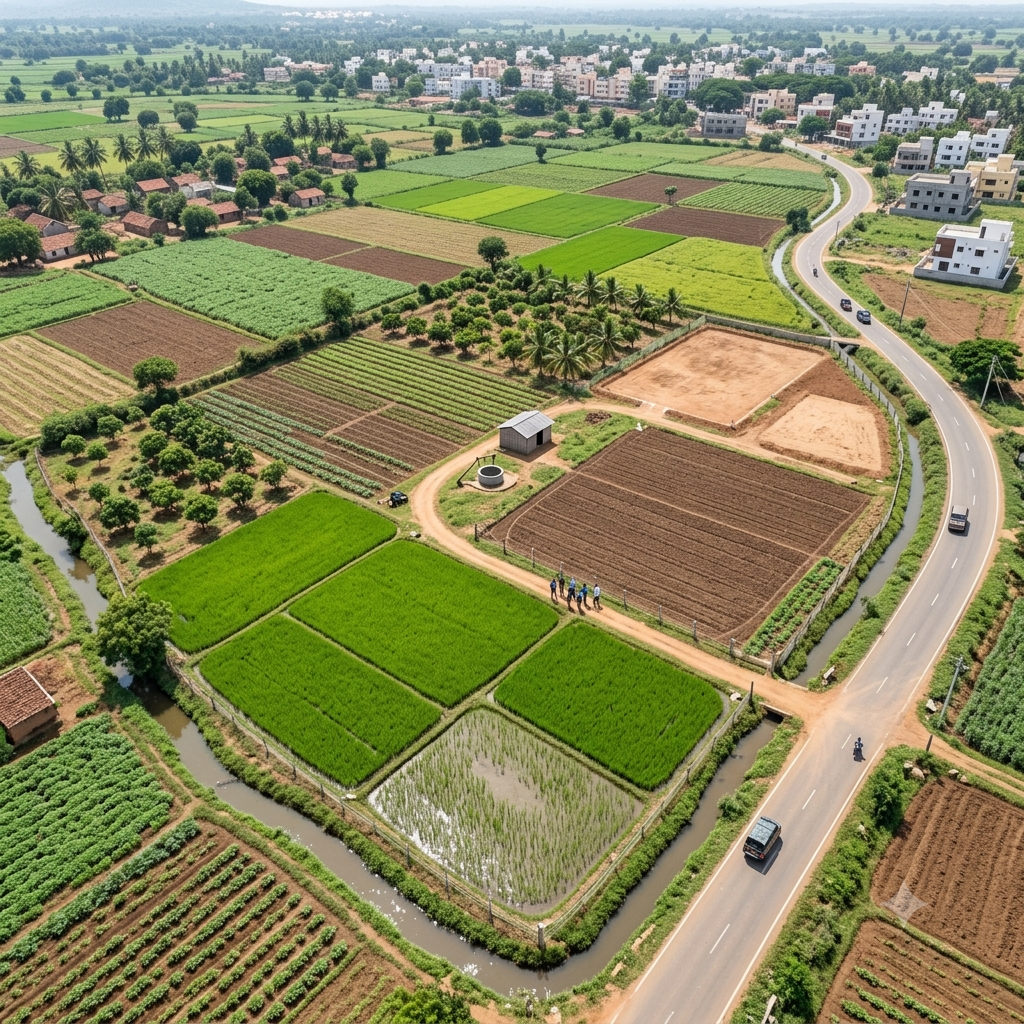
What Counts as Rural Agricultural Land? (Income Tax Definition)
Understanding What Counts as Rural Agricultural Land? (Income Tax Definition) is important for landowners, farmers, and real estate investors because taxation rules in India treat rural agricultural land differently from urban land. In many cases, gains from rural agricultural land are exempt from capital gains tax, making it a key concept in property planning and investment decisions.
In this guide on What Counts as Rural Agricultural Land? (Income Tax Definition), we will explain the official income tax definition, distance criteria, classification rules, examples, and tax implications in simple terms.
What is Rural Agricultural Land?
Rural agricultural land refers to land used for farming or agricultural activities that is located outside notified urban limits as defined under the Income Tax Act, 1961.
In the context of What Counts as Rural Agricultural Land? (Income Tax Definition), the key factor is not just usage (farming), but also location.
Basic meaning:
- Land used for agriculture
- Located outside municipal or urban notified limits
- Not classified as urban land under income tax rules
What Counts as Rural Agricultural Land? (Income Tax Definition)
Under Indian Income Tax law, agricultural land is classified as rural or urban based on its distance from a municipality.
A land is considered “rural agricultural land” if:
- It is located beyond 2 km, 6 km, or 8 km from municipal limits (depending on population of the municipality), AND
- The population of the municipality is considered in classification rules
This definition is central to What Counts as Rural Agricultural Land? (Income Tax Definition).
Distance Criteria for Rural Agricultural Land
The classification depends on population size of the nearest municipality:
1. Municipality population > 10 lakh
- Rural land must be beyond 8 km
2. Municipality population between 1 lakh and 10 lakh
- Rural land must be beyond 6 km
3. Municipality population < 1 lakh
- Rural land must be beyond 2 km
If land falls within these limits, it is considered urban agricultural land.
Why Classification Matters in Income Tax
The What Counts as Rural Agricultural Land? (Income Tax Definition) is important because:
1. Tax exemption
- Capital gains from rural agricultural land are generally not taxable
2. Urban land taxation
- Urban agricultural land is treated as a capital asset and taxed
3. Investment planning
- Impacts real estate and farmland investment decisions
Examples of Rural Agricultural Land
To understand What Counts as Rural Agricultural Land? (Income Tax Definition), consider:
Example 1:
A farmland located 10 km outside a city with population above 10 lakh
👉 Classified as rural agricultural land
Example 2:
A farm 3 km outside a small town with population below 1 lakh
👉 May be urban agricultural land
What Does NOT Count as Rural Agricultural Land?
Land will NOT be considered rural agricultural land if:
- It is within specified distance from municipality
- It is inside municipal or corporation limits
- It is converted into non-agricultural (NA) use
- It is used for commercial/residential construction
Tax Treatment of Rural Agricultural Land
Understanding What Counts as Rural Agricultural Land? (Income Tax Definition) also includes taxation rules:
Rural agricultural land:
- Not treated as capital asset
- No capital gains tax applicable
- Income from agriculture may be exempt (subject to conditions)
Urban agricultural land:
- Treated as capital asset
- Subject to capital gains tax
Importance in Real Estate Investment
This classification affects:
- Land buying decisions
- Long-term investment planning
- Tax liability on sale
- Conversion planning (NA conversion impact)
Common Mistakes in Understanding Rural Land
- Assuming all farmland is tax-free
- Ignoring distance criteria
- Not checking municipality classification
- Confusing agricultural use with rural classification
Tips for Buyers and Investors
- Always verify distance from municipal limits
- Check population classification of nearest town
- Confirm land records before purchase
- Consult a tax advisor for sale planning
- Verify zoning and land-use status
FAQ – What Counts as Rural Agricultural Land? (Income Tax Definition)
What is rural agricultural land as per income tax?
It is agricultural land located outside specified municipal distance limits and not treated as a capital asset.
Is rural agricultural land taxable?
Capital gains from rural agricultural land are generally not taxable.
What is the distance rule for rural land?
2 km, 6 km, or 8 km depending on municipality population.
Is all farmland rural agricultural land?
No, only land outside municipal limits as per rules qualifies.
Why is classification important?
It determines whether capital gains tax applies on sale.
Conclusion
The What Counts as Rural Agricultural Land? (Income Tax Definition) is a key concept in Indian taxation that determines whether agricultural land is treated as a taxable capital asset. The classification depends mainly on distance from municipal limits and population size. Understanding these rules helps investors make smarter decisions and optimize tax benefits when buying or selling farmland.