Managed Farmland in India: Benefits, Investment & Farming, and the Future of Sustainable Agriculture
Introduction
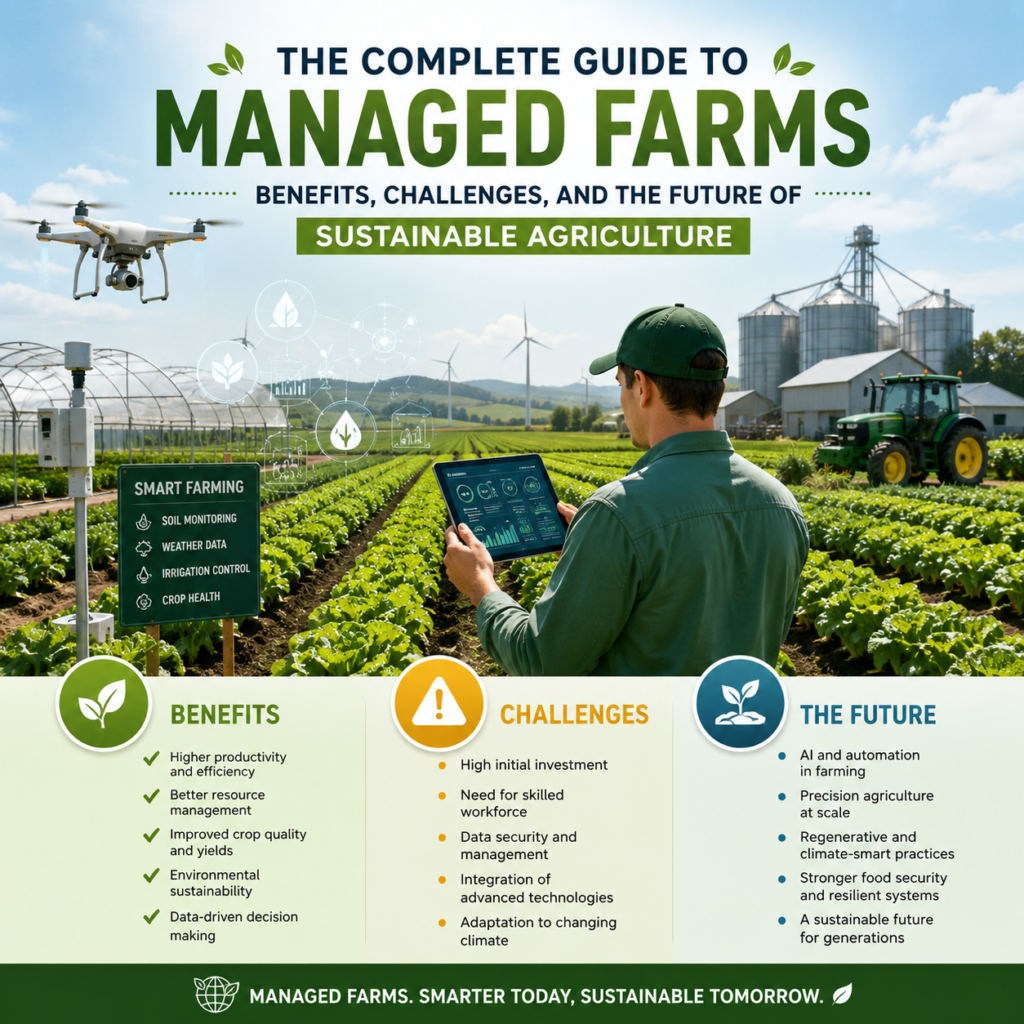
Agriculture has always been the backbone of human civilization, providing food, employment, and economic stability. However, modern farming faces unprecedented challenges, including climate change, labor shortages, rising operational costs, water scarcity, and fluctuating market prices. These challenges have made traditional farming increasingly difficult for landowners and investors who may not have the expertise or time to manage agricultural operations effectively.
This is where managed farms are transforming the agricultural landscape.
Managed farms combine professional farm management, modern agricultural practices, and advanced technology to create efficient, productive, and sustainable farming operations. Whether you are a landowner looking to maximize your property’s potential, an investor seeking long-term agricultural returns, or someone passionate about sustainable farming, managed farms offer an innovative solution that bridges expertise with opportunity.
In this comprehensive guide, we’ll explore what managed farms are, how they work, their benefits, challenges, investment potential, sustainability practices, technological innovations, and why they represent the future of agriculture.
What Are Managed Farms?
A managed farm is an agricultural property operated by experienced professionals who oversee every aspect of farming on behalf of landowners or investors. Instead of requiring owners to personally handle daily agricultural operations, a dedicated management team takes responsibility for planning, cultivation, maintenance, harvesting, marketing, and financial reporting.
The goal is simple:
Increase farm productivity
Reduce operational risks
Implement sustainable farming practices
Generate consistent agricultural returns
Preserve and improve land value
Managed farms can range from small organic farms to large commercial plantations growing fruits, vegetables, timber, spices, medicinal plants, or high-value crops.
How Managed Farms Work
A managed farming model typically follows several key stages.
1. Land Assessment
Before cultivation begins, experts evaluate:
Soil quality
Water availability
Climate conditions
Topography
Existing vegetation
Irrigation infrastructure
This assessment helps determine the most suitable crops and farming methods.
2. Farm Planning
Professional managers create a comprehensive farming strategy that includes:
Crop selection
Planting schedules
Irrigation planning
Fertilizer management
Pest control
Harvest timelines
Budget forecasting
Proper planning significantly improves long-term productivity.
3. Farm Development
Infrastructure is established or upgraded, including:
Irrigation systems
Drip irrigation
Water storage
Solar-powered pumps
Farm roads
Fencing
Storage facilities
These investments improve operational efficiency.
4. Daily Farm Operations
Professional teams handle daily responsibilities such as:
Land preparation
Planting
Water management
Weed control
Fertilization
Pest monitoring
Equipment maintenance
Labor management
Owners receive regular updates without managing these tasks themselves.
5. Harvesting and Marketing
Once crops mature, managers coordinate:
Harvest scheduling
Quality inspection
Packaging
Transportation
Wholesale marketing
Retail partnerships
Export opportunities
Effective marketing often increases profitability.
6. Reporting
Transparency is one of the defining features of managed farms.
Most providers offer:
Crop progress reports
Financial statements
Yield reports
Expense tracking
Farm photographs
Video updates
This keeps owners informed throughout the farming cycle.
Types of Managed Farms
Managed farms can specialize in different agricultural sectors.
Fruit Farms
Examples include:
Mango
Avocado
Citrus
Pomegranate
Dragon fruit
Apple
Guava
Fruit farms often generate long-term income after trees mature.
Vegetable Farms
Popular crops include:
Tomato
Onion
Potato
Capsicum
Leafy greens
Cucumber
Beans
Vegetable farming provides relatively quicker harvest cycles.
Organic Farms
Organic managed farms avoid synthetic chemicals and emphasize:
Composting
Crop rotation
Biological pest control
Soil health
Natural fertilizers
Organic produce often commands premium prices.
Agroforestry Farms
These combine:
Trees
Crops
Livestock
Biodiversity
Agroforestry improves soil fertility while creating multiple income streams.
Plantation Farms
Examples include:
Coffee
Tea
Cocoa
Rubber
Coconut
Areca nut
Bamboo
These farms focus on long-term agricultural returns.
Benefits of Managed Farms
Professional Expertise
Many landowners lack agricultural knowledge.
Managed farms provide access to:
Agronomists
Soil scientists
Irrigation experts
Farm managers
Agricultural engineers
Professional expertise improves productivity while minimizing costly mistakes.
Time Savings
Managing a farm requires constant supervision.
Professional management allows owners to:
Continue their careers
Live in another city
Travel
Diversify investments
without sacrificing farm performance.
Improved Productivity
Experienced management teams optimize:
Plant health
Water usage
Fertilizer application
Harvest timing
Crop rotation
This generally results in better yields.
Sustainable Farming Practices
Managed farms increasingly adopt sustainable agriculture through:
Water conservation
Organic fertilizers
Renewable energy
Reduced chemical use
Soil regeneration
Sustainability protects both the environment and long-term profitability.
Better Risk Management
Agriculture involves many risks, including:
Weather
Diseases
Market fluctuations
Labor shortages
Pest infestations
Professional management helps reduce these risks through careful planning and monitoring.
Technology Integration
Modern managed farms use technologies such as:
GPS mapping
Soil sensors
Drone monitoring
Automated irrigation
Weather forecasting
Farm management software
Technology improves decision-making while reducing waste.
Sustainable Agriculture and Managed Farms
Sustainability is no longer optional.
Managed farms play a vital role in protecting natural resources while maintaining productivity.
Water Conservation
Water-efficient practices include:
Drip irrigation
Rainwater harvesting
Moisture sensors
Smart irrigation scheduling
These systems reduce water waste significantly.
Soil Health
Healthy soil supports long-term productivity.
Common practices include:
Cover crops
Compost application
Crop rotation
Reduced tillage
Green manure
These methods improve fertility naturally.
Biodiversity
Managed farms encourage biodiversity by:
Planting native species
Preserving pollinators
Creating buffer zones
Maintaining tree cover
Biodiversity contributes to ecosystem stability.
Renewable Energy
Many managed farms use:
Solar pumps
Solar fencing
Solar lighting
Bioenergy systems
Renewable energy lowers operational costs while reducing emissions.
Technology in Managed Farming
Agriculture is becoming increasingly data-driven.
Drones
Drones assist with:
Crop inspection
Disease detection
Field mapping
Irrigation assessment
They allow faster and more accurate farm monitoring.
IoT Sensors
Internet of Things (IoT) devices measure:
Soil moisture
Temperature
Humidity
Nutrient levels
This enables precise resource management.
Artificial Intelligence
AI supports farmers through:
Yield prediction
Disease diagnosis
Weather analysis
Crop recommendations
AI-powered insights improve planning and efficiency.
Farm Management Software
Digital platforms simplify:
Financial records
Crop planning
Labor scheduling
Inventory management
Equipment maintenance
This improves transparency and operational control.
Investment Opportunities in Managed Farms
Managed farms have attracted increasing interest from investors looking to diversify beyond traditional asset classes.
Potential benefits include:
Tangible asset ownership
Long-term land appreciation
Agricultural income
Portfolio diversification
Exposure to the growing food sector
However, agricultural investments also involve risks, including weather variability, changing regulations, market demand, and biological factors. Investors should evaluate providers carefully, understand the business model, and seek professional advice where appropriate.
Challenges in Managed Farming
Despite many advantages, managed farms face challenges.
Climate Change
Extreme weather events can impact:
Crop yields
Water availability
Pest populations
Climate-resilient farming practices are becoming increasingly important.
Rising Input Costs
Expenses continue to increase for:
Fertilizers
Seeds
Fuel
Labor
Machinery
Efficient resource management helps control costs.
Skilled Labor Shortages
Agriculture increasingly requires trained workers capable of operating modern equipment and following advanced farming practices.
Training and mechanization help address this issue.
Market Volatility
Crop prices fluctuate due to:
Supply and demand
Imports and exports
Consumer preferences
Global economic conditions
Diversification reduces financial risk.
How to Choose the Right Managed Farm
Before selecting a managed farming provider, consider the following factors.
Experience
Look for:
Years in operation
Successful projects
Professional qualifications
Agricultural expertise
Transparency
A reliable provider should offer:
Regular updates
Financial reporting
Farm visits
Clear communication
Sustainability
Ask about:
Water management
Soil conservation
Organic practices
Biodiversity initiatives
Technology
Modern providers should utilize technologies that improve efficiency and enable informed decision-making.
Legal Documentation
Ensure all agreements clearly define:
Ownership
Responsibilities
Revenue sharing
Maintenance
Exit terms
Consult legal professionals before making commitments.
The Future of Managed Farms
Managed farming is expected to evolve alongside technological and environmental changes.
Key trends include:
Precision agriculture
AI-driven crop management
Climate-smart farming
Carbon farming initiatives
Increased automation
Digital marketplaces
Blockchain for supply chain transparency
Regenerative agriculture
As global demand for food continues to rise, professionally managed agricultural operations are likely to play an increasingly important role in meeting production needs while conserving natural resources.
Frequently Asked Questions
What is a managed farm?
A managed farm is an agricultural property operated by professional experts who oversee cultivation, maintenance, harvesting, and farm operations on behalf of the owner.
Who can invest in managed farms?
Managed farms may be suitable for landowners, agricultural entrepreneurs, and investors interested in professionally managed farming. Investment suitability depends on individual financial goals, regulations, and risk tolerance.
Are managed farms profitable?
Profitability varies based on crop selection, climate, market conditions, operating costs, and management quality. No returns are guaranteed.
Are managed farms sustainable?
Many managed farms prioritize sustainable practices such as efficient irrigation, soil conservation, renewable energy, and responsible resource management.
What technologies are used?
Common technologies include drones, IoT sensors, GPS mapping, weather analytics, automated irrigation, and farm management software.
Conclusion
Managed farms represent a modern approach to agriculture that combines professional expertise, scientific farming methods, and innovative technology to improve productivity and sustainability. By delegating day-to-day operations to experienced professionals, landowners and investors can participate in agriculture without managing every aspect themselves.
While agriculture remains subject to environmental and market risks, managed farming offers structured processes, improved transparency, and access to specialized knowledge that can help farms operate more efficiently. As sustainability, precision agriculture, and digital innovation continue to reshape the industry, managed farms are well positioned to contribute to the future of food production.
Whether your goal is to improve land productivity, adopt sustainable practices, or explore agricultural opportunities, understanding how managed farms operate is an important first step. Careful research, due diligence, and selecting an experienced management partner can help lay the foundation for long-term success in an evolving agricultural landscape.