
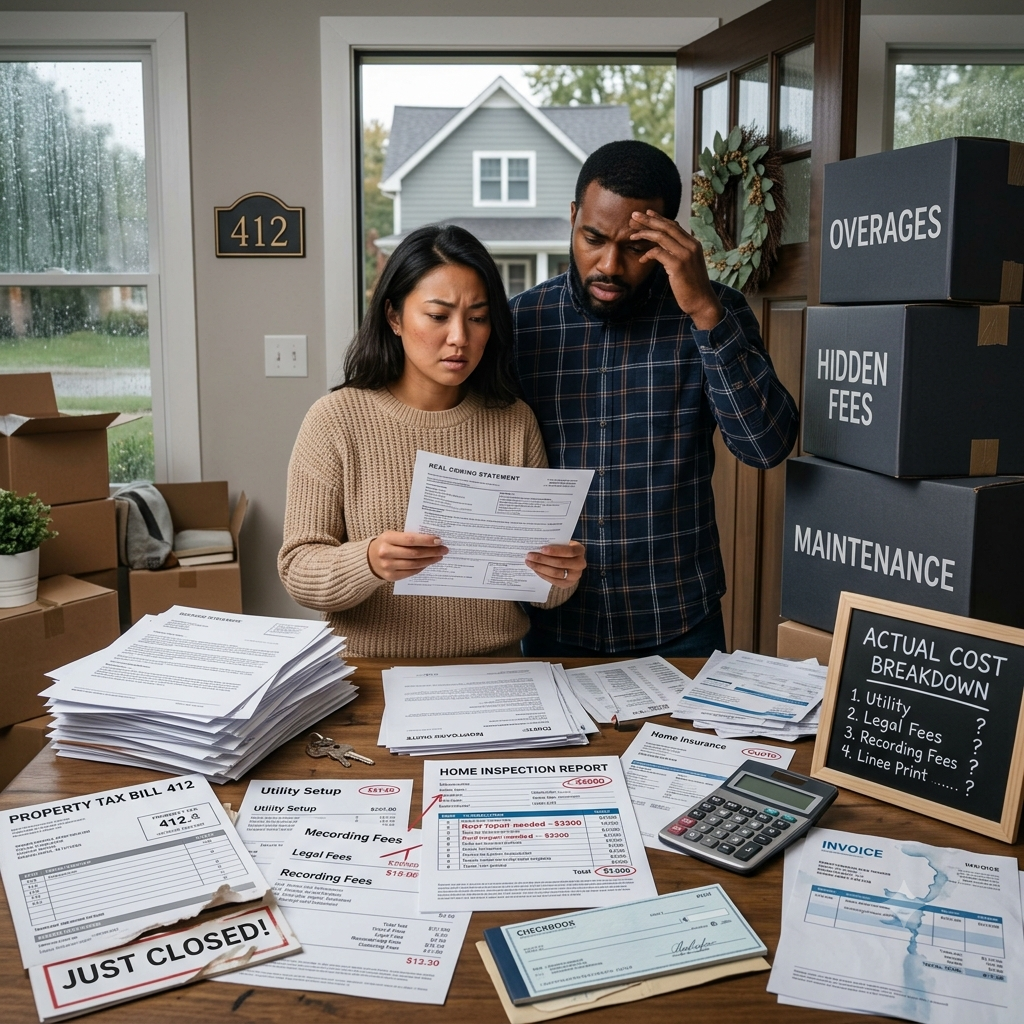
Hidden Costs of Buying a Home (Closing Costs Explained) in 2026
When most first-time buyers think about purchasing a home, they focus on one big number: the down payment. But in reality, the down payment is only part of the upfront cost.
The real surprise for many buyers comes from closing costs and other hidden expenses that can add thousands of dollars to the total price of buying a home.
In 2026, with rising property values and evolving lending fees, understanding these hidden costs is more important than ever.
This guide breaks down exactly what closing costs are, what they include, and how much you should realistically budget when buying a home.
What Are Closing Costs?
Closing costs are the fees and expenses you pay to finalize a real estate transaction. They are paid at the “closing” of the home purchase—when ownership is officially transferred to you.
These costs are separate from:
- Your down payment
- Your monthly mortgage payment
Instead, they cover the services required to process, approve, and legally complete your home purchase.
How Much Are Closing Costs in 2026?
On average, closing costs typically range from:
- 2% to 5% of the home’s purchase price
Example:
- $300,000 home → $6,000 to $15,000
- $500,000 home → $10,000 to $25,000
- $800,000 home → $16,000 to $40,000
That means even after saving for a down payment, buyers still need a significant amount of cash at closing.
Why Closing Costs Are Often “Hidden” for Buyers
Many buyers are surprised by closing costs because:
- They are not included in the listing price
- They vary by lender, location, and loan type
- They are not always clearly explained upfront
- They appear late in the buying process
In reality, lenders are required to provide a Loan Estimate early on, but many buyers overlook it or underestimate the total.
Breakdown of Common Closing Costs
Let’s look at the major components that make up closing costs.
1. Loan Origination Fees
This is what the lender charges to process your mortgage.
Typically includes:
- Application fees
- Underwriting fees
- Processing fees
Cost range:
- About 0.5% to 1% of the loan amount
For a $400,000 loan, this could be $2,000 to $4,000.
2. Appraisal Fee
Before approving your loan, the lender needs to confirm the home’s value.
An independent appraiser evaluates the property to ensure:
- The price matches market value
- The lender is not over-lending
Cost range:
- $400 to $800 (sometimes more in high-cost areas)
3. Home Inspection Fee
A home inspection is optional but highly recommended.
It checks for:
- Structural issues
- Plumbing and electrical problems
- Roof condition
- HVAC systems
Cost range:
- $300 to $700 on average
This small cost can prevent expensive surprises later.
4. Title Search and Title Insurance
This ensures the home has a clean ownership history.
It protects against:
- Ownership disputes
- Liens or unpaid debts tied to the property
Cost range:
- $1,000 to $3,000+ depending on home price
Title insurance is often required by lenders.
5. Escrow Fees
An escrow company manages the transaction, holding funds until all conditions are met.
They handle:
- Money transfers
- Document processing
- Final closing coordination
Cost range:
- $500 to $2,000
6. Property Taxes (Prepaid)
At closing, buyers often pay a portion of property taxes upfront.
This depends on:
- Local tax rates
- Time of year
- Loan structure
Some lenders require several months of taxes to be prepaid into escrow.
7. Homeowners Insurance
Lenders require proof of insurance before closing.
You may need to prepay:
- 6–12 months of coverage upfront
Cost range:
- $800 to $2,500+ annually (varies widely by location and home value)
8. Mortgage Points (Optional)
Mortgage points allow you to “buy down” your interest rate.
- 1 point = 1% of loan amount
- Can lower your monthly payment
Example:
- $300,000 loan → 1 point = $3,000
Not required, but some buyers use this to save long-term money.
9. Recording Fees and Transfer Taxes
These are government charges for legally recording the sale.
They vary by state and city but typically include:
- Deed recording fees
- Transfer taxes
Cost range:
- $100 to $2,000+
Some states are significantly more expensive than others.
10. HOA Fees (If Applicable)
If you buy in a managed community or condo, you may owe:
- HOA transfer fees
- Initial dues
- Move-in fees
Cost range:
- $200 to $1,000+ at closing
Other Hidden Costs Buyers Often Forget
Beyond closing costs, there are additional expenses that can catch buyers off guard.
Moving Costs
- Hiring movers: $500 to $2,000+
- Truck rentals: $100 to $300
- Packing supplies: $100 to $500
Immediate Repairs or Upgrades
Even if the home passes inspection, many buyers spend money immediately on:
- Painting
- Flooring
- Appliances
- Minor repairs
Utility Setup Fees
Some providers charge:
- Deposit fees
- Installation fees
- Activation charges
Furniture and Setup Costs
New homeowners often underestimate how much it costs to furnish a home:
- Sofa, bed, dining table, appliances, etc.
Who Pays Closing Costs?
Closing costs are usually split between buyer and seller, but in most cases:
- Buyers pay most closing costs
- Sellers may cover some costs in negotiations
- In competitive markets, seller contributions are less common
However, buyers can sometimes negotiate:
- Closing cost credits
- Rate buydowns
- Repair credits after inspection
How to Reduce Closing Costs
There are several ways to lower your upfront expenses:
1. Compare lenders
Different lenders charge different fees. Always shop around.
2. Negotiate seller credits
In some markets, sellers may contribute toward closing costs.
3. Ask about lender credits
Some lenders cover closing costs in exchange for a slightly higher interest rate.
4. Avoid unnecessary add-ons
Be cautious of optional fees or services you don’t need.
5. Use assistance programs
First-time buyer programs may help reduce upfront costs.
Closing Disclosure: The Most Important Document
Before closing, you’ll receive a Closing Disclosure from your lender.
It includes:
- Final loan terms
- Exact closing costs
- Monthly payment breakdown
Compare it carefully with your original Loan Estimate to ensure there are no surprises.
Example: Total Upfront Costs on a $400,000 Home
Let’s break it down:
- Down payment (10%): $40,000
- Closing costs (3%): $12,000
- Moving + setup: $2,000–$5,000
Total upfront cost:
👉 Around $54,000–$57,000
This shows why budgeting beyond just the down payment is critical.
Final Thoughts
Closing costs are one of the most overlooked parts of buying a home—but they are also one of the most important to understand.
In 2026, buyers who plan properly avoid financial stress and last-minute surprises. The key takeaway is simple:
The true cost of buying a home is always higher than the listing price + down payment.
If you account for closing costs early, compare lenders, and budget realistically, you’ll be in a much stronger position to close smoothly and confidently.
Homeownership becomes far less stressful when you understand the full financial picture—not just the sticker price.