
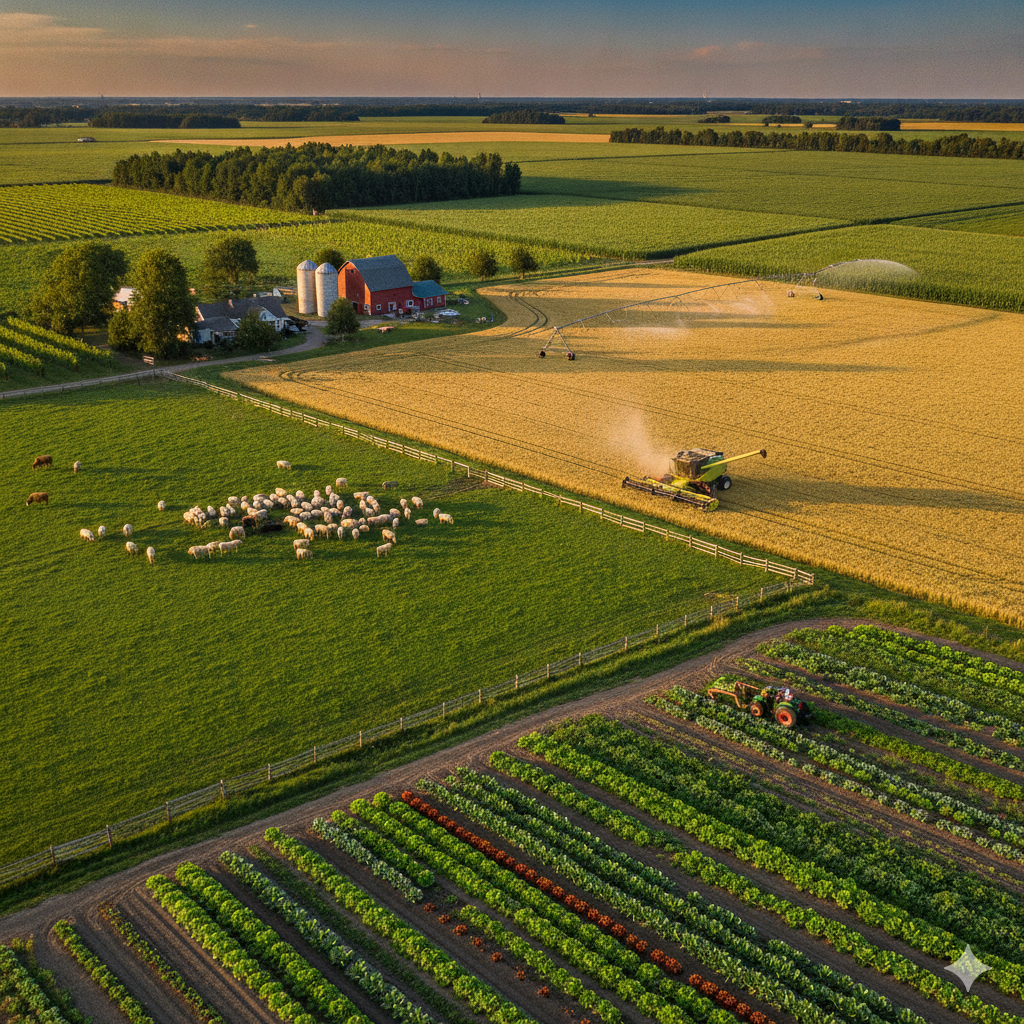
How to Use Agricultural Land: Complete Ownership Guide
You’ve bought the land. Or you’re about to. Now comes the most important question — what do you actually do with it?
Agricultural land is one of the most versatile assets you can own. But it is also one of the most misunderstood. Many buyers purchase farmland with good intentions and then let it sit idle for years — neither generating income nor appreciating at its full potential — simply because they didn’t know what to do with it.
This guide changes that. Here is a complete, practical breakdown of how to use agricultural land — whether you’re a farmer, an investor, an NRI, or an urban professional who just bought their first few acres outside Bengaluru.
First — Understand What You Own
Before deciding how to use agricultural land, you need to understand its legal classification and physical characteristics.
Check the RTC / Pahani
The Revenue Tenancy and Crops document tells you how the land is officially classified — irrigated (Bagayat), dryland (Jirayat), or otherwise. This determines what activities are legally permitted on the land.
Know the Soil and Water
Get a soil health test done. Understand the water table depth, borewell yield, and rainfall pattern for your region. These factors determine which crops will thrive and which won’t.
Understand the Zoning
In Karnataka, agricultural land cannot be used for residential construction without a DC conversion. If your land is classified as agricultural, you must use it for agricultural purposes — or go through the legal conversion process before building anything permanent.
Once you know what you own, you can decide how to use it.
Crop Cultivation — The Most Direct Use
The most straightforward use of agricultural land is growing crops. Depending on your soil type, water availability, and climate, you can choose from:
Food Crops
Rice, wheat, ragi, maize, pulses — staple crops that have consistent market demand. These are typically grown on a seasonal basis and sold to APMC markets or directly to buyers.
Horticulture Crops
Vegetables, fruits, and flowers. Higher income per acre than staple crops, but requires more management, water, and market linkage. The Bengaluru–Mysuru belt is ideal for tomato, beans, marigold, jasmine, and exotic vegetables that sell at premium prices in city markets.
Plantation Crops
Mango, coconut, arecanut, banana — long-term crops that take a few years to mature but then produce income for decades. One of the most popular choices for managed farmland investors because of the combination of income and land appreciation.
Spices and Medicinal Plants
Turmeric, ginger, moringa, ashwagandha — growing demand from Ayurveda, export markets, and health-conscious urban consumers. These crops command premium prices and are well-suited to Karnataka’s climate.
Agroforestry — Combine Trees and Crops
Agroforestry is the practice of growing trees alongside crops on the same piece of agricultural land. It is one of the smartest uses of farmland today — and increasingly popular in managed farmland projects across Karnataka.
Why agroforestry works:
- Trees like teak, sandalwood, and silver oak provide long-term timber value
- Crops grown between the trees generate annual income while the trees mature
- Tree cover improves soil health, reduces water evaporation, and protects crops from wind
- Carbon sequestration benefits are increasingly being monetized through carbon credit markets
A typical agroforestry setup on Karnataka farmland might include sandalwood or teak as the anchor tree, mango or coconut as a medium-term fruit crop, and seasonal vegetables or flowers as the short-term income generator — all on the same acre.
Organic Farming — Premium Positioning
Consumer demand for organic produce is growing rapidly across urban India and in export markets. Agricultural land that is converted to certified organic farming commands significantly higher prices for its produce.
How to transition to organic farming:
- Stop using chemical fertilizers and pesticides
- Begin soil restoration using compost, vermicompost, and green manure
- Apply for organic certification through agencies like APEDA or private certifiers
- Certification typically takes 2–3 years of documented organic practice
Once certified, organic produce can be sold at 30–100% premium over conventional prices — directly to urban consumers, restaurants, organic stores, and export buyers.
For investors, organic farmland also commands a higher resale value and attracts a niche but growing segment of lifestyle buyers.
Dairy and Livestock Integration
Agricultural land can be used not just for crops but for raising animals — and combining both is one of the most profitable uses of farmland.
Dairy farming on agricultural land is highly viable in Karnataka, which has one of the strongest dairy cooperative networks in India (KMF / Nandini). Even a small herd of 5–10 crossbred cows can generate consistent monthly income from milk sales.
Goat and sheep farming requires less investment, less water, and less infrastructure than dairy. Goats can graze on farm residue and require minimal land clearing.
Poultry — both broiler and layer — can be integrated with crop farming. Poultry waste is an excellent natural fertilizer, and the income from eggs or meat adds another revenue stream.
The key is integration — using animal waste to fertilize crops, using crop residue to feed animals, and creating a closed-loop farm system that reduces input costs and maximizes output.
Aquaculture and Fish Farming
If your agricultural land has a natural water body, low-lying area, or access to abundant water, fish farming is an increasingly viable option.
Freshwater fish farming — growing species like catla, rohu, tilapia, or catfish in constructed ponds — can generate significant income per acre. Karnataka’s Department of Fisheries offers subsidies and training for farmers interested in aquaculture.
Integrated fish-farming-agriculture systems — where fish pond water is used to irrigate crops, and crop waste feeds the fish — are gaining popularity as a highly efficient use of agricultural land.
Agritourism — Turn Your Farm Into an Experience
One of the fastest-growing uses of agricultural land in the Bengaluru–Mysuru corridor is agritourism — opening your farm to urban visitors who want to experience rural life.
What agritourism includes:
- Farm stays and weekend accommodation in farm cottages
- Crop harvesting experiences for families and children
- Organic cooking classes using farm produce
- Nature walks, bird watching, and outdoor activities
- Yoga and wellness retreats on farm premises
The demand is real. Bengaluru’s urban population — stressed, screen-fatigued, and craving nature — is actively looking for weekend farm escapes within 100–150 km of the city. Mysuru, Kanakapura, and Ramanagara are prime zones for this.
Agritourism requires minimal permanent construction (temporary structures and tents are permitted on agricultural land in many cases) and can generate substantial weekend income on top of regular farm revenue.
Solar Farming — Agrivoltaics
This is a newer but rapidly growing use of agricultural land in India. Agrivoltaics is the practice of installing solar panels on agricultural land while continuing to grow crops underneath or between the panels.
Under schemes like PM-KUSUM (Pradhan Mantri Kisan Urja Suraksha evam Utthaan Mahabhiyan), farmers can install solar panels on their agricultural land, use the electricity for their own irrigation needs, and sell surplus power back to the grid.
Benefits:
- Reduces electricity cost for borewell operation
- Generates income from solar power sale
- Panels provide partial shade that can actually benefit certain crops in hot climates
- Government subsidies available under PM-KUSUM Component B
For investors with larger tracts of agricultural land in well-sunlit zones, solar farming is an income stream that runs parallel to — and complements — agricultural use.
Leasing Out Agricultural Land
If you own agricultural land but are not in a position to actively farm or manage it yourself, leasing it out is a practical option.
Crop share leasing — the tenant farmer grows crops and shares a percentage of the produce or income with the landowner. Traditional, legally recognized, and common across Karnataka.
Fixed rent leasing — the tenant pays a fixed annual amount for the right to cultivate the land. Simpler to manage and gives the landowner predictable income.
Managed farmland model — the most modern version of leasing. You entrust the land to a professional farmland management company that handles all cultivation, harvesting, and sales — and pays you a share of the income or a fixed return. This is the model that DesiReNest’s managed farmland projects are built around.
Leasing ensures your land is productive and maintained even when you are not present — which is essential for absentee owners and NRI investors.
What You Cannot Do on Agricultural Land in Karnataka
Just as important as knowing what you can do is knowing what you cannot.
Without DC conversion, agricultural land in Karnataka cannot be used for:
- ❌ Permanent residential construction
- ❌ Commercial buildings or shops
- ❌ Industrial units or warehouses
- ❌ Layout or plotted development for residential sale
- ❌ Hotels or resorts with permanent structures
Violating these restrictions can result in demolition orders, legal penalties, and loss of the land’s agricultural status — which affects both its use and its resale value.
Always consult a local agricultural or revenue lawyer before making any construction or development decision on agricultural land.
Choosing the Right Use for Your Land
The best use of your agricultural land depends on four factors:
Factor | Questions to Ask |
Soil and water | What crops will this land actually support? |
Your involvement | Can you manage it actively or do you need a managed model? |
Investment horizon | Do you want quick returns or long-term appreciation? |
Location | How close is it to markets, cities, and infrastructure? |
For most urban investors and NRI buyers in the Karnataka market, the answer is a managed farmland model with integrated plantation crops — mango, coconut, or sandalwood as the anchor, with shorter-cycle crops for annual income, and a professional team handling everything on the ground.