Which Land Is Used for Farming? Meaning, Types, and Examples Explained
Introduction
Farming is one of the most important human activities because it produces the food we eat every day. But farming is not done on just any land. It requires specific types of land that are suitable for growing crops or raising livestock.
So, a common question arises: which land is used for farming?
The answer is agricultural land, but within that category, there are several types of land that are specifically used for different farming activities.
In this blog, we will explain the types of land used for farming, their characteristics, and real-world examples.
What Is Farming Land Called?
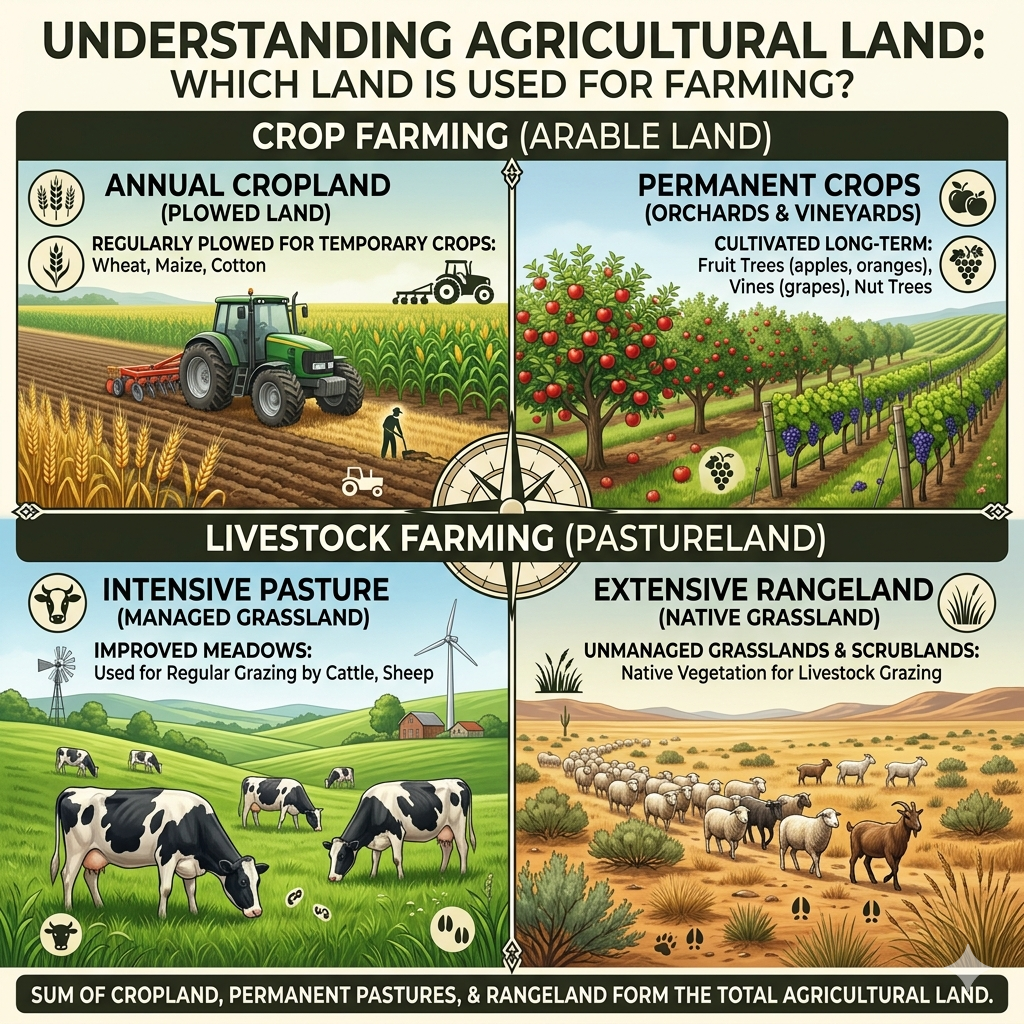
The land used for farming is called agricultural land.
Agricultural land is land that is used for growing crops, vegetables, fruits, and for raising animals.
It is one of the most important natural resources because it directly supports food production and rural livelihoods.
Main Types of Land Used for Farming
Farming is done on different types of land depending on soil, climate, and water availability.
1. Arable Land (Most Common Farming Land)
Arable land is land that is used for growing seasonal crops.
Characteristics:
- Fertile soil
- Suitable for ploughing and cultivation
- Used for crop rotation
Crops grown:
- Wheat
- Rice
- Maize
- Pulses
- Vegetables
Arable land is the most widely used farming land in the world.
2. Irrigated Land
Irrigated land is farming land that receives water through artificial systems.
Water sources include:
- Canals
- Tube wells
- Drip irrigation
- Sprinkler systems
Why it is important:
- Supports farming in dry regions
- Enables multiple cropping seasons
- Improves productivity
Irrigated land is highly productive and widely used in modern agriculture.
3. Rainfed Land
Rainfed land depends entirely on rainfall for farming.
Characteristics:
- No artificial irrigation system
- Highly dependent on monsoon or seasonal rains
- Risky but widely used in rural areas
Crops grown:
- Millets
- Pulses
- Oilseeds
Rainfed agriculture is common in many developing regions.
4. Permanent Cropland
This type of land is used for long-term crops that do not need replanting every year.
Examples:
- Tea plantations
- Coffee farms
- Rubber plantations
- Fruit orchards (mango, apple, orange)
Features:
- Long-term production
- High economic value
- Requires consistent care
5. Pasture Land (Grazing Land)
Pasture land is used for grazing animals.
Animals raised:
- Cattle
- Sheep
- Goats
Importance:
- Supports dairy and meat production
- Provides natural feeding grounds for livestock
- Used in mixed farming systems
6. Mixed Farming Land
Mixed farming land is used for both crops and livestock together.
Features:
- Combines crop cultivation and animal husbandry
- Reduces farming risk
- Increases income sources
This type of farming is common in rural areas.
7. Plantation Land
Plantation land is large-scale farming land used for a single crop.
Crops grown:
- Tea
- Coffee
- Sugarcane
- Coconut
Features:
- Commercial farming system
- Large investment required
- Export-oriented production
What Type of Soil Is Best for Farming?
Different soils support different types of farming.
1. Alluvial Soil
- Very fertile
- Found in river plains
- Best for rice and wheat
2. Black Soil
- High moisture retention
- Ideal for cotton
3. Loamy Soil
- Balanced soil type
- Suitable for most crops
Example of Farming Land in India
India has diverse farming land types such as:
- Fertile alluvial plains in the north
- Black soil regions in central India
- Coastal and delta farming areas
- Rainfed farming zones in dry regions
These variations make India one of the largest agricultural producers in the world.
Why Only Certain Land Is Used for Farming?
Not all land can be used for farming because:
1. Soil Fertility
Poor soil cannot support crop growth.
2. Water Availability
Farming requires sufficient water supply.
3. Climate Conditions
Extreme heat, cold, or dryness reduces productivity.
4. Terrain
Steep mountains and rocky areas are difficult for farming.
Importance of Farming Land
Farming land is essential because it:
1. Produces Food
Supports global food supply including grains, fruits, and vegetables.
2. Supports Economy
Agriculture contributes to national income.
3. Provides Employment
Millions depend on farming for livelihood.
4. Supplies Raw Materials
Used in industries like textiles, sugar, and food processing.
Challenges Facing Farming Land
- Soil degradation
- Urban expansion
- Water scarcity
- Climate change
- Overuse of chemicals
These issues reduce land productivity over time.
Future of Farming Land
Modern agriculture is improving land use through:
- Precision farming
- Smart irrigation systems
- Organic farming
- Sustainable soil management
- High-yield crop varieties
These methods help increase production even on limited land.
Conclusion
The land used for farming is called agricultural land, and it includes different types such as arable land, irrigated land, rainfed land, plantation land, and pasture land. Each type supports different farming activities depending on soil, climate, and water availability.
Understanding which land is used for farming helps us appreciate how food is produced and how important land management is for the future.
In simple terms, fertile, well-watered, and suitable land is used for farming to grow crops and raise animals that support human life.