
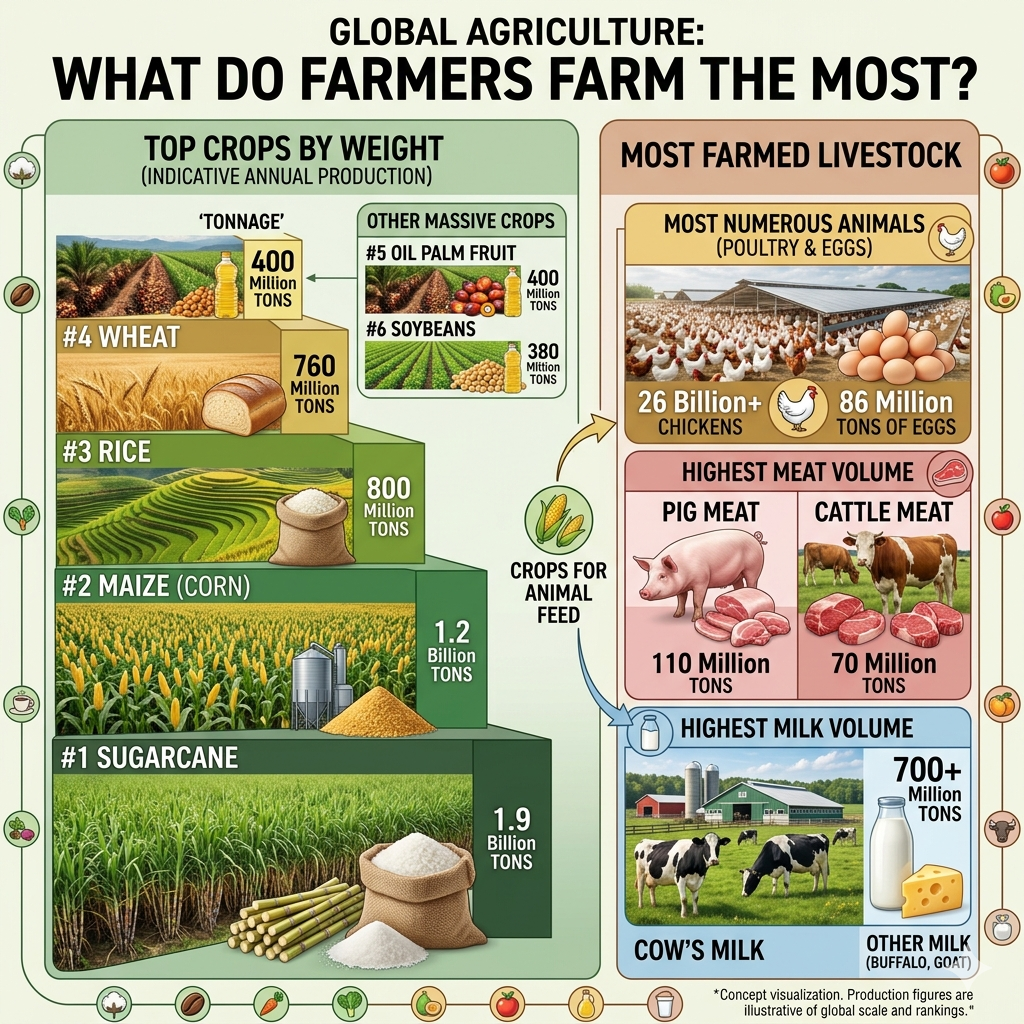
What Do Farmers Farm the Most? Most Grown Crops in the World Explained
Introduction
Farming is the backbone of global food production. Every day, farmers around the world grow crops and raise livestock to feed billions of people. But have you ever wondered: what do farmers farm the most?
The answer depends on region, climate, and demand—but globally, a few staple crops dominate agricultural production because they are essential for food, animal feed, and industry.
In this blog, we will explore the most commonly farmed crops in the world, why they are grown so widely, and how they support global food systems.
What Does “Farm the Most” Mean?
When we say farmers “farm the most,” we refer to:
- The most widely cultivated crops
- The largest production volume crops
- The most important staple foods globally
These crops are grown on millions of hectares of farmland worldwide.
1. Rice – The Most Important Staple Crop
Rice
Rice is one of the most widely farmed crops in the world, especially in Asia.
Why farmers grow rice so much:
- It is a staple food for over half the world’s population
- Grows well in wet and tropical climates
- High demand in domestic and international markets
Major rice-producing countries:
- China
- India
- Indonesia
- Vietnam
- Thailand
Rice is essential for daily meals in many countries.
2. Wheat – The Global Bread Crop
Wheat
Wheat is another major crop grown by farmers worldwide.
Why wheat is widely farmed:
- Used to make bread, pasta, and bakery products
- Grows in temperate climates
- Long shelf life and easy storage
Major wheat producers:
- China
- India
- Russia
- United States
- France
Wheat is one of the most important food security crops.
3. Maize (Corn) – The Versatile Crop
Maize
Maize, also known as corn, is one of the most farmed crops globally.
Why farmers grow maize:
- Used for human food and animal feed
- Important for biofuel production
- High yield per hectare
Major producers:
- United States
- China
- Brazil
- Argentina
Maize is extremely versatile and widely used.
4. Soybeans – The Protein Crop
Soybean
Soybeans are widely farmed due to their high protein and oil content.
Uses:
- Cooking oil
- Animal feed
- Plant-based protein products
Major producers:
- Brazil
- United States
- Argentina
- China
Soybeans are essential for both food and livestock industries.
5. Sugarcane – The Cash Crop
Sugarcane
Sugarcane is one of the most widely farmed cash crops in tropical regions.
Uses:
- Sugar production
- Ethanol (biofuel)
- Jaggery and molasses
Major producers:
- Brazil
- India
- Thailand
- China
Sugarcane is highly profitable in suitable climates.
6. Potatoes – The Underground Staple
Potato
Potatoes are widely grown due to their adaptability.
Why farmers grow potatoes:
- High yield per acre
- Grows in many climates
- Used in many food products
Major producers:
- China
- India
- Russia
- Ukraine
7. Vegetables and Fruits
Farmers also grow a wide variety of vegetables and fruits such as:
- Tomatoes
- Onions
- Carrots
- Bananas
- Apples
- Mangoes
These are high-value crops used in daily diets.
Why These Crops Are Farmed the Most
1. High Food Demand
Staple crops like rice, wheat, and maize feed billions of people.
2. Versatility
Many crops have multiple uses (food, oil, feed, fuel).
3. Climate Adaptability
These crops grow in many different environments.
4. Economic Value
Cash crops like sugarcane and soybeans generate income for farmers.
Global Crop Production Pattern
- Asia dominates rice and wheat farming
- The Americas dominate maize and soybeans
- Tropical regions dominate sugarcane farming
- Temperate regions focus on grains and root crops
Challenges in Farming Major Crops
- Climate change affecting yields
- Water scarcity
- Soil degradation
- Market price fluctuations
- Pest and disease attacks
Future of Farming Major Crops
Future farming will focus on:
- Climate-resistant crop varieties
- Precision agriculture
- Sustainable farming methods
- Smart irrigation systems
- Genetically improved seeds
These innovations will help increase global food production.
Conclusion
Farmers around the world mainly grow staple crops such as rice, wheat, maize, soybeans, sugarcane, and potatoes. These crops are essential for feeding the global population and supporting industries like food processing, biofuels, and livestock farming.
In simple terms, farmers farm what people eat the most and what industries depend on the most.
Understanding these crops helps us appreciate the importance of agriculture in everyday life.