
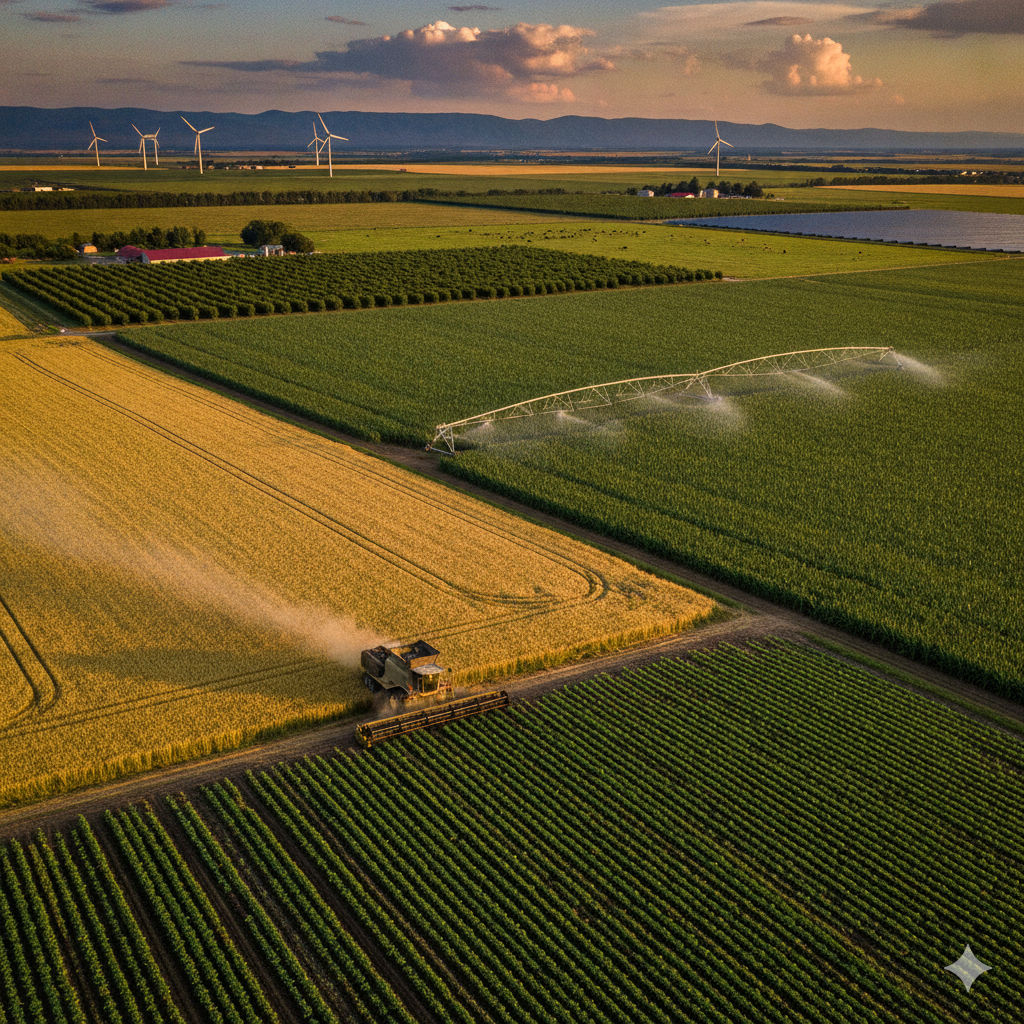
What Is Cropland Area? Definition, Importance, Types, and Global Trends
Introduction
Cropland area is one of the most important concepts in agriculture and land management. It refers to the portion of land used specifically for growing crops for food, livestock feed, fiber, fuel, and industrial purposes. As the global population continues to increase, understanding cropland area has become essential for ensuring food security, sustainable agriculture, and environmental conservation.
Agricultural land serves as the foundation of food production systems worldwide. Farmers depend on cropland to cultivate grains, vegetables, fruits, oilseeds, and other crops that support human life and economic development. Governments, researchers, and agricultural organizations monitor cropland area closely to assess agricultural productivity, plan land use policies, and address challenges such as climate change and land degradation.
In this comprehensive guide, we will explore what cropland area is, its importance, different types, measurement methods, benefits, challenges, and future trends in agriculture.
What Is Cropland Area?
Cropland area refers to the total land area that is actively used for cultivating crops. This includes fields planted with cereals, vegetables, fruits, legumes, oilseeds, and other agricultural crops intended for harvest.
In simple terms, cropland is land dedicated to growing plants for human consumption, animal feed, industrial use, or biofuel production.
According to agricultural definitions, cropland generally includes:
- Land used for annual crops
- Land used for perennial crops
- Temporary crop fields
- Permanent crop plantations
- Cultivated agricultural land
However, cropland does not typically include:
- Pastureland used solely for grazing animals
- Forest land
- Urban areas
- Barren land
- Wetlands not used for cultivation
Cropland area is usually measured in hectares, acres, or square kilometers depending on regional standards.
Understanding Cropland and Agricultural Land
Many people confuse cropland with agricultural land, but they are not exactly the same.
Agricultural Land
Agricultural land includes all land used for farming activities, such as:
- Cropland
- Pastures
- Grazing land
- Orchards
- Plantations
Cropland
Cropland is a specific category within agricultural land that focuses solely on growing crops.
For example:
A farm may have:
- 100 hectares of wheat fields
- 50 hectares of grazing pasture
In this case:
- Agricultural land = 150 hectares
- Cropland area = 100 hectares
Understanding this distinction helps policymakers and researchers accurately assess agricultural productivity.
Types of Cropland Area
Cropland can be divided into different categories based on the type and duration of cultivation.
1. Arable Land
Arable land refers to land suitable for growing temporary crops.
Examples include:
- Wheat fields
- Rice paddies
- Corn fields
- Vegetable farms
These crops are planted and harvested within a single growing season.
2. Permanent Cropland
Permanent cropland consists of land used for crops that remain productive for several years without requiring replanting after each harvest.
Examples include:
- Fruit orchards
- Vineyards
- Coffee plantations
- Tea plantations
- Cocoa farms
These crops often produce yields for many years.
3. Irrigated Cropland
Irrigated cropland relies on artificial water supply systems.
Common irrigation methods include:
- Drip irrigation
- Sprinkler systems
- Surface irrigation
Irrigated cropland generally produces higher yields than rain-fed agriculture.
4. Rain-Fed Cropland
Rain-fed cropland depends entirely on natural rainfall.
This type of farming is common in regions with reliable precipitation patterns.
Importance of Cropland Area
Cropland area plays a crucial role in supporting human societies and economies.
Food Production
The most important function of cropland is food production.
Major crops grown on cropland include:
- Rice
- Wheat
- Corn
- Soybeans
- Potatoes
- Fruits
- Vegetables
Without sufficient cropland, feeding the world’s population would be impossible.
Food Security
Food security depends heavily on the availability and productivity of cropland.
Increasing cropland efficiency helps ensure that communities have access to nutritious food year-round.
Economic Development
Agriculture contributes significantly to national economies.
Cropland supports:
- Farm income
- Employment
- Agricultural exports
- Food processing industries
Many developing countries rely heavily on crop production for economic growth.
Raw Material Supply
Cropland produces raw materials used in various industries.
Examples include:
- Cotton for textiles
- Sugarcane for sugar production
- Corn for ethanol
- Oilseeds for cooking oils
These materials support manufacturing and industrial sectors.
Rural Livelihoods
Millions of farmers depend on cropland for their livelihoods.
Productive cropland creates employment opportunities and supports rural development.
How Is Cropland Area Measured?
Accurate measurement of cropland area is essential for agricultural planning and policy development.
Field Surveys
Traditional field surveys involve physically measuring agricultural fields.
Advantages:
- High accuracy
- Detailed information
Disadvantages:
- Time-consuming
- Labor-intensive
Satellite Imaging
Modern agriculture increasingly relies on satellite technology.
Satellite imagery can:
- Identify crop types
- Measure field sizes
- Monitor land use changes
- Assess crop health
Remote sensing provides efficient large-scale cropland monitoring.
Geographic Information Systems (GIS)
GIS technology combines mapping and data analysis to evaluate cropland distribution and productivity.
Benefits include:
- Precise land mapping
- Better resource management
- Improved planning decisions
Drone Technology
Agricultural drones help farmers and researchers monitor cropland conditions in real time.
Drones can:
- Capture aerial images
- Assess crop growth
- Detect disease outbreaks
- Evaluate irrigation needs
Global Cropland Distribution
Cropland is distributed unevenly across the world due to differences in climate, soil quality, water availability, and population density.
Asia
Asia contains some of the world’s most intensively cultivated cropland areas.
Major crops include:
- Rice
- Wheat
- Tea
- Sugarcane
Countries such as India and China have extensive agricultural land supporting large populations.
North America
North America has vast cropland areas dedicated to:
- Corn
- Soybeans
- Wheat
Modern mechanized farming dominates agricultural production in this region.
Europe
European cropland supports diverse agricultural systems.
Common crops include:
- Wheat
- Barley
- Potatoes
- Grapes
South America
South America is a major producer of:
- Soybeans
- Coffee
- Sugarcane
- Corn
Large-scale commercial agriculture contributes significantly to exports.
Africa
Africa has substantial agricultural potential, although many regions face challenges related to infrastructure, water access, and climate variability.
Benefits of Expanding Productive Cropland
When managed sustainably, productive cropland offers numerous benefits.
Increased Food Production
Expanding productive agricultural land helps meet growing food demand.
Economic Growth
Agricultural productivity stimulates local and national economies.
Employment Generation
Cropland creates jobs in farming, transportation, processing, and distribution.
Export Opportunities
Many countries earn valuable foreign exchange through agricultural exports.
Improved Rural Development
Productive farming regions often experience improvements in infrastructure and community services.
Challenges Affecting Cropland Area
Despite its importance, cropland faces several threats.
Urbanization
Rapid urban expansion often converts fertile agricultural land into residential and industrial developments.
Soil Degradation
Poor farming practices can lead to:
- Soil erosion
- Nutrient depletion
- Reduced fertility
Climate Change
Climate-related challenges include:
- Droughts
- Floods
- Heatwaves
- Unpredictable rainfall patterns
These factors can reduce crop productivity.
Water Scarcity
Limited access to water affects irrigation and crop growth.
Land Fragmentation
In some regions, agricultural land is divided into smaller plots, reducing farming efficiency.
Sustainable Management of Cropland Area
Protecting cropland is essential for long-term agricultural success.
Crop Rotation
Growing different crops in succession helps maintain soil fertility.
Conservation Tillage
Reducing soil disturbance minimizes erosion and improves soil health.
Efficient Irrigation
Modern irrigation systems reduce water waste and improve productivity.
Precision Agriculture
Technology-driven farming improves resource efficiency and crop yields.
Agroforestry
Combining trees and crops enhances biodiversity and soil conservation.
Future of Cropland Area
The future of cropland management will depend on balancing food production with environmental sustainability.
Emerging trends include:
Smart Farming
Digital technologies help farmers optimize land use and increase productivity.
Artificial Intelligence
AI supports better decision-making through predictive analytics and crop monitoring.
Vertical Farming
Indoor vertical farms can supplement traditional cropland by producing crops in urban environments.
Sustainable Land Management
Governments and agricultural organizations are promoting practices that protect soil and water resources.
Climate-Resilient Agriculture
New crop varieties and farming methods are being developed to withstand changing climate conditions.
Frequently Asked Questions (FAQs)
What is cropland area?
Cropland area refers to land that is actively used for growing crops such as grains, vegetables, fruits, and oilseeds.
How is cropland different from agricultural land?
Cropland includes only land used for crop cultivation, while agricultural land includes cropland, pastures, and grazing areas.
Why is cropland important?
Cropland is essential for food production, economic development, employment, and food security.
What are the main types of cropland?
The main types include arable land, permanent cropland, irrigated cropland, and rain-fed cropland.
How is cropland measured?
Cropland is measured using field surveys, satellite imagery, GIS technology, and drone-based monitoring systems.
Conclusion
Cropland area is a critical component of global agriculture and food production systems. It represents the land used to cultivate crops that provide food, raw materials, and economic opportunities for billions of people worldwide. As populations grow and environmental challenges increase, efficient management of cropland becomes more important than ever.
By adopting sustainable farming practices, utilizing advanced technologies, and protecting valuable agricultural land from degradation and urban expansion, societies can ensure long-term food security and agricultural productivity. Understanding cropland area is essential for farmers, policymakers, researchers, and anyone interested in the future of agriculture and sustainable development.