
What Is the Purpose of Farmland? Meaning, Uses, and Importance Explained
Introduction
Farmland is one of the most valuable natural resources on Earth. It is the foundation of agriculture and plays a major role in feeding the global population. But many people still ask a simple question: what is the purpose of farmland?
In this blog, we will clearly explain the purpose of farmland, its uses, and why it is essential for human life and the economy.
What Is Farmland?
Farmland is land used for agricultural activities such as growing crops, vegetables, fruits, and raising animals.
In simple terms:
Farmland is land meant for producing food and agricultural products.
Main Purpose of Farmland
The primary purpose of farmland is:
To produce food and agricultural goods for humans and animals.
But its role goes much beyond just food production.
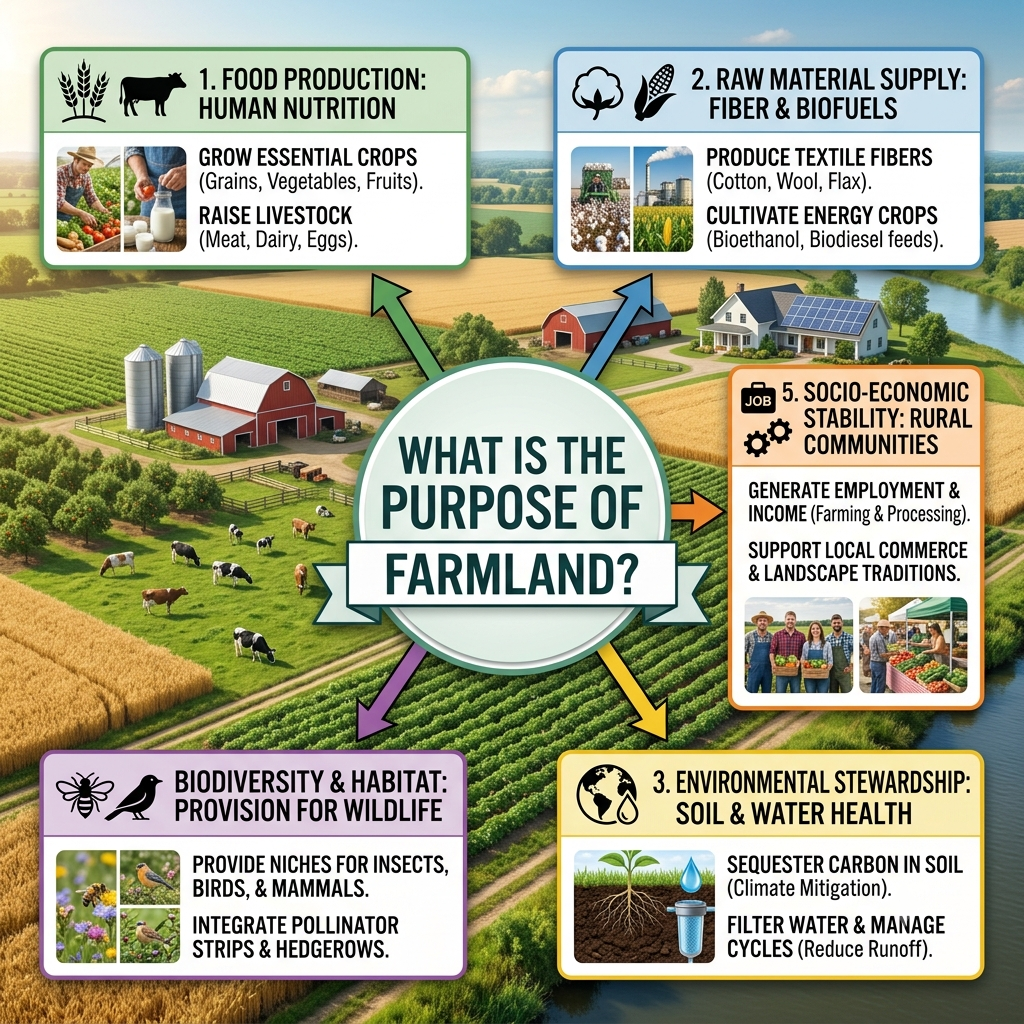
1. Food Production (Main Purpose)
The most important purpose of farmland is to grow food.
Crops grown include:
- Rice
- Wheat
- Maize
- Vegetables
- Fruits
Why it matters:
- Feeds the global population
- Supports daily nutrition
- Ensures food security
Without farmland, food production would not be possible on a large scale.
2. Livestock Farming
Farmland is also used for raising animals.
Animals include:
- Cows
- Buffaloes
- Goats
- Sheep
- Poultry
Products:
- Milk
- Meat
- Eggs
This supports the dairy and meat industries.
3. Raw Material Production
Farmland provides raw materials for industries.
Examples:
- Cotton → textile industry
- Sugarcane → sugar industry
- Oilseeds → cooking oil production
These materials support manufacturing and trade.
4. Economic Development
Farmland plays a key role in the economy.
Benefits:
- Generates income for farmers
- Supports agricultural exports
- Contributes to national GDP
Agriculture is a major economic sector in many countries.
5. Employment Generation
Farmland provides jobs for millions of people.
Includes:
- Farmers
- Agricultural laborers
- Transport workers
- Food processing workers
In rural areas, farming is the main source of employment.
6. Supporting Industries
Farmland supports many industries indirectly:
- Food processing
- Dairy industry
- Textile industry
- Biofuel production
These industries depend on agricultural output.
7. Environmental Balance
Farmland also helps maintain environmental balance when managed properly.
Benefits:
- Supports soil health
- Encourages biodiversity
- Helps manage ecosystems
Sustainable farming practices improve environmental quality.
Example of Farmland Use in India
India has diverse farmland used for:
- Rice farming in West Bengal
- Wheat farming in Punjab
- Sugarcane farming in Maharashtra
- Tea plantations in Assam
These activities support both food supply and the economy.
Types of Activities on Farmland
Farmland is used for many activities such as:
- Crop cultivation
- Irrigation
- Harvesting
- Animal grazing
- Agro-based industries
Importance of Farmland
Farmland is important because it:
- Ensures food security
- Supports rural livelihoods
- Provides industrial raw materials
- Strengthens the economy
- Maintains agricultural sustainability
Challenges Affecting Farmland
Despite its importance, farmland faces challenges:
- Urban expansion reducing land
- Soil degradation
- Water shortages
- Climate change impacts
- Overuse of chemicals
Conclusion
The purpose of farmland is mainly to produce food and agricultural products, but it also supports livestock farming, industries, employment, and economic growth. It is one of the most essential resources for human survival and development.
In simple terms, farmland exists to feed people, support industries, and sustain the economy.