
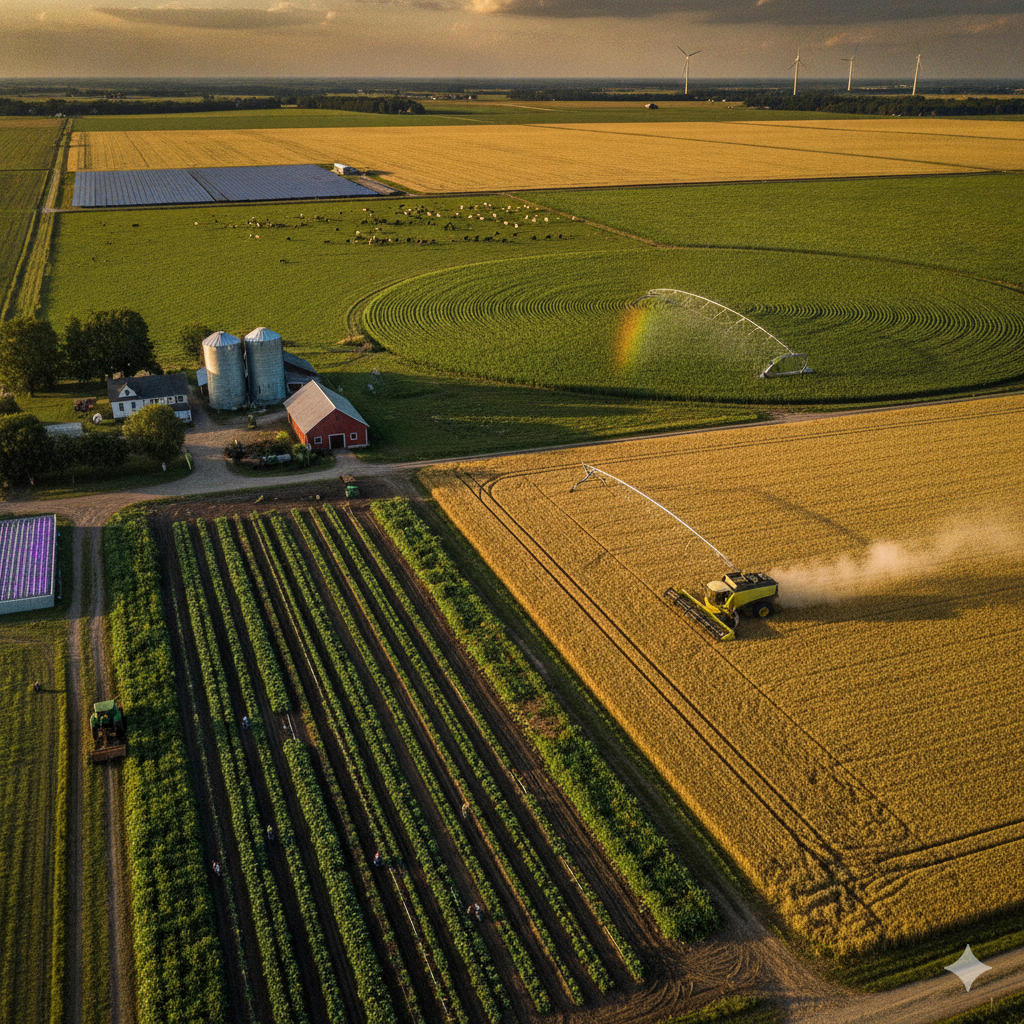
Which Type of Land Is India? Understanding India’s Land Types and Land Use Patterns
Introduction
India is one of the world’s most geographically diverse countries. From the snow-covered Himalayas in the north to the coastal plains of the south, India contains a wide variety of landforms, soil types, and ecosystems. This diversity makes the country one of the most agriculturally productive nations in the world and supports a population of more than 1.4 billion people.
A common question often asked by students, investors, farmers, and researchers is: “Which type of land is India?”
The answer is not simple because India is not defined by a single type of land. Instead, India consists of multiple land categories, including agricultural land, forests, mountains, deserts, plateaus, river plains, and coastal regions. Each type of land plays an important role in the country’s economy, agriculture, biodiversity, and development.
In this blog, we will explore the different types of land found in India, their characteristics, and their importance.
Understanding Land Types in India
Land refers to the Earth’s surface that is used for various purposes such as agriculture, forestry, industry, housing, transportation, and conservation.
India’s land can be classified based on:
- Physical geography
- Land use patterns
- Agricultural suitability
- Soil characteristics
- Economic activities
Let’s examine each category in detail.
Major Physical Land Types in India
1. Northern Plains
The Northern Plains are among the most fertile regions in India.
Location
Stretching across northern India, these plains are formed by the rivers:
- Ganga
- Yamuna
- Brahmaputra
- Indus and its tributaries
Characteristics
- Flat terrain
- Rich alluvial soil
- Excellent water availability
- High agricultural productivity
Importance
The Northern Plains are often referred to as India’s “food bowl” because they produce:
- Wheat
- Rice
- Sugarcane
- Pulses
This region supports a large portion of India’s agricultural output.
2. The Deccan Plateau
The Deccan Plateau covers much of central and southern India.
Characteristics
- Elevated land surface
- Volcanic rock formations
- Black cotton soil in many areas
- Rich mineral resources
Agricultural Uses
Farmers cultivate:
- Cotton
- Millet
- Groundnuts
- Soybeans
The plateau is also important for mining and industrial development.
3. Himalayan Mountain Region
The Himalayan region occupies the northern part of India.
Features
- High mountains
- Glaciers
- Forests
- River sources
Importance
The Himalayas:
- Influence India’s climate
- Supply water through major rivers
- Support tourism and biodiversity
- Protect the country from cold winds
Agriculture in this region includes horticulture and terrace farming.
4. Desert Land
India contains significant desert areas, particularly in:
- Rajasthan
- Parts of Gujarat
Characteristics
- Low rainfall
- Sandy soil
- Sparse vegetation
Economic Activities
Despite harsh conditions, desert regions support:
- Livestock farming
- Irrigated agriculture
- Solar energy projects
The Thar Desert is one of the world’s most populated deserts.
5. Coastal Plains
India has a coastline of more than 7,500 kilometers.
Features
- Fertile coastal soils
- Fishing industries
- Coconut and rice cultivation
Major Coastal Areas
- Western Coastal Plains
- Eastern Coastal Plains
These regions contribute significantly to trade, agriculture, and tourism.
Land Use Classification in India
Apart from physical geography, India classifies land according to its use.
Agricultural Land
Agricultural land forms one of the largest land-use categories in India.
Uses
- Crop cultivation
- Livestock farming
- Orchards
- Plantations
Major crops include:
- Rice
- Wheat
- Cotton
- Sugarcane
- Maize
Agriculture remains a major contributor to India’s economy and employment.
Forest Land
Forests cover a significant portion of India’s land area.
Importance
Forests provide:
- Biodiversity conservation
- Timber and forest products
- Carbon storage
- Watershed protection
Major forest types include:
- Tropical forests
- Deciduous forests
- Mangrove forests
- Mountain forests
Barren and Uncultivable Land
Some areas are unsuitable for farming due to:
- Rocky terrain
- Desert conditions
- Extreme slopes
Although these lands may have limited agricultural value, they can support:
- Renewable energy projects
- Mining
- Conservation efforts
Urban and Built-Up Land
Urban land includes:
- Residential areas
- Commercial zones
- Industrial regions
- Infrastructure projects
Rapid urbanization has increased the proportion of built-up land in India over the past few decades.
Soil Types Found in India
India’s land diversity is reflected in its soil types.
Alluvial Soil
Found in:
- Northern Plains
Suitable for:
- Rice
- Wheat
- Sugarcane
Black Soil
Found in:
- Maharashtra
- Madhya Pradesh
- Gujarat
Suitable for:
- Cotton
- Soybeans
Red Soil
Found in:
- Southern India
- Eastern India
Suitable for:
- Millets
- Pulses
- Groundnuts
Laterite Soil
Found in:
- Kerala
- Karnataka
- Tamil Nadu
Suitable for:
- Tea
- Coffee
- Rubber
Desert Soil
Found in:
- Rajasthan
Requires irrigation for productive agriculture.
Why India Is Considered an Agricultural Country
Although India has diverse land types, it is often called an agricultural nation because:
Large Agricultural Area
India has one of the world’s largest agricultural land areas.
Diverse Climatic Conditions
Different climates allow cultivation of numerous crops.
Large Farming Population
Millions of people depend on agriculture for their livelihood.
Food Production Capacity
India is among the leading producers of:
- Rice
- Wheat
- Milk
- Fruits
- Vegetables
Agricultural land remains one of India’s most important resources.
Importance of India’s Diverse Land Types
The diversity of land in India supports:
Economic Growth
Different regions contribute to:
- Agriculture
- Mining
- Manufacturing
- Tourism
Biodiversity
India’s varied landscapes support thousands of plant and animal species.
Food Security
Fertile agricultural land helps feed a large population.
Climate Regulation
Forests, wetlands, and grasslands play important environmental roles.
Challenges Related to Land Use in India
India faces several land-related challenges.
Urban Expansion
Growing cities reduce available agricultural land.
Soil Degradation
Unsustainable farming practices can reduce productivity.
Water Scarcity
Many regions face groundwater depletion.
Land Fragmentation
Small farm sizes affect agricultural efficiency.
Proper land management is essential for sustainable development.
Future of Land Use in India
The future of India’s land resources will depend on:
- Sustainable agriculture
- Smart urban planning
- Forest conservation
- Water management
- Climate-resilient farming
Balancing development with environmental protection will be crucial.
Frequently Asked Questions (FAQs)
What type of land is most common in India?
Agricultural land is one of the most extensive land-use categories in India.
Is India mostly agricultural land?
A significant portion of India’s land is used for agriculture, making it one of the world’s largest agricultural economies.
What are the major landforms in India?
India consists of mountains, plains, plateaus, deserts, forests, and coastal regions.
Why is India’s land important?
India’s diverse land supports agriculture, biodiversity, economic growth, and food security.
Which soil type is best for farming in India?
Alluvial soil is generally considered one of the most fertile soils in India.
Conclusion
India is not defined by a single type of land. Instead, it is a geographically diverse country with fertile plains, plateaus, mountains, deserts, forests, and coastal regions. This diversity has helped India become one of the world’s leading agricultural nations while also supporting industries, biodiversity, and economic development.
Agricultural land remains one of India’s most valuable resources, but the country’s strength lies in the combination of multiple land types that contribute to its growth and sustainability. Understanding India’s land diversity is essential for farmers, investors, students, and policymakers seeking to appreciate the country’s unique geographical and economic landscape.