Why Does Bill Gates Invest in Farmland? Understanding the Billionaire’s Agricultural Strategy
Introduction
Over the past few years, reports that Bill Gates has become one of the largest private farmland owners in the United States have sparked widespread interest. Many people wonder why a technology billionaire known for co-founding Microsoft would invest heavily in agricultural land.
Is it about food production, sustainability, long-term wealth preservation, or something else entirely?
In this article, we’ll explore why Bill Gates invests in farmland, the benefits of farmland as an asset, and what investors can learn from his strategy.
Who Is Bill Gates?
Bill Gates is one of the world’s most well-known entrepreneurs, philanthropists, and investors. Through his investments and charitable initiatives, he has shown a strong interest in global issues such as healthcare, education, clean energy, and sustainable agriculture.
His farmland investments have attracted attention because they represent a significant shift from traditional technology-focused investing.
How Much Farmland Does Bill Gates Own?
According to widely reported public records and land ownership investigations, Bill Gates has acquired extensive farmland holdings across multiple U.S. states through investment entities associated with him.
These properties include farmland used for:
- Corn production
- Soybean cultivation
- Vegetable farming
- Other agricultural activities
While exact figures can change over time due to purchases and sales, he is frequently cited among the largest private farmland owners in the United States.
Why Does Bill Gates Invest in Farmland?
There is no single reason. Instead, several factors make farmland an attractive investment.
1. Farmland Is a Valuable Long-Term Asset
One of the biggest reasons investors buy farmland is its ability to retain value over time.
Unlike many assets that can become obsolete, productive agricultural land remains essential because people will always need food.
Key advantages include:
- Limited supply of fertile land
- Growing global population
- Increasing food demand
- Historical appreciation in land values
For long-term investors, farmland can serve as a stable wealth-preservation asset.
2. Growing Global Food Demand
The world’s population continues to grow, increasing the demand for:
- Grains
- Fruits
- Vegetables
- Livestock feed
- Agricultural products
As food demand rises, productive farmland becomes increasingly valuable.
Investing in agriculture allows exposure to a sector that supports one of humanity’s most fundamental needs.
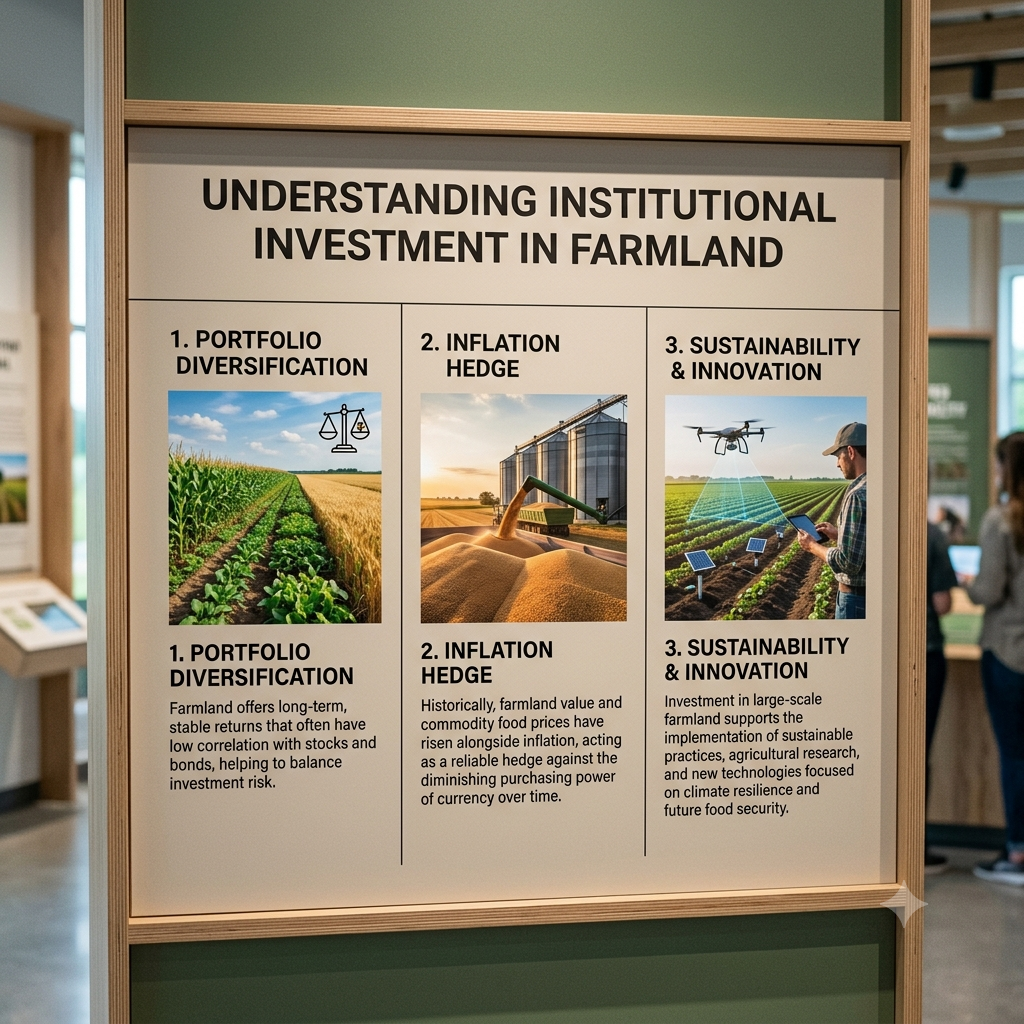
3. Inflation Protection
Farmland is often considered a hedge against inflation.
When inflation rises:
- Land values may increase
- Crop prices often rise
- Agricultural revenue can grow
This can help protect purchasing power compared to some traditional investments.
Many institutional investors view farmland as a defensive asset during periods of economic uncertainty.
4. Portfolio Diversification
Successful investors often spread investments across different asset classes.
Farmland offers diversification because its performance is often less correlated with:
- Stock markets
- Technology companies
- Corporate bonds
This can help reduce overall investment risk.
For someone with significant exposure to technology investments, agricultural land can provide balance.
5. Interest in Sustainable Agriculture
Bill Gates has frequently discussed the importance of improving global food systems.
Areas of interest include:
- Sustainable farming practices
- Climate-resilient agriculture
- Improved crop productivity
- Efficient resource management
Farmland investments may align with broader interests in agricultural innovation and environmental sustainability.
6. Agricultural Technology Opportunities
Modern agriculture is increasingly technology-driven.
Innovations include:
- Precision farming
- Artificial intelligence in agriculture
- Smart irrigation systems
- Soil monitoring technologies
- Data-driven crop management
Investors who understand technology may see long-term opportunities in the modernization of farming.
Common Myths About Bill Gates’ Farmland Investments
Several misconceptions circulate online regarding these investments.
Myth 1: He Bought Farmland to Control Food Supply
There is no evidence that farmland ownership gives control over the global food supply.
Agriculture remains highly decentralized and involves millions of farmers, businesses, and governments worldwide.
Myth 2: Farmland Is His Only Major Investment
Farmland represents only one part of a much larger investment portfolio that includes:
- Stocks
- Private companies
- Energy investments
- Real estate
- Infrastructure assets
Myth 3: Farmland Is a Quick-Rich Investment
Farmland is generally considered a long-term investment rather than a short-term speculation.
Returns often come through:
- Land appreciation
- Agricultural income
- Long-term asset growth
Why Investors Are Interested in Farmland
Bill Gates is not the only investor attracted to farmland.
Farmland appeals to investors because it offers:
- Tangible ownership
- Potential appreciation
- Income generation
- Inflation protection
- Diversification benefits
As a result, farmland has become increasingly popular among institutional investors, pension funds, and high-net-worth individuals.
What Can Indian Investors Learn?
For investors in India, farmland may offer opportunities, but it also requires careful consideration.
Important factors include:
- State land laws
- Water availability
- Soil quality
- Infrastructure access
- Legal due diligence
Farmland should be evaluated as a long-term asset rather than a guaranteed source of rapid profits.
Risks of Farmland Investment
Like any investment, farmland carries risks:
- Weather uncertainty
- Droughts and floods
- Commodity price fluctuations
- Regulatory changes
- Rising operating costs
Successful farmland investing requires research, planning, and patience.
Conclusion
Bill Gates invests in farmland because it offers a combination of long-term value, diversification, inflation protection, and exposure to a sector that will remain essential as the global population grows. Farmland is a productive, tangible asset tied directly to food production and agricultural development.
While there are many theories about his motivations, the most widely accepted explanation is straightforward: farmland has historically been a stable investment with strong long-term potential. As food demand increases and agricultural innovation advances, farmland is likely to remain an important asset class for investors around the world.