Managed farms near Bangalore have become an increasingly popular choice for people seeking a combination of nature, long-term land ownership, and professionally maintained agricultural property. With experts handling farming operations, managed farmland offers convenience for busy professionals, families, retirees, and eligible NRIs.
However, buying a managed farm is a significant investment that requires careful evaluation. Not all projects offer the same level of quality, transparency, or long-term value. Before making a purchase, it’s essential to understand the key factors that can help you choose the right managed farm.
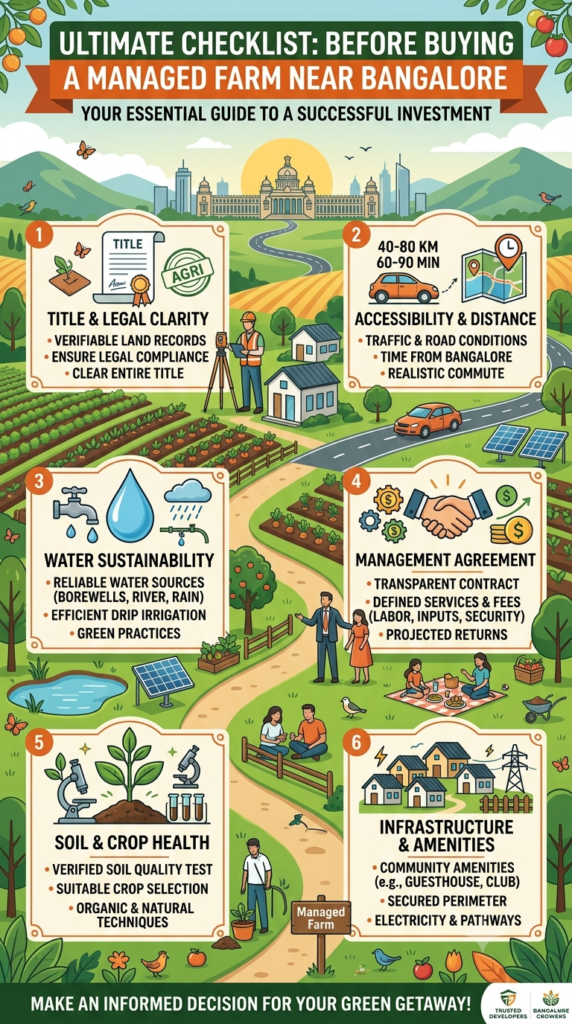
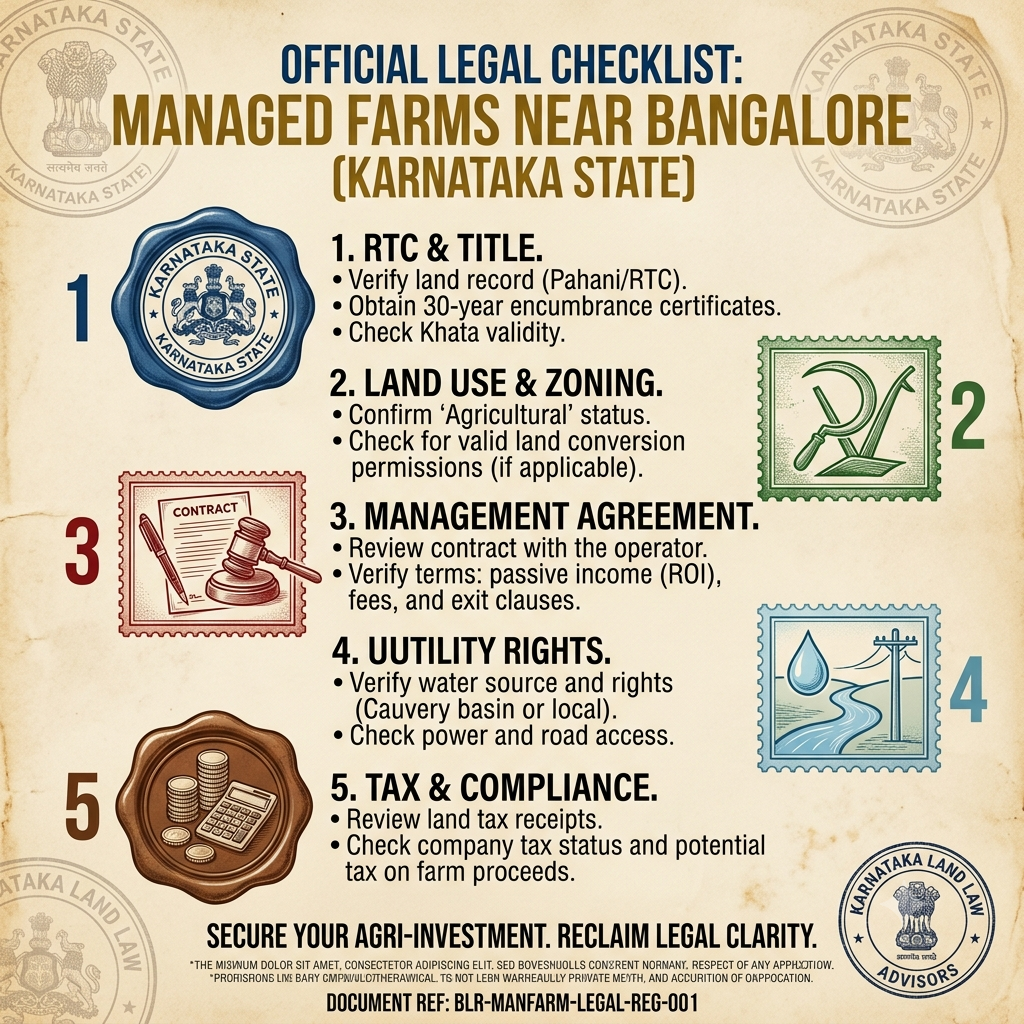
1. Verify Land Ownership and Legal Documents
The first and most important step is verifying the legal status of the property.
Before investing, ensure that:
- The seller has a clear and marketable title.
- Ownership records are up to date.
- The land is free from legal disputes or encumbrances.
- All necessary approvals and documentation are available.
- Property boundaries are clearly defined.
Consulting an experienced property lawyer can help you verify legal documents before signing any agreement.
2. Understand the Farm Management Model
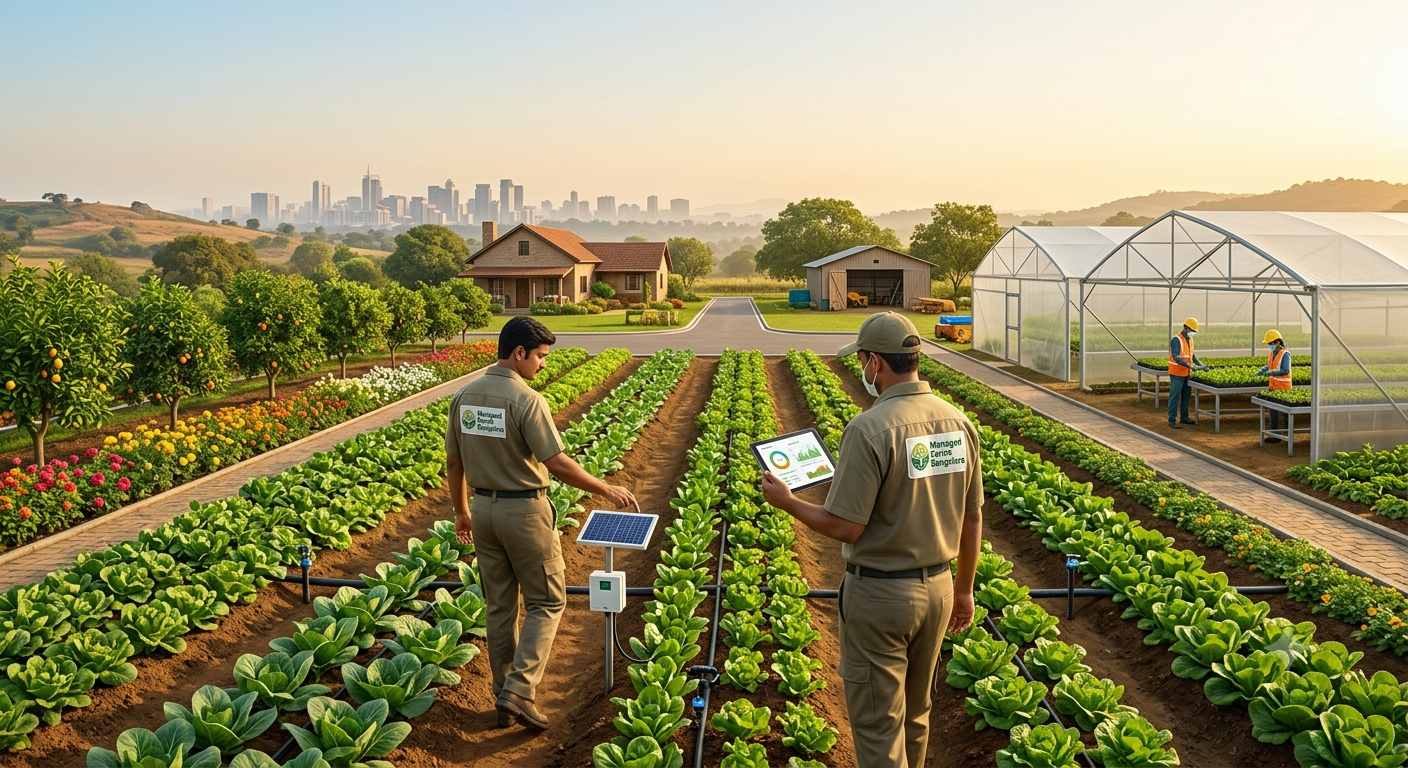
The main advantage of managed farms is professional management. Before purchasing, understand exactly what services are included.
Ask questions such as:
- Who manages the farm?
- What farming activities are covered?
- How often is maintenance carried out?
- Are security and irrigation included?
- How are harvests managed?
- Will you receive regular progress updates?
A transparent management agreement helps avoid misunderstandings later.
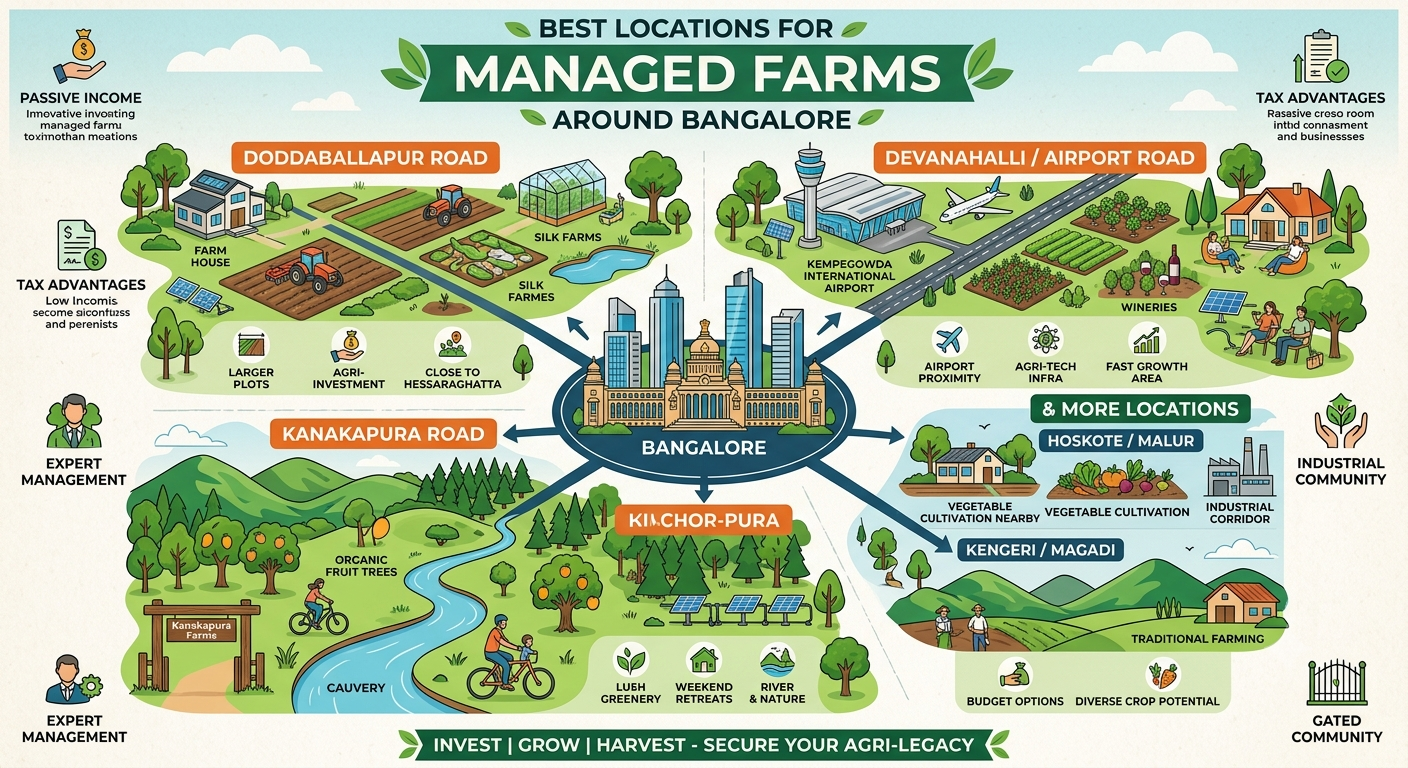
3. Evaluate the Location
Location plays an important role in both convenience and the farming potential of the land.
Consider:
- Distance from Bangalore
- Road connectivity
- Accessibility during all seasons
- Nearby towns and essential services
- Future infrastructure development
A location that is easy to reach makes weekend visits more enjoyable.
4. Check Water Availability
Reliable water is essential for agricultural land.
Find out:
- The primary water source
- Availability throughout the year
- Irrigation methods used
- Rainwater harvesting systems
- Water storage capacity
A professionally managed irrigation system contributes to healthier plantations.
5. Assess Soil Quality
Healthy soil supports sustainable farming and productive plantations.
Ask whether the developer has conducted soil testing and understand what types of crops or trees are suitable for the land.
Different regions may be better suited for fruit orchards, timber plantations, or mixed agriculture.
6. Review Maintenance Charges
Managed farms usually involve recurring maintenance fees.
Before purchasing, understand:
- Annual maintenance charges
- Services covered
- Additional costs, if any
- Payment schedule
- Fee revision policy
Knowing the ongoing costs helps you plan your budget effectively.
7. Research the Developer or Farm Management Company
Choose a developer with a proven track record in managed farmland projects.
Look for:
- Years of experience
- Completed projects
- Customer reviews
- Transparency in communication
- Quality of farm management
If possible, speak with existing customers to learn about their experiences.
8. Visit the Property Personally
Marketing materials can only provide limited information.
Whenever possible:
- Visit the farm.
- Inspect the roads and infrastructure.
- Observe the surrounding environment.
- Check the condition of existing plantations.
- Meet the management team.
A site visit gives you a better understanding of the project.
9. Understand Agricultural Income Expectations
Some managed farm projects generate income from agricultural activities.
However, buyers should remember:
- Agricultural income varies.
- Weather affects production.
- Market prices fluctuate.
- Crop performance changes seasonally.
- Income is never guaranteed.
Avoid projects that promise unrealistic or fixed returns without explaining the associated risks.
10. Review Security and Infrastructure
A good managed farm should include basic infrastructure such as:
- Fencing
- Internal roads
- Security personnel
- Controlled access
- Irrigation systems
- Storage facilities (where applicable)
These features improve both convenience and property management.
11. Look for Sustainable Farming Practices
Many buyers appreciate projects that focus on environmental responsibility.
Consider whether the project promotes:
- Organic farming methods
- Water conservation
- Drip irrigation
- Native tree plantations
- Soil conservation
- Biodiversity
Sustainable practices can support the long-term health of the land.
12. Read Every Agreement Carefully
Never rely solely on verbal commitments.
Carefully review:
- Sale agreement
- Management agreement
- Maintenance terms
- Exit conditions
- Ownership rights
- Responsibilities of both parties
Seek legal advice if any clause is unclear.
Red Flags to Watch For
Exercise caution if you encounter:
- Unclear ownership documents
- Pressure to make immediate payments
- Guaranteed high returns with no explanation
- Lack of transparency regarding management fees
- Poor road access
- No clear water source
- Incomplete legal documentation
Taking time to verify details can help you avoid costly mistakes.
Final Checklist Before Buying
Before making your decision, ensure you have:
- ✔ Verified legal documents
- ✔ Reviewed the management agreement
- ✔ Visited the property
- ✔ Checked water availability
- ✔ Evaluated soil quality
- ✔ Understood maintenance costs
- ✔ Researched the developer
- ✔ Sought independent legal and financial advice
Conclusion
Buying a managed farm near Bangalore can be an excellent way to enjoy farmland ownership without the responsibilities of daily farming. However, selecting the right project requires careful planning, thorough research, and proper due diligence.
By evaluating legal documentation, location, water resources, management quality, infrastructure, and ongoing costs, you can make a more informed decision that aligns with your lifestyle and long-term goals.