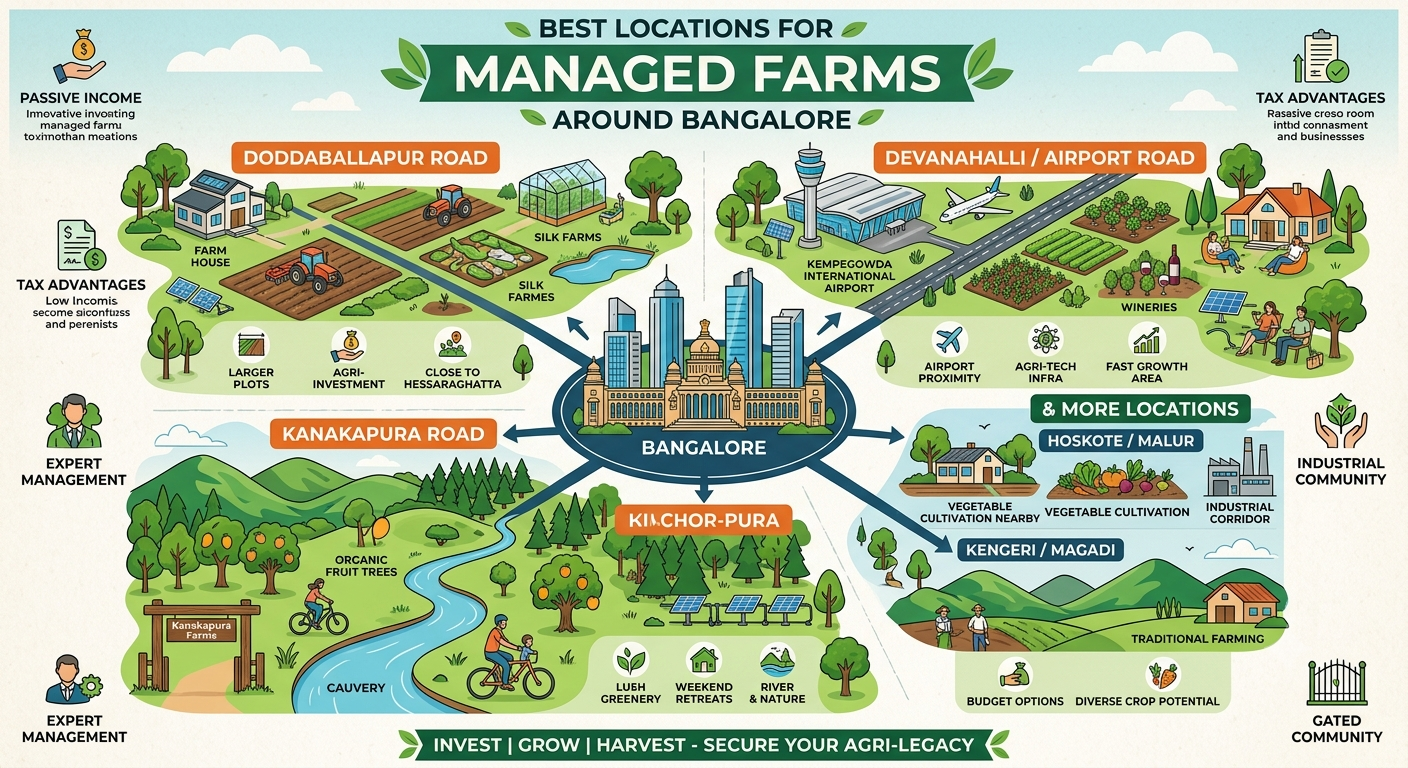
As sustainability becomes a priority for modern homebuyers and investors, managed farms around Bangalore are emerging as a unique way to combine eco-conscious living with agricultural land ownership. These professionally managed farmland projects allow individuals to enjoy nature, support responsible farming practices, and own a tangible asset—without the day-to-day challenges of managing a farm.
Whether you’re looking for a peaceful weekend retreat, a long-term land investment, or a lifestyle that reconnects you with nature, managed farms offer an attractive solution for sustainable living.
What Are Managed Farms?
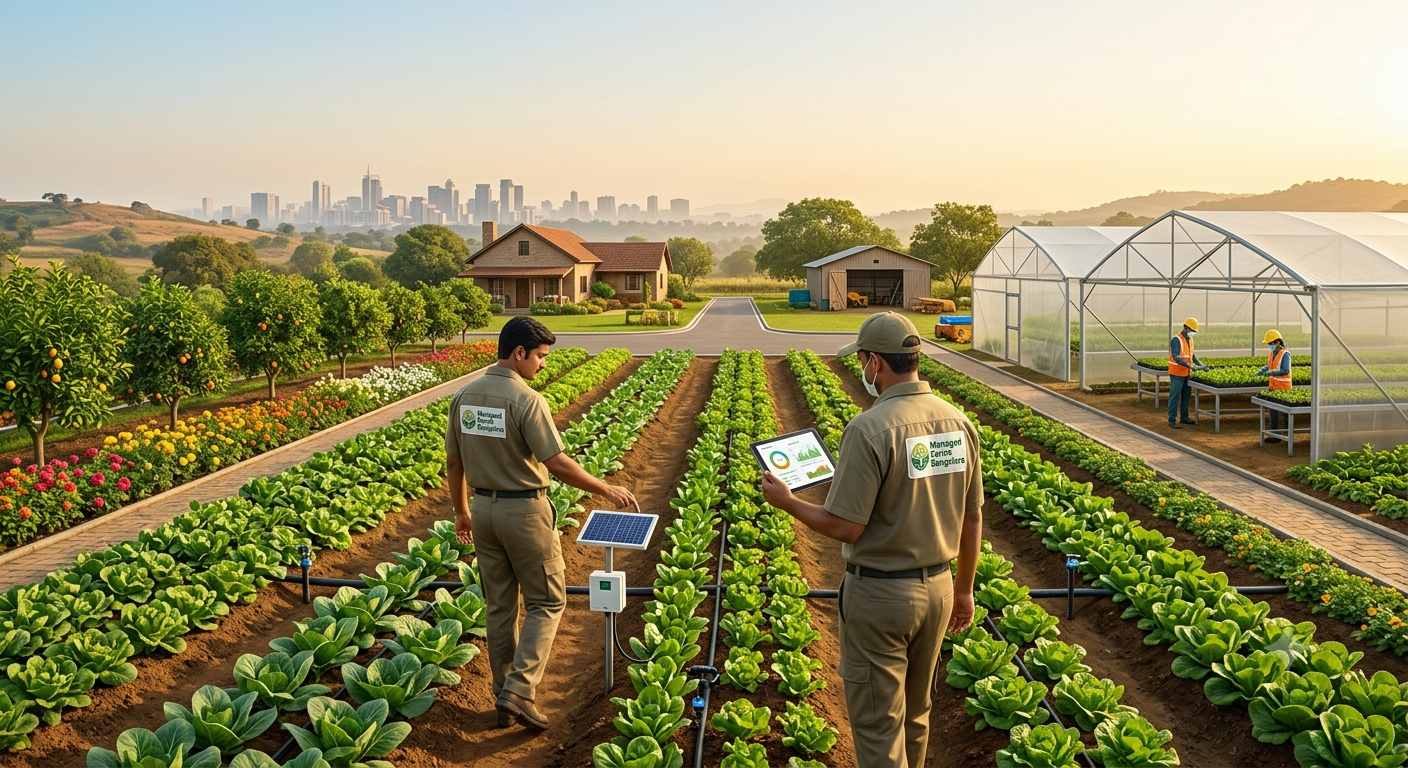
Managed farms are agricultural properties where individuals own farmland while a professional farm management team takes care of all farming operations.
Typical services include:
- Plantation and crop cultivation
- Irrigation management
- Soil care
- Pest and disease management
- Harvesting
- Farm maintenance
- Security and fencing
This model enables owners to enjoy farmland without requiring agricultural knowledge or constant supervision.
Why Sustainable Living Matters
Sustainable living focuses on reducing environmental impact while making responsible use of natural resources. As cities continue to expand, many people are looking for greener spaces that promote healthier lifestyles and environmental conservation.
Managed farms support this vision by encouraging responsible agricultural practices and preserving green landscapes.
Benefits of Managed Farms for Sustainable Living
1. Closer Connection with Nature
Owning a managed farm allows you to spend time surrounded by:
- Trees and orchards
- Fresh air
- Open landscapes
- Natural biodiversity
- Seasonal crops
Regular visits can provide a welcome break from urban life and help foster a deeper appreciation for the environment.
2. Eco-Friendly Farming Practices
Many managed farm projects adopt sustainable agricultural methods such as:
- Organic farming techniques
- Drip irrigation systems
- Rainwater harvesting
- Soil conservation
- Composting
- Native tree plantations
These practices help reduce resource consumption and promote healthier ecosystems.
3. Efficient Water Management
Water conservation is a key aspect of sustainable farming.
Managed farms often implement:
- Drip irrigation
- Water storage systems
- Rainwater harvesting
- Irrigation scheduling
- Efficient distribution methods
Responsible water management helps support crop health while minimizing waste.
4. Reduced Maintenance Responsibilities
Traditional farming requires continuous attention and expertise.
With managed farms, experienced agricultural professionals oversee:
- Plantation care
- Irrigation
- Crop monitoring
- Weed control
- Harvesting
- Property maintenance
This allows owners to enjoy sustainable farmland ownership without daily operational responsibilities.
5. Healthier Lifestyle
Spending weekends in a green environment can encourage:
- Outdoor activities
- Walking and cycling
- Gardening
- Family gatherings
- Relaxation away from city pollution
Many buyers value managed farms as places to recharge and improve their overall well-being.
6. Supporting Biodiversity
Several managed farm communities include:
- Native plant species
- Fruit orchards
- Pollinator-friendly landscapes
- Tree plantation initiatives
These efforts can contribute to healthier local ecosystems and create habitats for birds and beneficial insects.
7. Long-Term Land Ownership
Managed farms also provide the opportunity to own agricultural land as a tangible long-term asset.
The future value of farmland depends on factors such as:
- Location
- Infrastructure development
- Water availability
- Market conditions
- Management quality
Land appreciation and agricultural income are never guaranteed and should be evaluated realistically.
Popular Areas Around Bangalore
Several regions around Bangalore are known for managed farm developments due to their natural surroundings and accessibility.
Popular locations include:
- Kanakapura Road
- Ramanagara
- Chikkaballapur
- Doddaballapur
- Devanahalli
- Hosur
Each area offers unique advantages depending on your lifestyle preferences, travel convenience, and long-term goals.
Features to Look for in a Sustainable Managed Farm
Before choosing a project, consider whether it includes:
- Organic farming practices
- Drip irrigation
- Rainwater harvesting
- Native tree plantations
- Reliable water sources
- Professional farm management
- Gated security
- Internal roads
- Transparent legal documentation
Projects with these features are generally better aligned with sustainable living principles.
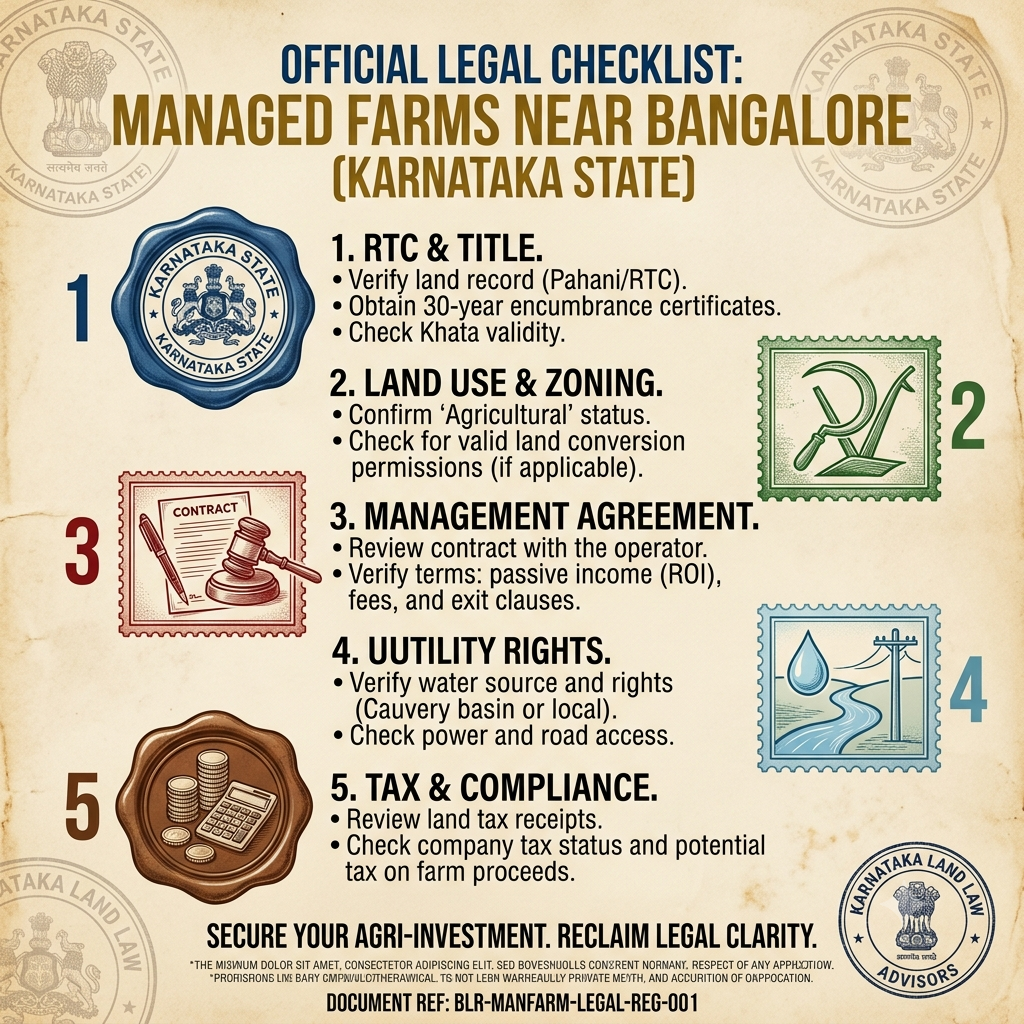
Things to Check Before Investing
Before buying managed farmland, always:
- Verify land ownership and legal approvals.
- Review the farm management agreement.
- Understand maintenance charges.
- Visit the property personally.
- Assess water availability.
- Evaluate soil quality.
- Research the developer’s reputation.
- Seek independent legal and financial advice.
Conducting proper due diligence is essential for making an informed purchase.
Who Should Consider Managed Farms?
Managed farms are ideal for:
- Working professionals
- Families seeking a weekend retreat
- Nature enthusiasts
- Retirees
- Eligible NRIs
- Individuals interested in sustainable lifestyles
- Buyers looking for professionally managed agricultural land
Conclusion
Managed farms around Bangalore provide a practical way to embrace sustainable living while enjoying the benefits of farmland ownership. Through professional management, eco-friendly farming practices, and peaceful natural surroundings, these projects allow owners to stay connected with nature without taking on the challenges of traditional farming.
While managed farms can offer long-term ownership and lifestyle benefits, it’s important to conduct thorough due diligence, verify legal documentation, and choose projects that genuinely prioritize sustainable agricultural practices. With the right approach, managed farmland can become a meaningful investment in both your future and the environment.
FAQs
- What is a managed farm?
A managed farm is agricultural land where a professional team manages farming operations, maintenance, irrigation, and harvesting while the buyer owns the land. - How do managed farms support sustainable living?
Many managed farms use eco-friendly practices such as organic farming, drip irrigation, rainwater harvesting, soil conservation, and tree plantations to reduce environmental impact. - Do I need farming experience to own a managed farm?
No. Professional farm managers handle daily agricultural activities, making managed farms suitable for buyers without farming expertise. - Which locations around Bangalore are popular for managed farms?
Popular regions include Kanakapura Road, Ramanagara, Chikkaballapur, Doddaballapur, Devanahalli, and Hosur due to their accessibility and natural surroundings. - What should I consider before investing in a managed farm?
Verify legal documents, review management agreements, inspect water availability, evaluate maintenance costs, visit the property, and research the developer before making a purchase.