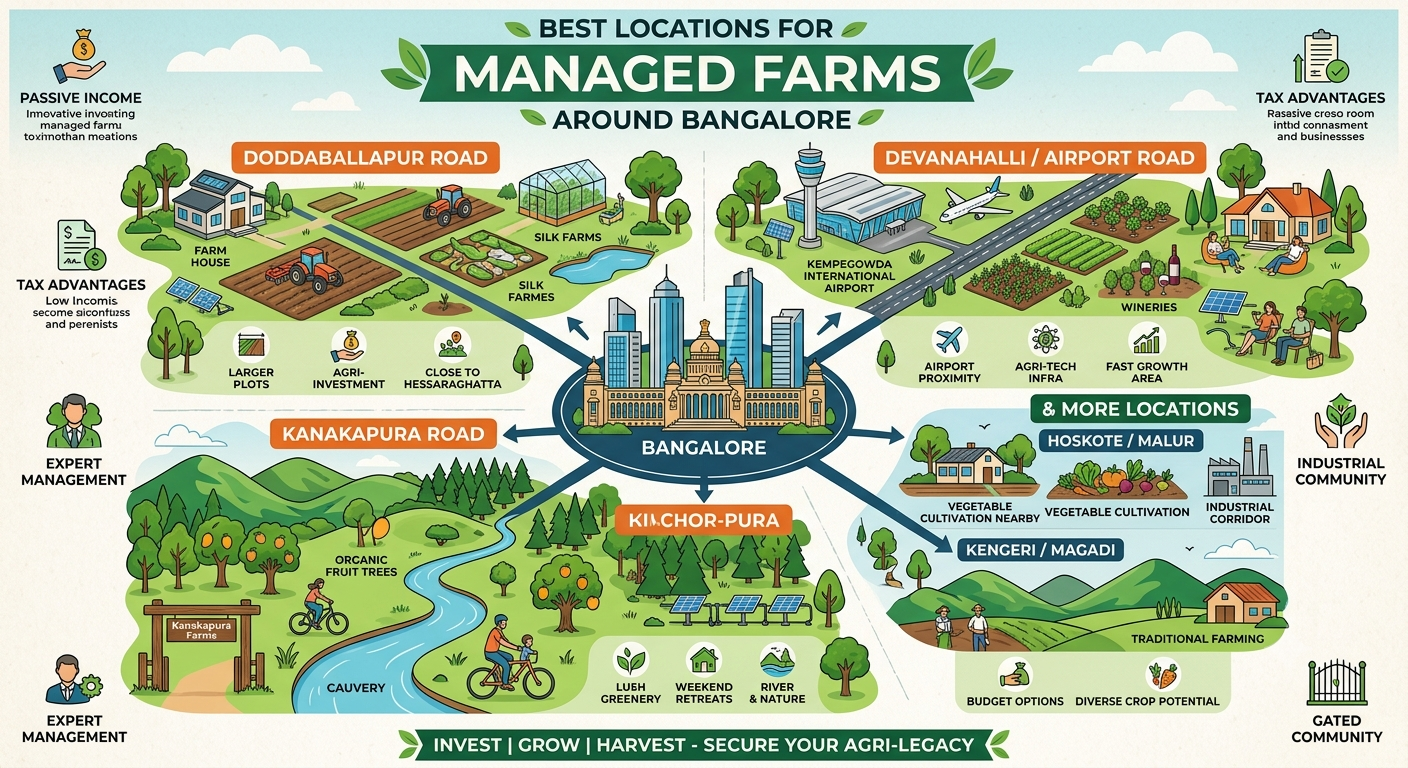
As Bangalore continues to expand as one of India’s leading technology and business hubs, the demand for green spaces, sustainable lifestyles, and alternative real estate opportunities is steadily increasing. Among the emerging trends, managed farms around Bangalore are gaining attention from working professionals, families, retirees, and investors looking for a balance between nature and long-term land ownership.
Managed farms combine agricultural land ownership with professional farm management, making it possible to enjoy the benefits of owning farmland without handling the day-to-day responsibilities of farming. Looking ahead, several social, economic, and environmental factors are likely to shape the future of managed farmland in the region.
What Are Managed Farms?
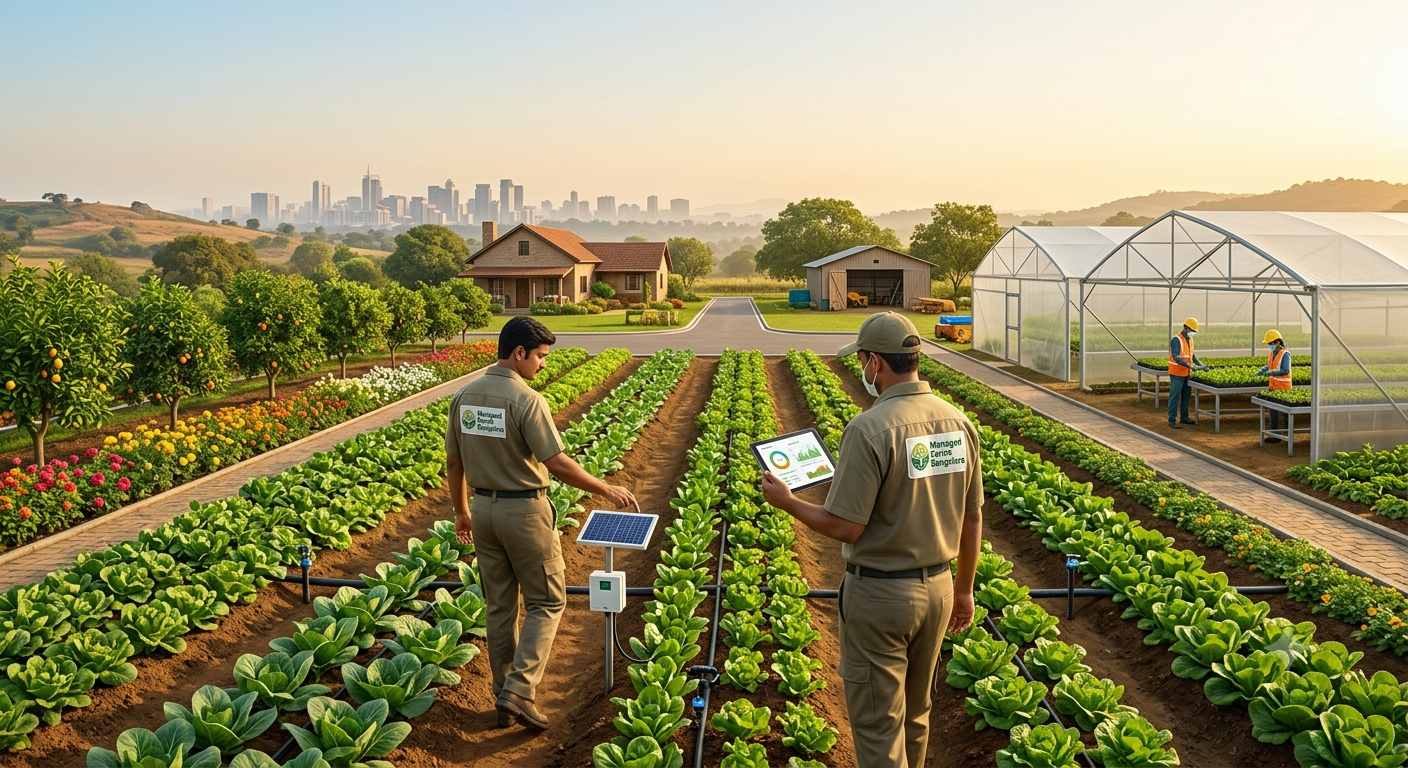
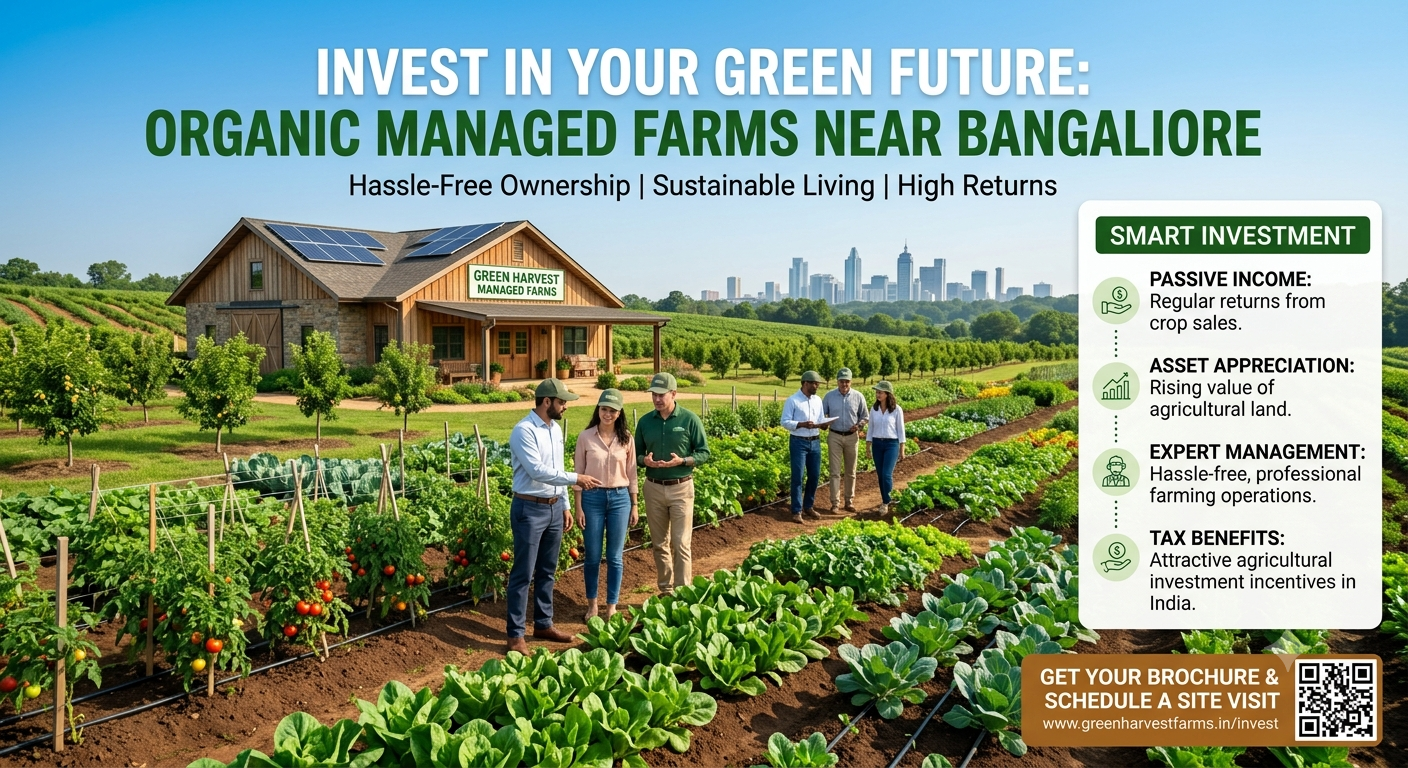
Managed farms are agricultural properties where buyers own individual farm plots while a professional management team takes care of farming operations.
These services generally include:
- Plantation and crop cultivation
- Irrigation management
- Soil care
- Pest and disease management
- Harvesting
- Security
- Farm maintenance
This model has made farmland ownership accessible to people with busy urban lifestyles.
Why Managed Farms Are Becoming More Popular
The growing popularity of managed farms is driven by several changing lifestyle preferences.
Many buyers are looking for:
- Peaceful weekend retreats
- Sustainable living opportunities
- Long-term land ownership
- Professionally maintained agricultural property
- A stronger connection with nature
These evolving priorities are expected to continue influencing demand in the coming years.
Trends Shaping the Future of Managed Farms
1. Growing Demand for Sustainable Living
Environmental awareness is increasing among urban homebuyers and investors.
Many future managed farm projects are expected to place greater emphasis on:
- Organic farming practices
- Rainwater harvesting
- Drip irrigation
- Native tree plantations
- Soil conservation
- Biodiversity protection
These initiatives can help improve environmental sustainability while supporting agricultural productivity.
2. Smarter Farm Management
Technology is gradually becoming part of modern agriculture.
Future managed farms may increasingly adopt:
- Automated irrigation systems
- Remote monitoring
- Weather-based irrigation scheduling
- Soil moisture sensors
- Digital farm management platforms
The availability of these technologies will vary by project and should not be assumed.
3. Improved Infrastructure Around Bangalore
Road expansions and infrastructure development continue to improve connectivity between Bangalore and nearby agricultural regions.
Locations such as:
- Kanakapura Road
- Doddaballapur
- Chikkaballapur
- Ramanagara
- Devanahalli
- Hosur
are expected to remain attractive due to easier access for weekend visits and rural living, though local market conditions will differ across regions.
4. Increased Interest from Working Professionals
Busy professionals increasingly seek ownership experiences that require minimal day-to-day involvement.
Managed farms meet this need through:
- Professional maintenance
- Security
- Irrigation management
- Crop care
- Regular farm updates
This convenience is likely to remain one of the strongest drivers of future demand.
5. Wellness-Focused Lifestyles
The importance of physical and mental well-being has encouraged many families to spend more time in natural environments.
Managed farms provide opportunities for:
- Weekend relaxation
- Outdoor recreation
- Gardening
- Family gatherings
- Nature walks
As wellness becomes a greater priority, these lifestyle benefits may continue to attract buyers.
6. Focus on Long-Term Land Ownership
Many buyers are exploring agricultural land as a tangible long-term asset.
Future land values will depend on factors such as:
- Infrastructure development
- Location
- Water availability
- Legal compliance
- Market demand
Neither land appreciation nor agricultural income should be viewed as guaranteed.
7. Eco-Friendly Communities
Some future managed farm developments may incorporate community-focused amenities such as:
- Walking trails
- Fruit orchards
- Community gardens
- Native landscaping
- Rainwater harvesting systems
- Open recreational spaces
These features can enhance the ownership experience while promoting sustainable land use.
Opportunities for Buyers
Managed farms may appeal to:
- Working professionals
- Families
- Nature enthusiasts
- Retirees
- Eligible NRIs
- Individuals interested in sustainable agriculture
- Buyers seeking professionally managed agricultural land
The combination of convenience and lifestyle benefits makes managed farms attractive to a wide range of buyers.
Challenges to Consider
Despite their growing popularity, managed farms require careful evaluation.
Potential buyers should consider:
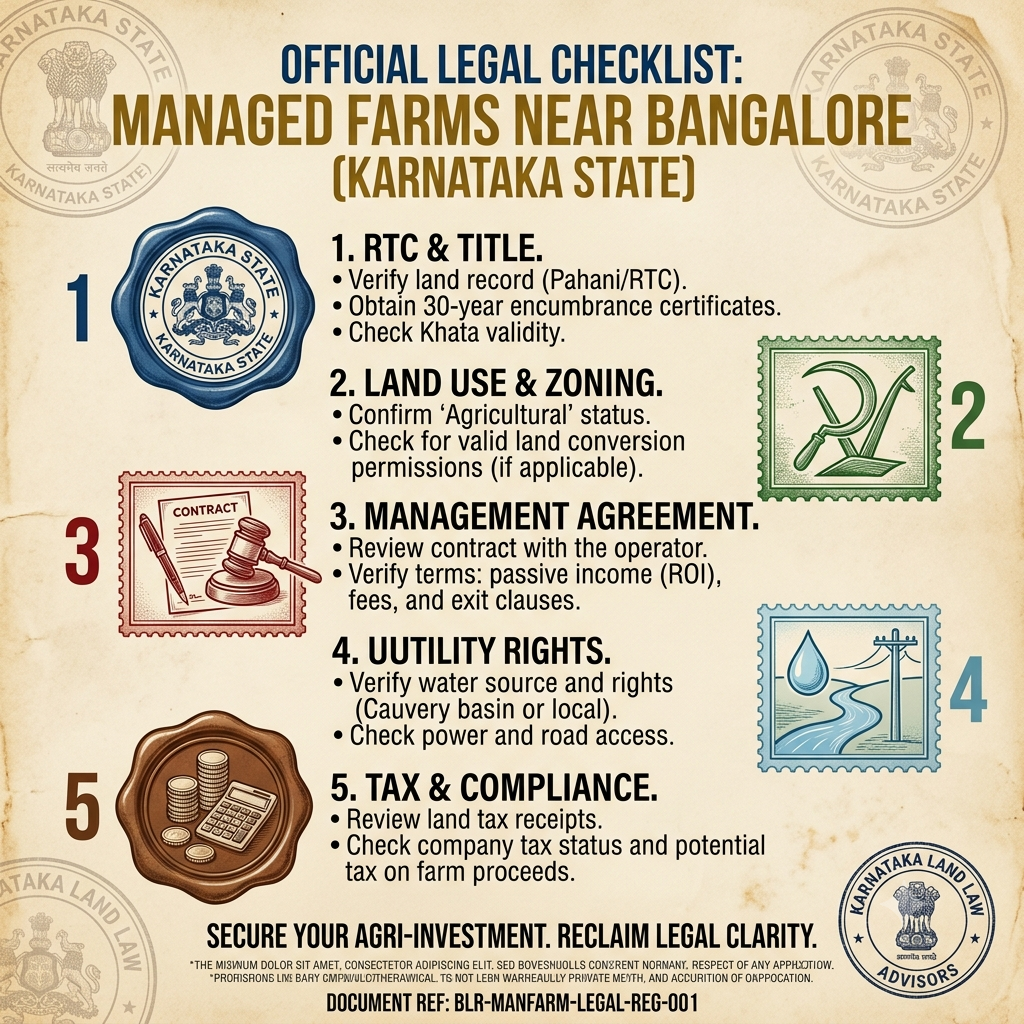
- Legal documentation
- Water availability
- Farm management quality
- Maintenance charges
- Agricultural regulations
- Market conditions
- Developer credibility
Thorough due diligence remains essential.
How to Prepare for Future Investments
If you are considering a managed farm, follow these steps:
- Verify land ownership and approvals.
- Understand the management agreement.
- Visit the property.
- Assess irrigation and water resources.
- Evaluate infrastructure.
- Research the developer’s reputation.
- Seek independent legal and financial advice.
Making informed decisions can help reduce investment risks.
Conclusion
The future of managed farms around Bangalore looks promising as more people seek sustainable lifestyles, professionally managed farmland, and a stronger connection with nature. Improved infrastructure, growing environmental awareness, and advances in agricultural technology are likely to continue shaping this sector in the years ahead.
While managed farms offer convenience, lifestyle benefits, and long-term land ownership opportunities, every project should be evaluated on its own merits. By verifying legal documentation, understanding management agreements, and conducting proper due diligence, buyers can make informed decisions that align with their personal and financial goals.
FAQs
- What are managed farms?
Managed farms are agricultural properties where owners purchase farmland while professional teams manage cultivation, irrigation, maintenance, security, and harvesting. - Why are managed farms becoming popular around Bangalore?
They offer hassle-free farmland ownership, sustainable living opportunities, weekend retreats, and professional farm management for busy urban buyers. - Will technology play a role in the future of managed farms?
Many future projects may adopt technologies such as automated irrigation, soil moisture monitoring, and digital farm management, although features vary by developer. - Can managed farms be considered a long-term investment?
Managed farms provide ownership of agricultural land, but future appreciation and agricultural income depend on location, market conditions, infrastructure, and project quality. - What should buyers check before investing in managed farmland?
Verify legal documents, understand management agreements, assess water availability, review maintenance costs, inspect the property, and research the developer before making a purchase.