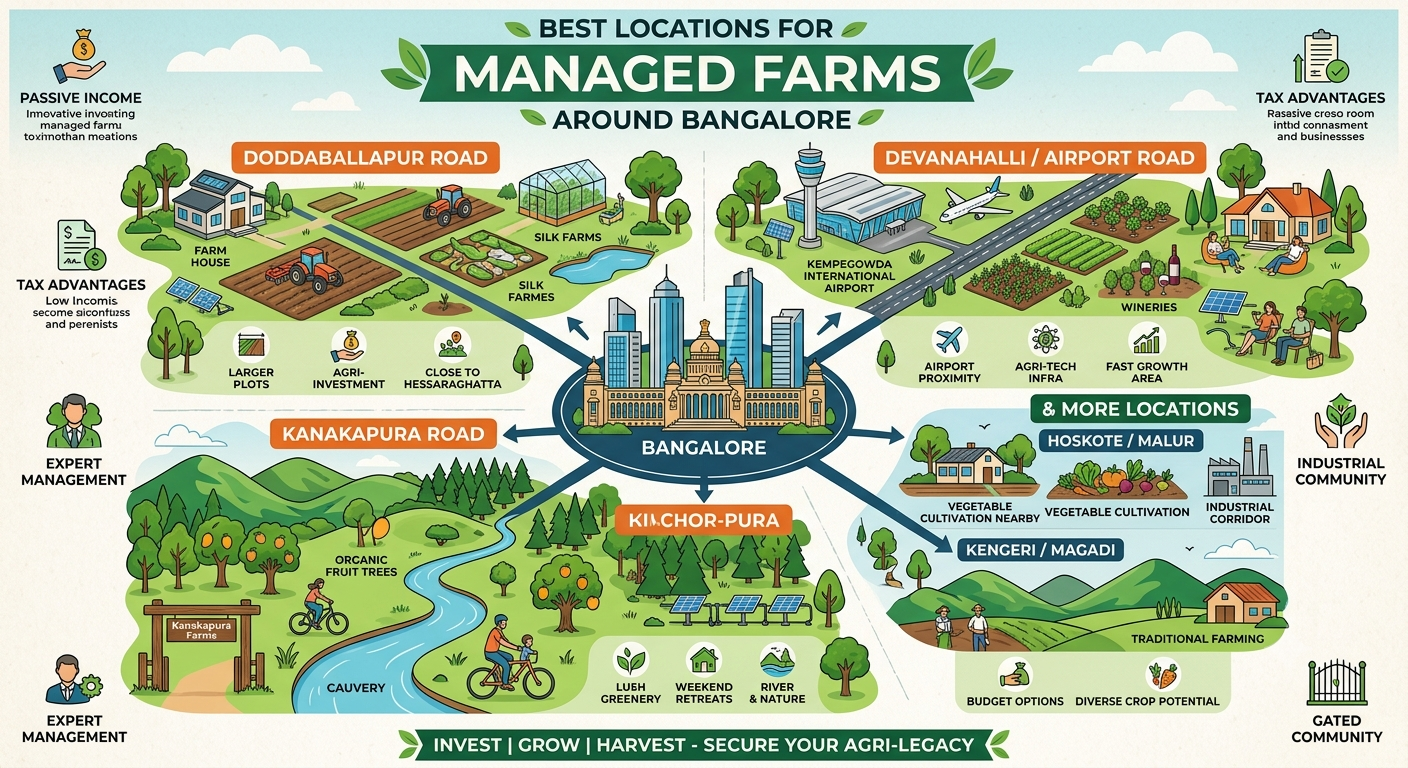
Managed farms near Bangalore have become an increasingly popular option for individuals seeking hassle-free farmland ownership, sustainable living, and long-term land investment. While professionally managed farmland offers several advantages, purchasing agricultural land requires careful legal due diligence.
Verifying ownership records, approvals, and contractual terms before investing can help reduce risks and ensure a smoother buying experience. This legal checklist outlines the key aspects every buyer should review before purchasing a managed farm near Bangalore.
Why Legal Due Diligence Matters
Agricultural land transactions differ from residential property purchases. Factors such as ownership history, land classification, applicable state laws, and management agreements require careful evaluation.
Conducting legal due diligence helps you:
- Confirm clear ownership
- Identify potential disputes
- Understand your rights and responsibilities
- Avoid future legal complications
- Make a well-informed investment decision
Consulting a qualified property lawyer is strongly recommended before signing any agreement.
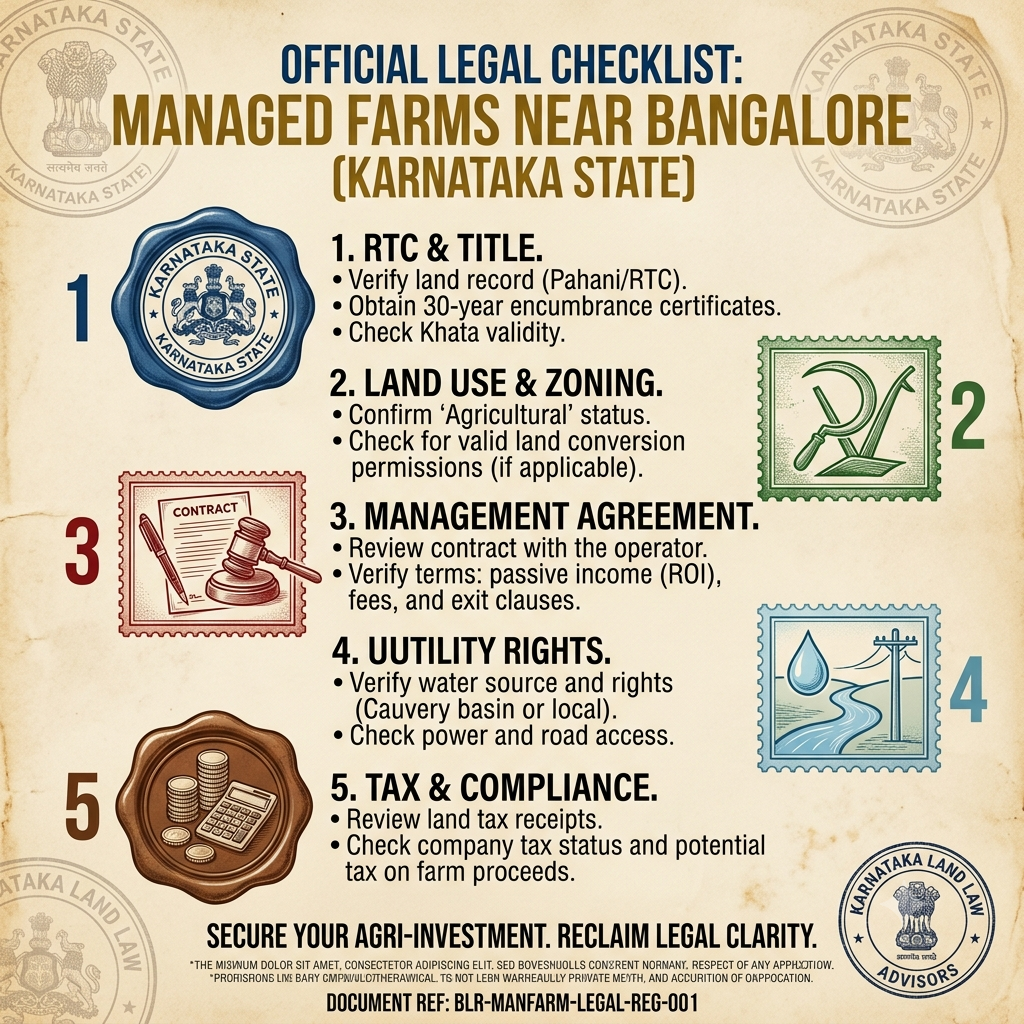
1. Verify the Land Title
The first step is confirming that the seller has a clear and marketable title to the property.
Check for:
- Title deed
- Ownership history
- Chain of title
- Mutation records
- Revenue records
- Encumbrance status
A clear title reduces the risk of future ownership disputes.
2. Obtain an Encumbrance Certificate
An Encumbrance Certificate (EC) helps verify whether the land has existing legal or financial liabilities.
The certificate may indicate:
- Mortgages
- Loans
- Court attachments
- Registered transactions affecting the property
Review the EC for the relevant period before proceeding with the purchase.
3. Verify Land Classification
Confirm that the land is legally classified for agricultural use.
Understand:
- Current land classification
- Permitted land use
- Any restrictions on development
- Applicable zoning regulations
Land-use rules vary by state and local authority, so ensure the intended use complies with applicable laws.
4. Check Revenue Records
Review official revenue records, such as:
- RTC (Record of Rights, Tenancy and Crops), where applicable
- Mutation entries
- Survey records
- Village maps
These documents help confirm ownership and land details.
5. Confirm Survey Boundaries
A professional land survey can help verify:
- Exact plot dimensions
- Boundary markings
- Access roads
- Encroachments, if any
Matching survey records with on-ground measurements can prevent future disputes.
6. Review the Sale Agreement Carefully
Never rely solely on verbal commitments.
The sale agreement should clearly specify:
- Purchase price
- Payment schedule
- Property details
- Possession terms
- Responsibilities of both parties
- Conditions for cancellation, if applicable
Read every clause carefully before signing.
7. Understand the Farm Management Agreement
In managed farm projects, ownership and management are often governed by separate agreements.
Review:
- Scope of management services
- Maintenance responsibilities
- Service fees
- Duration of the agreement
- Renewal terms
- Termination conditions
- Owner responsibilities
Ensure you understand exactly what services are included.
8. Verify Water Rights and Irrigation Access
Water availability is essential for agricultural land.
Check:
- Source of irrigation
- Borewell permissions (if applicable)
- Water-sharing arrangements
- Irrigation infrastructure
- Water storage facilities
Reliable water access contributes to the long-term usability of the property.
9. Review Maintenance Charges
Managed farms usually involve recurring maintenance costs.
Ask for written details regarding:
- Annual maintenance fees
- Services covered
- Additional charges
- Fee revision policy
Transparency regarding costs helps avoid misunderstandings later.
10. Confirm Access Roads and Easement Rights
Ensure the property has legal access.
Verify:
- Public road connectivity
- Private access rights
- Easements
- Internal roads within the project
Legal access is essential for future use and maintenance.
11. Check for Pending Litigation
Ask whether the land is involved in:
- Civil disputes
- Government acquisition proceedings
- Boundary disputes
- Inheritance claims
- Environmental litigation
Your legal advisor can help identify potential issues through due diligence.
12. Verify Developer Credentials
Before investing, research the developer or farm management company.
Look for:
- Previous projects
- Customer reviews
- Experience in managed farmland
- Transparency in documentation
- Quality of farm management services
A reputable developer often provides clearer documentation and better support throughout the buying process.
Common Legal Red Flags
Be cautious if you notice:
- Incomplete ownership documents
- Pressure to make immediate payments
- Missing approvals
- Unclear management agreements
- Boundary disputes
- Unverified promises of guaranteed returns
- Inconsistent land records
If any concerns arise, seek professional legal advice before proceeding.
Final Legal Checklist
Before purchasing a managed farm near Bangalore, make sure you have:
- ✔ Verified the title deed
- ✔ Reviewed the Encumbrance Certificate
- ✔ Confirmed agricultural land classification
- ✔ Checked revenue records
- ✔ Verified survey boundaries
- ✔ Reviewed the sale agreement
- ✔ Understood the management agreement
- ✔ Confirmed water availability
- ✔ Reviewed maintenance charges
- ✔ Verified legal access roads
- ✔ Checked for pending litigation
- ✔ Consulted an experienced property lawyer
Conclusion
Investing in a managed farm near Bangalore can provide the benefits of agricultural land ownership without the burden of daily farm management. However, legal due diligence is one of the most important steps in protecting your investment.
By carefully verifying ownership, reviewing agreements, checking land records, and consulting qualified legal professionals, you can reduce risks and make a more informed purchasing decision. A legally sound investment today can provide greater confidence and peace of mind for years to come.
FAQs
- Why is legal verification important before buying managed farmland?
Legal verification helps confirm clear ownership, identify disputes, verify approvals, and reduce the risk of future legal complications. - What documents should I check before purchasing a managed farm?
Important documents include the title deed, Encumbrance Certificate, revenue records, survey records, sale agreement, and farm management agreement. - What is an Encumbrance Certificate?
An Encumbrance Certificate (EC) shows whether a property has registered financial or legal liabilities, such as mortgages or certain other registered claims, during the specified period. - Should I review the farm management agreement separately?
Yes. The management agreement explains the services provided, maintenance responsibilities, fees, duration, and other important terms that differ from the land sale agreement. - Do I need a lawyer before investing in managed farmland?
Yes. Consulting a qualified property lawyer is recommended to verify legal documents, review agreements, and ensure the transaction complies with applicable laws