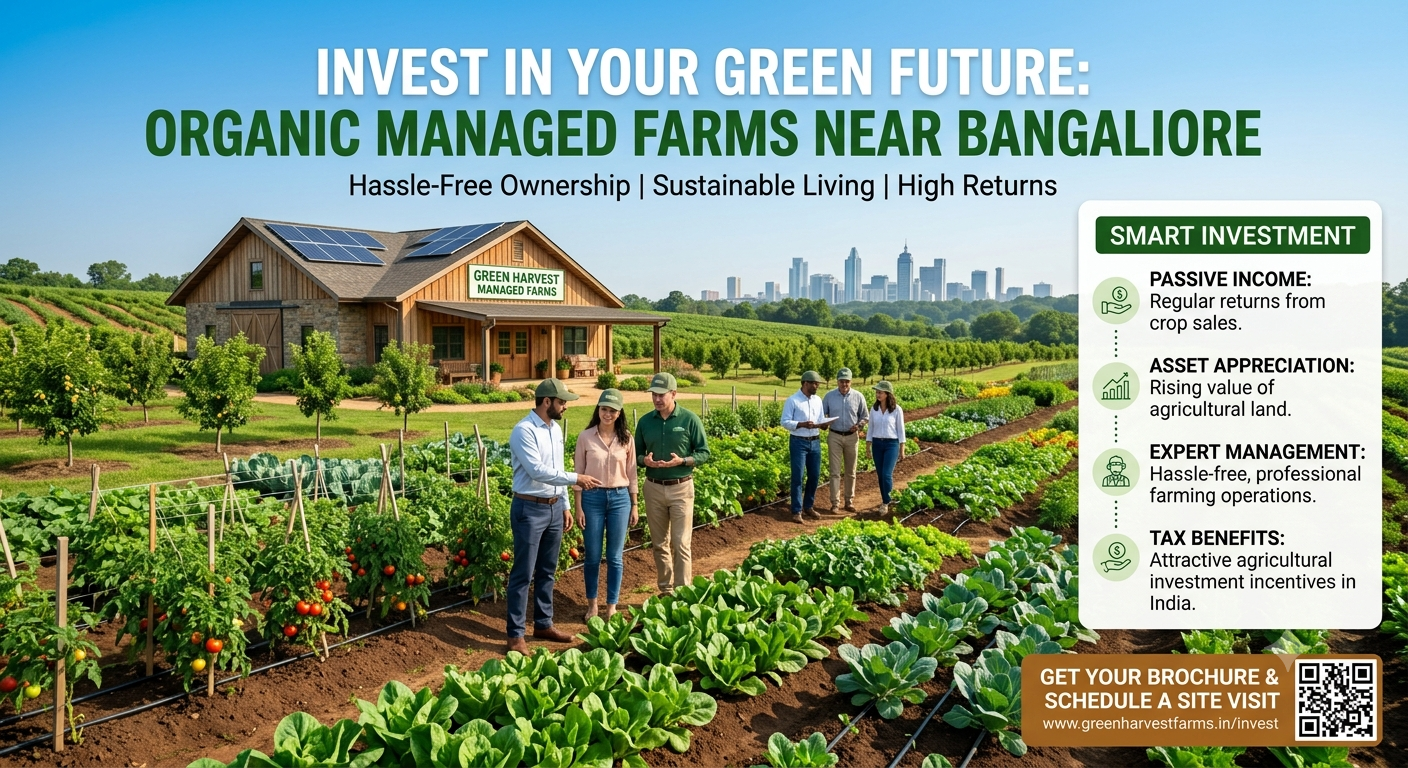
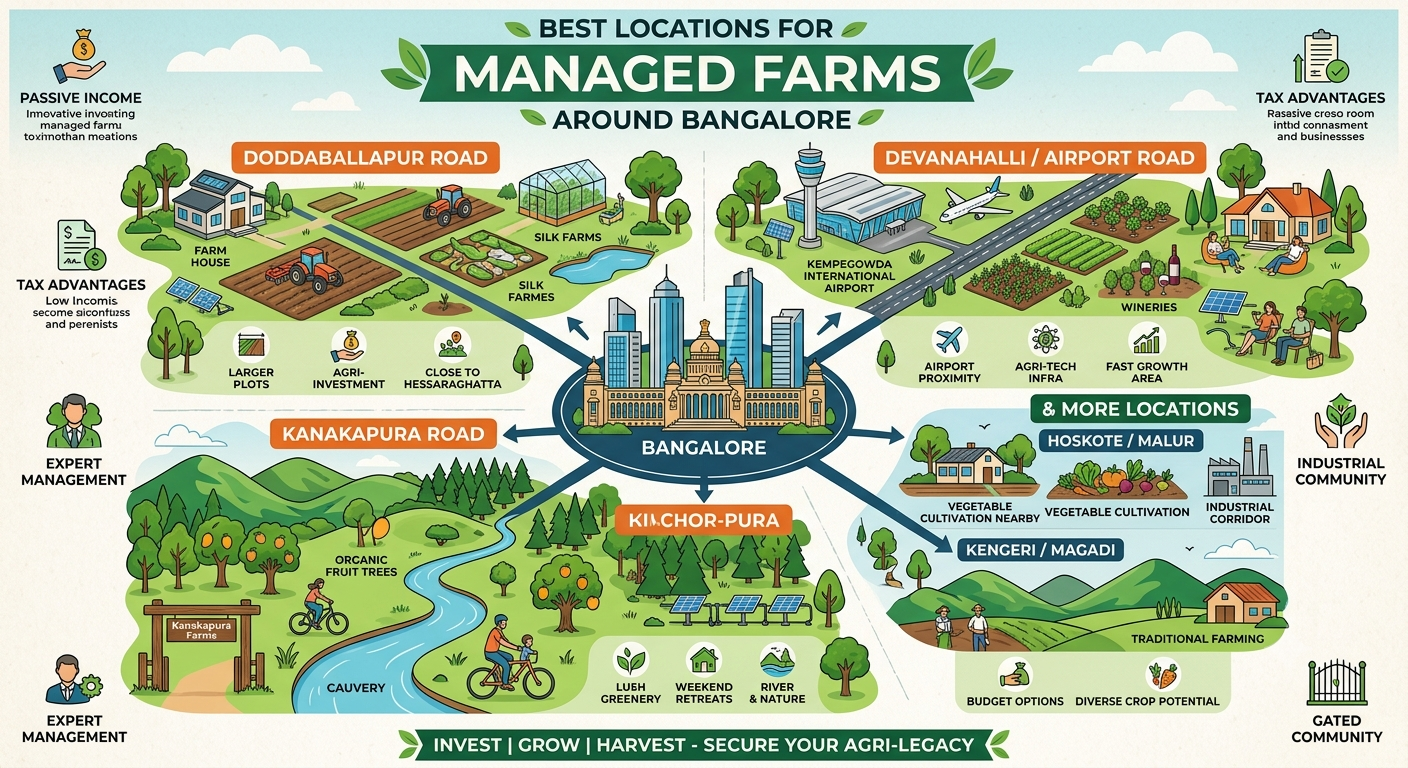
Managed farms in Bangalore have become an attractive option for individuals looking to own agricultural land without taking on the daily responsibilities of farming. With professional farm management, sustainable agricultural practices, and peaceful natural surroundings, managed farmland offers a unique blend of lifestyle benefits and long-term ownership opportunities.
Before investing, it’s important to understand the typical costs involved, the amenities offered by managed farm projects, and the factors that influence their long-term investment potential.
What Are Managed Farms?
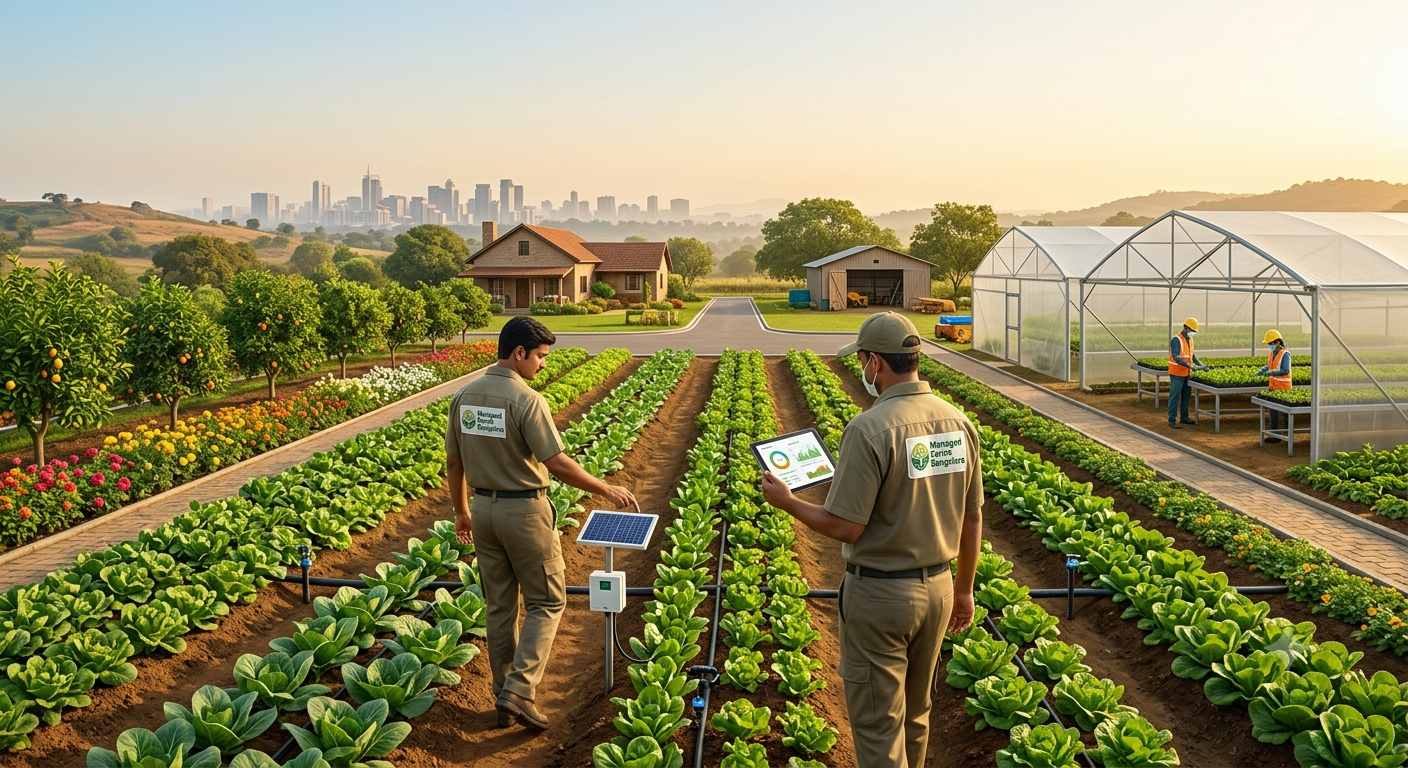
Managed farms are agricultural properties where buyers own individual farm plots while a professional management company oversees farming operations and property maintenance.
Common management services include:
- Plantation and crop cultivation
- Irrigation management
- Soil care
- Pest and disease control
- Harvesting
- Security and fencing
- General farm maintenance
This arrangement allows owners to enjoy farmland ownership without needing farming expertise or regular supervision.
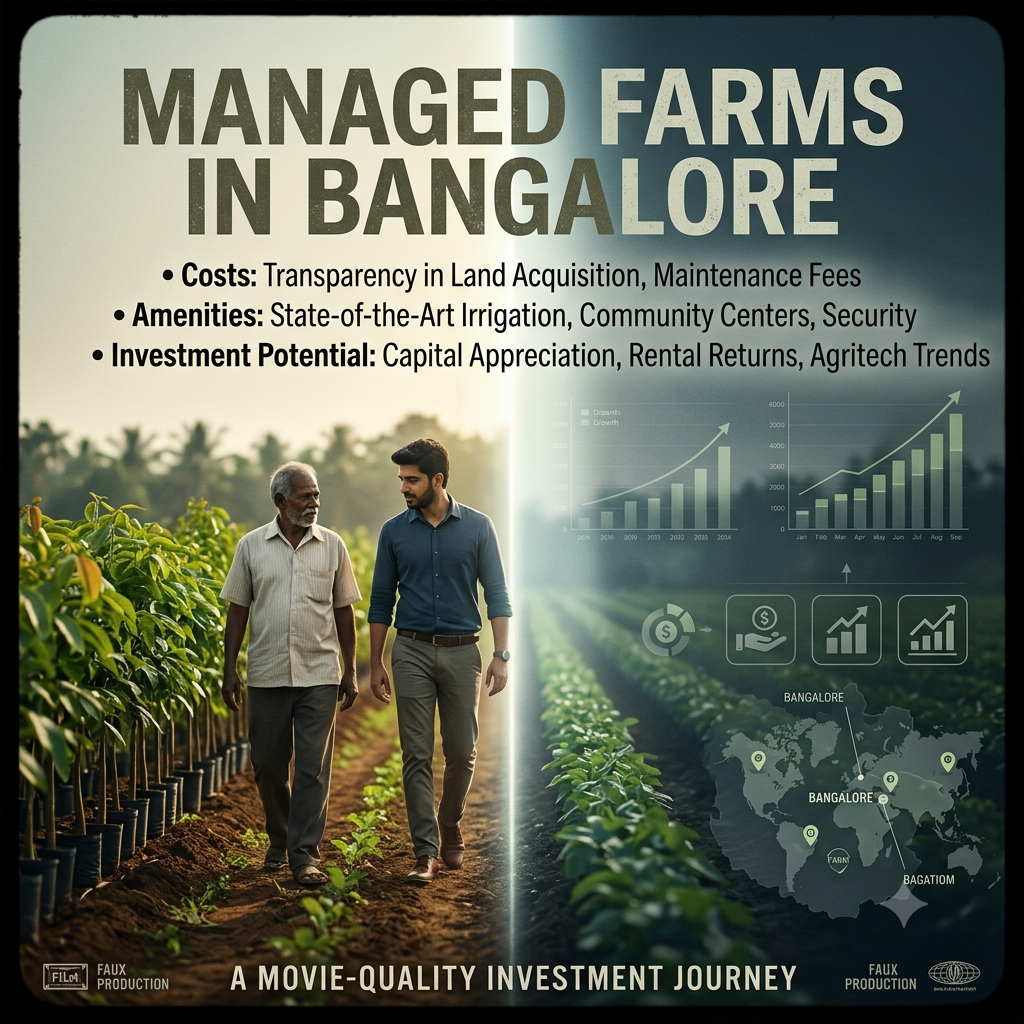
Understanding the Costs of Managed Farms
The overall cost of a managed farm depends on several factors, including location, plot size, infrastructure, water availability, and the services included in the project.
1. Land Cost
The purchase price varies based on:
- Distance from Bangalore
- Accessibility
- Soil quality
- Water resources
- Nearby infrastructure
- Demand in the area
Projects closer to major highways or rapidly developing regions may command higher prices.
2. Development Charges
Many managed farm communities include shared infrastructure, which may be reflected in the project cost.
These improvements can include:
- Internal roads
- Boundary fencing
- Irrigation systems
- Landscaping
- Water storage facilities
- Common recreational areas
Always ask for a detailed cost breakdown before purchasing.
3. Farm Management Charges
Professional management services usually involve recurring maintenance fees.
These charges often cover:
- Plantation care
- Irrigation
- Farm supervision
- Security
- Soil maintenance
- Common area upkeep
Understanding what is included in these fees helps you evaluate the project’s long-term affordability.
4. Registration and Legal Expenses
In addition to the purchase price, buyers should budget for:
- Stamp duty
- Registration charges
- Legal verification
- Documentation costs
These expenses vary depending on applicable laws and the transaction details.
Amenities Offered by Managed Farm Projects
Many managed farmland developments are designed to provide both agricultural functionality and a pleasant ownership experience.
Common amenities include:
Gated Community
- Controlled entry and exit
- Security personnel
- Boundary fencing
Efficient Water Management
- Drip irrigation
- Rainwater harvesting
- Borewells or water storage facilities
- Irrigation infrastructure
Green Spaces
- Fruit orchards
- Tree plantations
- Landscaped gardens
- Open recreational areas
Internal Infrastructure
- Well-planned access roads
- Parking areas
- Signage
- Utility connections where applicable
Farm Management Services
Professional teams may provide:
- Plantation planning
- Crop care
- Harvest management
- Soil improvement
- Seasonal maintenance
Some projects also share periodic updates on farm activities through reports or photographs.
Investment Potential of Managed Farms
Managed farmland is often considered by buyers seeking a combination of land ownership and lifestyle benefits.
Several factors may contribute to its long-term potential.
1. Tangible Asset Ownership
Agricultural land is a physical asset that many buyers value for its long-term ownership and legacy potential.
2. Infrastructure Development
Road improvements and expanding connectivity around Bangalore have increased interest in several agricultural regions.
Accessibility may influence future demand, though market performance varies by location.
3. Lifestyle Value
Many buyers purchase managed farms for:
- Weekend retreats
- Nature experiences
- Family recreation
- Sustainable living
These non-financial benefits often play an important role in the decision to invest.
4. Professional Maintenance
Regular maintenance helps preserve the condition of plantations, irrigation systems, and common infrastructure.
Professional management can make ownership more convenient for urban buyers.
5. Potential Agricultural Income
Some managed farm projects may generate agricultural income depending on:
- Crop selection
- Weather conditions
- Farm management
- Market demand
- Operational costs
Income from farming is variable and should not be considered guaranteed.
Factors That Affect Long-Term Value
Several elements influence the future value of a managed farm:
- Legal ownership
- Water availability
- Soil quality
- Road connectivity
- Farm management quality
- Sustainable agricultural practices
- Infrastructure development
- Market demand
Projects with strong fundamentals are generally better positioned for long-term ownership benefits.
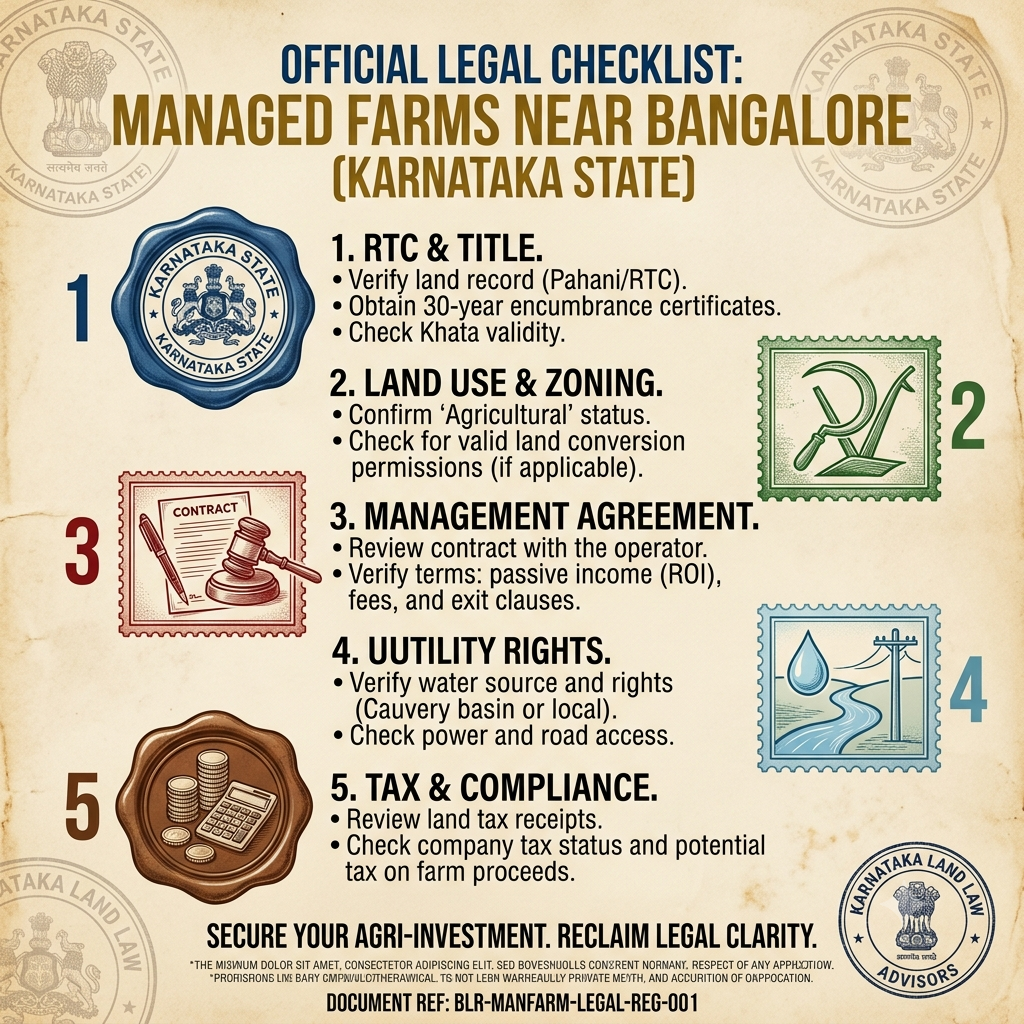
Things to Check Before Investing
Before purchasing managed farmland, buyers should:
- Verify land titles and legal approvals.
- Visit the property personally.
- Understand the management agreement.
- Review maintenance charges.
- Confirm water availability.
- Research the developer’s experience.
- Evaluate infrastructure and accessibility.
- Seek independent legal and financial advice.
Proper due diligence is essential before making any land purchase.
Who Should Consider Managed Farms?
Managed farms may be suitable for:
- Working professionals
- Families seeking weekend retreats
- Nature enthusiasts
- Retirees
- Eligible NRIs
- Individuals interested in sustainable agriculture
- Buyers looking to diversify their long-term assets
Conclusion
Managed farms in Bangalore offer a unique combination of professionally maintained agricultural land, peaceful natural surroundings, and convenient ownership. While costs vary depending on location and project features, understanding the associated expenses, amenities, and management services can help buyers make informed decisions.
Although managed farmland may offer long-term ownership and lifestyle benefits, future appreciation and agricultural income depend on many factors and cannot be guaranteed. Choosing a legally verified project, reviewing all agreements carefully, and conducting thorough due diligence are key steps toward making a confident investment.