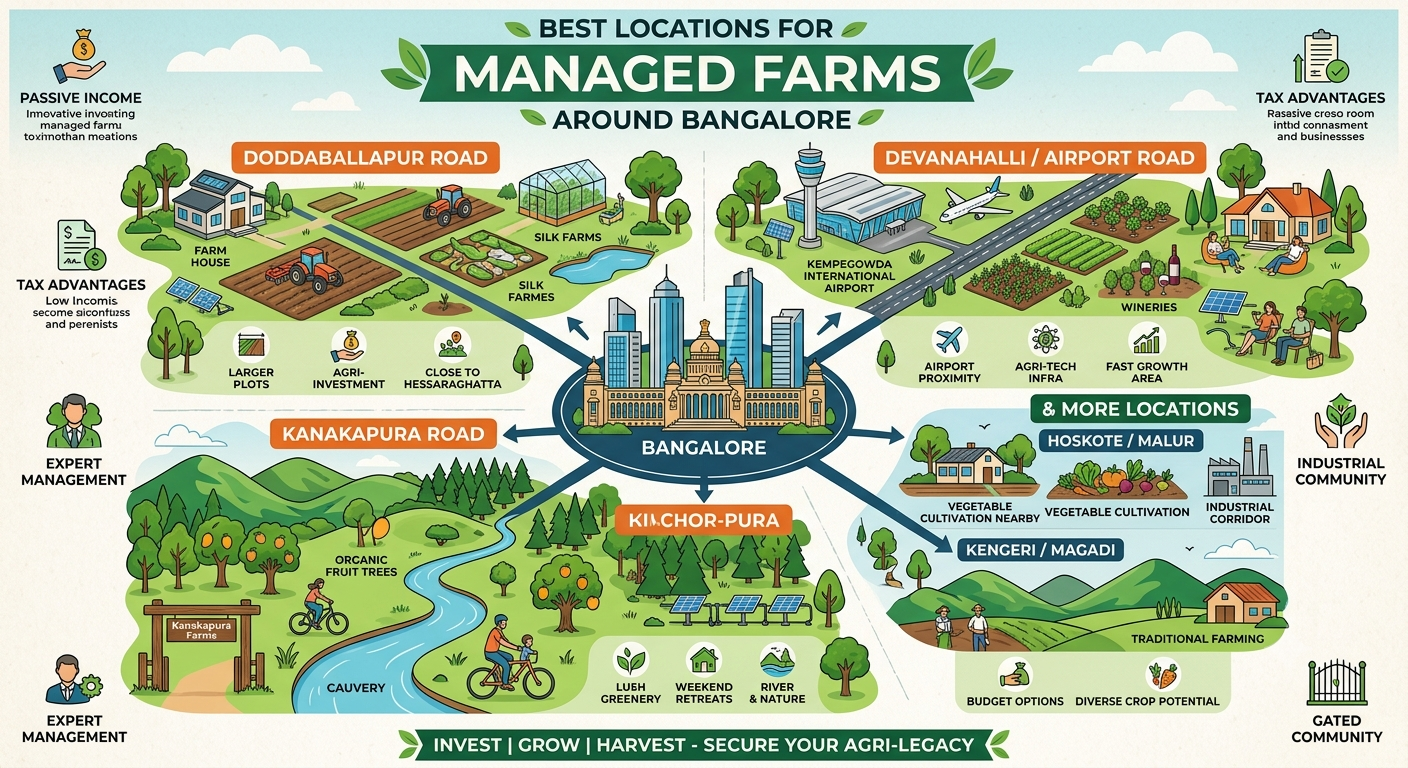
Managed farms near Bangalore have become an attractive option for individuals seeking a combination of land ownership, sustainable living, and professional farm management. Unlike traditional farmland, managed farms are maintained by experienced agricultural teams, making ownership convenient for busy professionals, families, retirees, and eligible NRIs.
While every investment carries risks, managed farms can offer long-term value through factors such as strategic location, professional maintenance, and the intrinsic value of land. Understanding these factors can help buyers make informed decisions.
What Are Managed Farms?
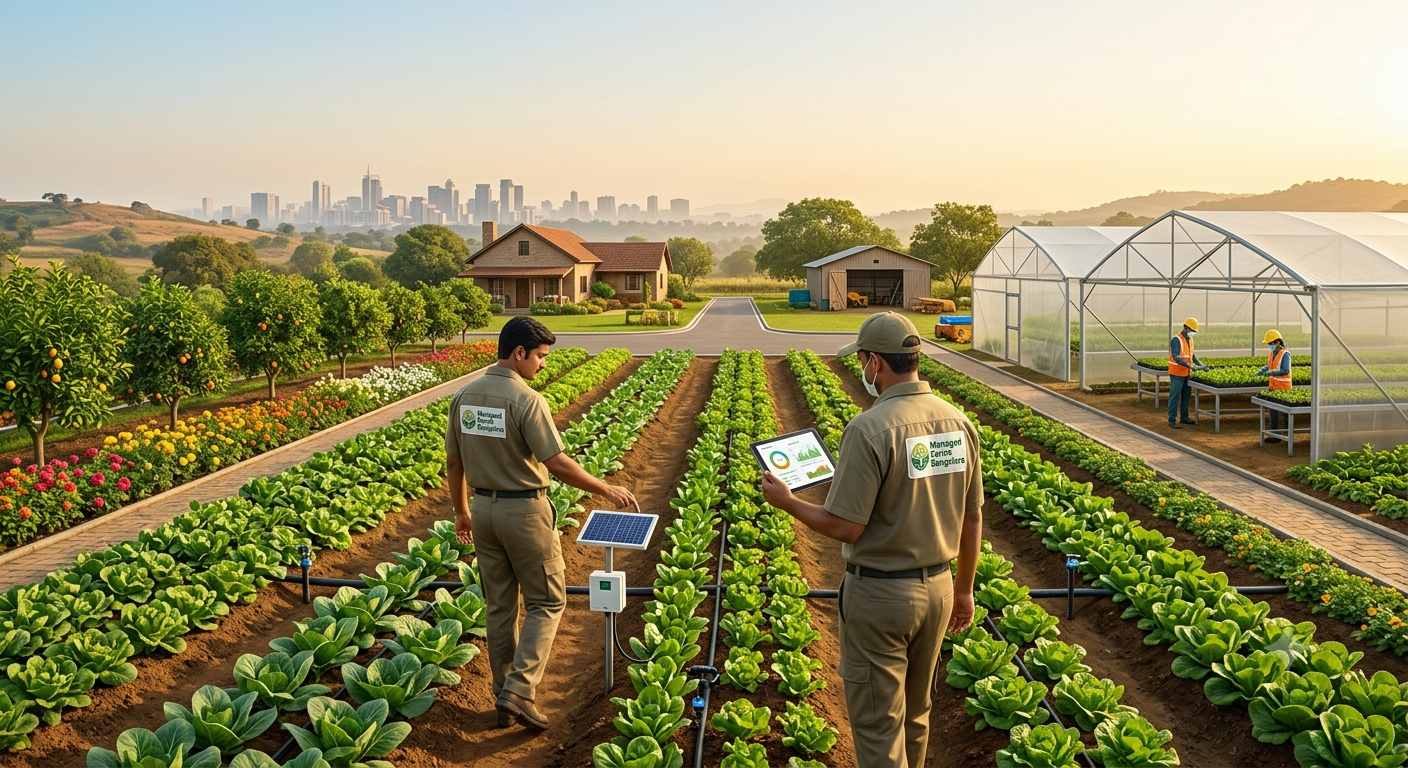
Managed farms are agricultural properties where buyers own the land while a professional management company takes care of:
- Plantation and crop cultivation
- Irrigation management
- Soil care
- Security and fencing
- Harvesting
- Farm maintenance
- Seasonal agricultural operations
This allows owners to enjoy farmland ownership without handling day-to-day farming responsibilities.
What Does Long-Term Value Mean?
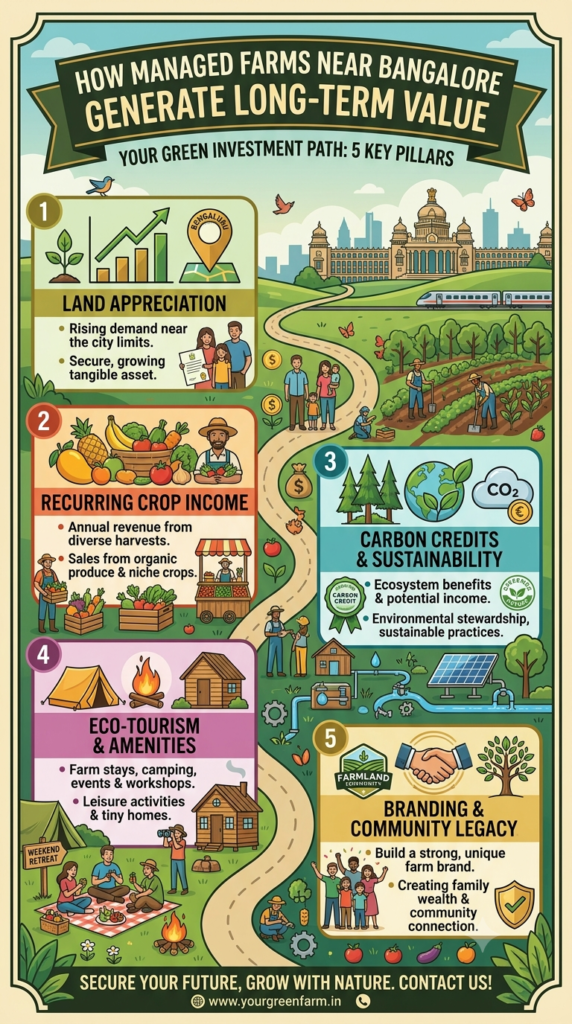
Long-term value is not limited to financial returns. For managed farms, it may include:
- Ownership of a tangible asset
- Access to a peaceful natural environment
- Sustainable land management
- Potential land appreciation over time
- Opportunities for agricultural production
- Lifestyle and recreational benefits
The value of any managed farm depends on location, management quality, legal compliance, infrastructure, and market conditions.
1. Land as a Tangible Asset
Unlike many financial investments, agricultural land is a physical asset. Many buyers value farmland because it represents ownership of real property that can be enjoyed and passed on to future generations.
However, future appreciation is influenced by various factors and cannot be guaranteed.
2. Strategic Locations Near Bangalore
Managed farms are often located in regions with improving infrastructure and road connectivity.
Popular areas include:
- Kanakapura Road
- Ramanagara
- Doddaballapur
- Chikkaballapur
- Devanahalli
- Hosur
Accessibility can make these locations more convenient for weekend visits and may influence long-term demand, though market performance varies by project and region.
3. Professional Farm Management
One of the key advantages of managed farms is ongoing professional maintenance.
Farm management companies typically oversee:
- Crop planning
- Plantation care
- Irrigation
- Soil management
- Pest control
- Harvesting
- Property maintenance
Consistent management helps maintain the condition of the land and plantations over time.
4. Sustainable Farming Practices
Many managed farm projects adopt environmentally responsible techniques such as:
- Organic farming methods
- Drip irrigation
- Rainwater harvesting
- Soil conservation
- Native tree plantations
These practices can contribute to healthier land and support long-term agricultural productivity.
5. Lifestyle Benefits
Long-term value is also measured by quality of life.
Managed farms provide:
- Fresh air
- Green surroundings
- Weekend retreats
- Outdoor family activities
- Reduced exposure to urban congestion
For many owners, these experiences become an important part of the property’s overall value.
6. Diversification of Assets
Managed farmland can serve as one component of a diversified portfolio.
Owning agricultural land may provide exposure to a different asset class than stocks, mutual funds, or fixed-income investments. Diversification can help spread risk, but each investment should be evaluated on its own merits.
7. Potential Agricultural Income
Depending on the project structure and crop selection, managed farms may generate income from agricultural activities.
However, buyers should understand that agricultural income depends on:
- Weather conditions
- Crop yields
- Market prices
- Operational costs
- Farm management practices
No agricultural income should be considered fixed or guaranteed.
8. Reduced Ownership Burden
Traditional farmland often requires significant time and expertise.
Managed farms reduce this burden by handling:
- Daily farm operations
- Irrigation
- Security
- Maintenance
- Harvest management
This convenience can make farmland ownership more practical for urban buyers.
9. Legacy for Future Generations
Many people view farmland as a long-term family asset.
Managed farms can provide future generations with:
- Land ownership
- Exposure to agriculture
- A connection to nature
- Opportunities for recreational use
This legacy aspect adds value beyond financial considerations.
Factors That Influence Long-Term Value
Several elements contribute to the long-term potential of a managed farm:
- Clear legal ownership
- Quality farm management
- Reliable water availability
- Healthy soil
- Good road connectivity
- Sustainable farming practices
- Well-maintained infrastructure
- Transparent management agreements
Projects that perform well in these areas are generally better positioned for long-term success.
Things to Evaluate Before Investing
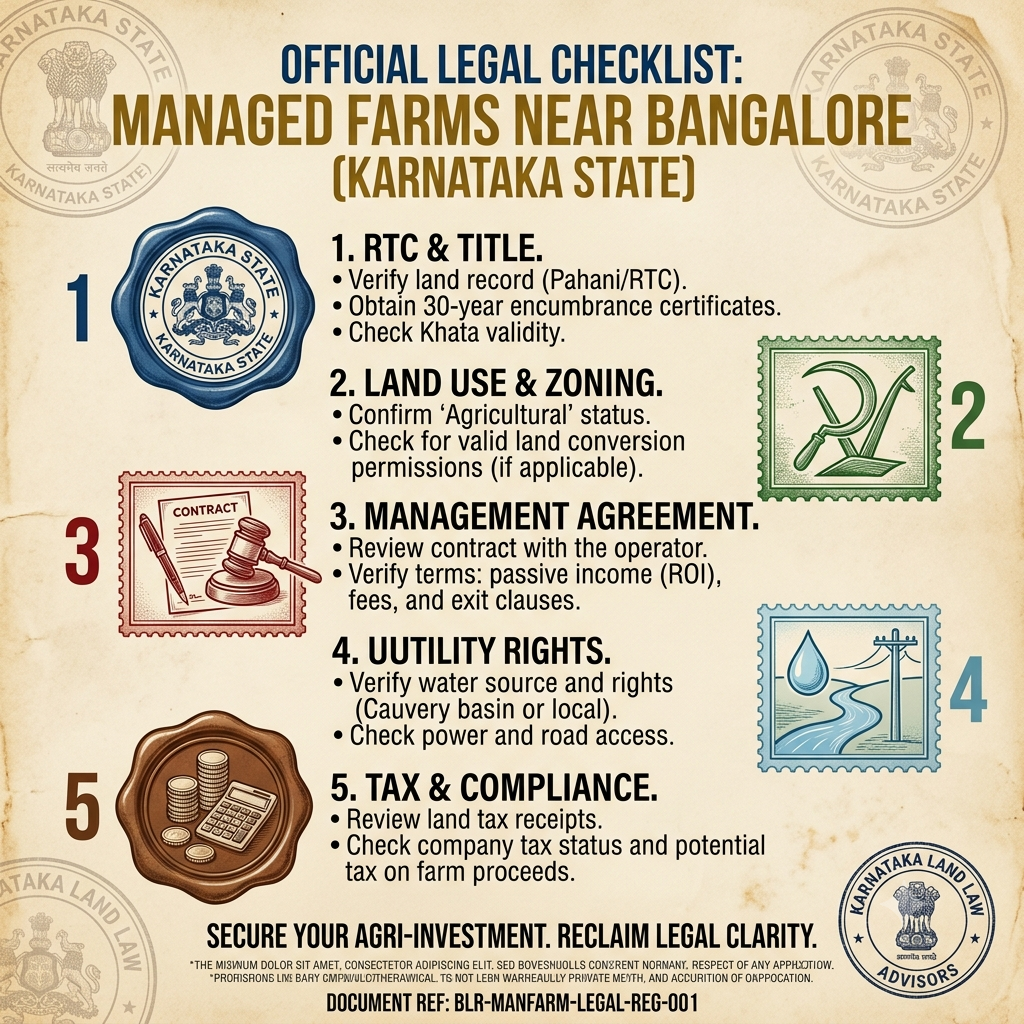
Before purchasing managed farmland, buyers should:
- Verify land titles and legal approvals.
- Review the management agreement.
- Understand recurring maintenance costs.
- Visit the property.
- Assess water availability and soil quality.
- Research the developer’s reputation.
- Seek independent legal and financial advice.
Taking these steps can help reduce risk and support better decision-making.
Conclusion
Managed farms near Bangalore offer long-term value through a combination of professionally maintained agricultural land, sustainable farming practices, convenient ownership, and lifestyle benefits. While future appreciation and agricultural income depend on multiple factors and cannot be guaranteed, well-managed projects can provide meaningful value for buyers seeking a long-term connection with nature and land ownership.
Careful due diligence, realistic expectations, and choosing a reputable managed farm project are essential for making a confident and informed investment decision.